
Hemp oil for health and beauty and other uses
- Why hemp oil can be beneficial
- A natural source of unsaturated fatty acids
- Hemp oil for the skin
- Hemp oil for the hair
- Hemp oil as a culinary treasure
- How to use hemp oil
- Why give hemp oil a place in your daily care routine
- FAQ
Why hemp oil can be beneficial
The oil contained in hemp seeds contains 75–80% beneficial unsaturated fatty acids and only 9–11% less desirable saturated fatty acids. A significant proportion consists of polyunsaturated fatty acids, including essential fatty acids, which the human body cannot produce on its own and therefore must obtain from food. These acids are involved in the metabolism of the whole body.
Some people may, for various reasons, have a lower intake or poorer utilization of these substances. Diet composition, individual metabolism, genetic predispositions and other factors may all play a role. In the long term, an unbalanced intake of essential fatty acids can affect a number of processes in the body, such as inflammatory responses, skin condition or cardiovascular health. This is why hemp seed oil can be a valuable part of a varied and balanced diet.
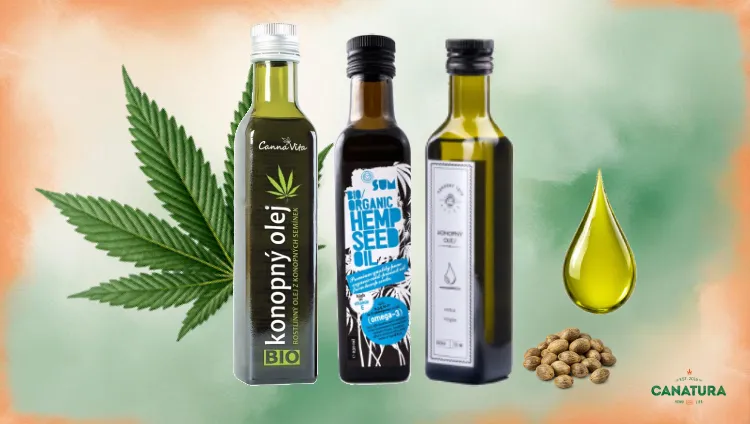
A natural source of unsaturated fatty acids
What are the effects of hemp oil? Hemp oil is valued for its naturally balanced composition of unsaturated fatty acids. It contains the essential omega-6 fatty acid linoleic acid (LA) and the omega-3 fatty acid alpha-linolenic acid (ALA) in a ratio of around 3 : 1, which is considered ideal from the perspective of a varied and balanced diet.
Linoleic acid
A 2024 study summarizes that linoleic acid is involved in the body in the formation of cell membranes and is also important for the skin, where it is part of the lipids of the natural skin barrier.
Alpha-linolenic acid
The European Food Safety Authority states that alpha-linolenic acid contributes to the maintenance of normal blood cholesterol levels. The effect is achieved with a daily intake of 2 g of ALA.
According to a 2022 study, alpha-linolenic acid may also serve in the body as a precursor for the formation of other omega-3 fatty acids, such as EPA and DHA, although this conversion is limited in humans.
Other substances
Hemp oil is also interesting because, in addition to LA and ALA, it contains smaller amounts of other fatty acids, such as gamma-linolenic acid (GLA), stearidonic acid and oleic acid. GLA and stearidonic acid are metabolites of essential fatty acids and complement the naturally diverse profile of hemp oil. However, their levels may vary depending on the hemp variety, the quality of the seeds and the way the oil is processed.
Hemp oil is not interesting only because of its fatty acid content. Depending on the quality of the seeds and the method of processing, it may naturally contain other substances as well, such as vitamin E, carotenoids, phytosterols, phospholipids or chlorophyll, to which hemp oil owes its typical greenish color.
Hemp oil for the skin
Hemp oil is a popular part of natural skin care, mainly thanks to its content of linoleic acid, which is a natural component of skin lipids and is involved in the proper functioning of the skin barrier. Vitamin E and other naturally occurring substances also help protect the skin from adverse environmental influences.
Hemp oil spreads easily on the skin, does not leave a distinctly greasy film and is suitable for daily care.
It is especially suitable for dry, sensitive and stressed skin. Thanks to its gentleness, it is also suitable for caring for dry areas of the body, hands or lips.
Hemp seed oil can be used on its own, for example as a facial oil applied in a small amount to damp skin, or it can be part of cosmetics, such as face and body creams, hand creams, foot creams or lip balms.
For skin prone to acne, eczema, psoriasis or significant irritation, hemp oil can be a great part of supportive cosmetic care.
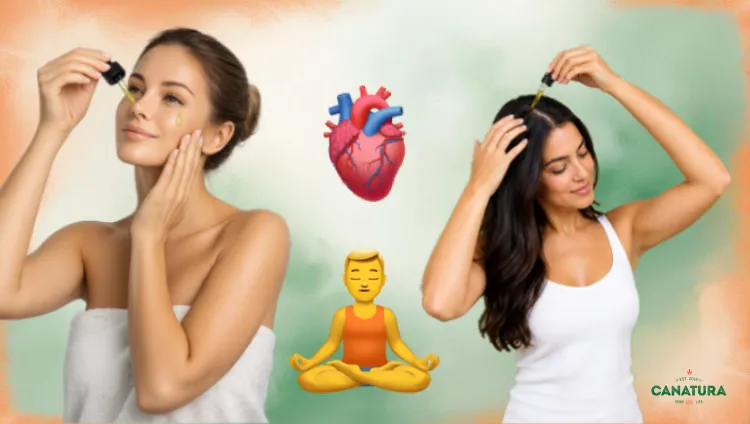
Hemp oil for the hair
Hemp oil is a popular ingredient in hair cosmetics because it helps care not only for the hair itself, but also for the scalp.
When used on the scalp, hemp oil can help reduce the feeling of dryness and tightness and support overall scalp comfort.
Thanks to its content of unsaturated fatty acids, hemp seed oil can soften the hair fiber, smooth the surface of the hair and give the hair a softer, more flexible and shinier appearance. It is especially appreciated by dry, stressed, frizzy or brittle hair that needs nourishment and protection against drying out.
The range of hair care products is truly varied — from shampoos and conditioners, through masks to serums.
Hemp oil as a culinary treasure
Hemp oil also has its place in the kitchen.
Keep in mind that hemp oil should not be heated — so it is not suitable for cooking, baking or frying. At higher temperatures, polyunsaturated fats break down into harmful peroxides.
It is therefore especially suitable for cold cuisine, where its natural nutritional composition stands out best. Ideally, add it only to a finished dish where the temperature does not exceed 50 degrees Celsius.
Thanks to its mild nutty taste, it can pleasantly enhance dips, spreads, porridges, salads, soups and finished dishes.
How to use hemp oil
What is the dosage of hemp oil? There is no precisely established amount, but for regular inclusion in the diet, around 1–2 teaspoons per day is usually recommended, ideally regularly and as part of a varied, balanced diet. If you are just starting with hemp oil, it is advisable to begin with a smaller dose and observe how it suits you.
Choose a high-quality, cold-pressed hemp oil in which all the important substances from the seeds remain preserved. After opening, store it according to the manufacturer’s instructions, usually in a cool and dark place.
Why give hemp oil a place in your daily care routine
Hemp seed oil is a versatile natural product that has its place in everyday body care, cosmetics and the kitchen.
It is valued especially for its balanced ratio of omega-6 and omega-3 fatty acids, which may support skin and heart health. It also contains vitamin E and other beneficial substances. It can be a valuable part of a varied and balanced diet as well as gentle care for the skin and hair.
FAQ
1. Is hemp oil psychoactive?
No. Commercially available hemp seeds or oil made from them do not contain THC, or if they do, only in trace amounts, so they do not have psychoactive effects.
2. Does hemp oil contain CBD or THC?
Oil pressed from hemp seeds usually does not contain significant amounts of CBD or THC. It is made from seeds, not from the flowers and leaves of the plant, where cannabinoids naturally occur in higher amounts. If you are looking for a product with CBD, you need to choose a CBD oil directly.
3. What is the difference between hemp oil and CBD oil?
Hemp oil is pressed from hemp seeds, whereas CBD oil is a hemp extract with cannabidiol dissolved in a carrier oil. These are therefore different products with different compositions and purposes of use.
4. How can you recognize high-quality hemp oil?
High-quality hemp oil is cold-pressed so that all beneficial substances are preserved. It should be stored in a dark glass bottle.
The color of the oil should be naturally green. The color is related to the natural chlorophyll content. The shade may vary depending on seed quality, pressing method and filtration of the oil. Slight differences in color do not necessarily mean lower quality.
The taste is mild and nutty.
It is also important to check the origin of the raw material, expiration date and recommended storage method.
5. Can hemp oil go rancid?
Yes, like other oils with a higher content of unsaturated fatty acids, it is sensitive to light, heat and air. After opening, it is therefore best to keep it well sealed, cool and away from light.
6. Is hemp oil suitable for vegans?
Yes, hemp oil is entirely plant-based, so it is suitable for vegan and vegetarian diets.
7. Can hemp oil cause an allergic reaction?
An allergic reaction is rare, but as with other natural products, it cannot be completely ruled out. It is therefore advisable to try a small amount first and observe how the body reacts.
Sources:
- https://pmc.ncbi.nlm.nih.gov/articles/PMC11719646/
- https://efsa.onlinelibrary.wiley.com/doi/epdf/10.2903/j.efsa.2009.1252
- https://www.mdpi.com/1420-3049/27/14/4471
Author: Elena Moreau
PHOTO: AI
“All information provided on this website, as well as the information made available through this website, is intended for educational purposes only. None of the information presented here is intended as a substitute for medical diagnosis, nor can such information be considered medical advice or recommended treatment. This website does not promote, endorse or advocate the permitted or prohibited use of narcotic or psychotropic substances or the commission of any other illegal activity. For more information, please see our Disclaimer.”
Imported from Canatura. Links have been converted to thcvapestores.com where possible.