
What is HHC? Effects, legality, safety and a comparison of HHC vs. THC
- What is HHC?
- How was HHC created?
- How is HHC produced?
- Is HHC legal?
- Is HHC safe?
- HHC effects: What does the research say?
- HHC vs. THC: What is the difference?
- HHC: Between popularity and a lack of research
- FAQ
HHC is currently one of the most talked-about substances derived from cannabis. It is often compared to THC, which is why there are many questions surrounding its effects, safety and legality. In this article, we will explain what HHC is, what current research says about its effects, and how it differs from THC.
What is HHC?
HHC is one of over a hundred cannabinoids found in cannabis. However, only trace amounts are present in the plant, which is why it is most commonly produced in a laboratory from other substances, such as CBD.
HHC has attracted considerable attention in recent years due to its potential effects, which are often compared to those of THC.
In March 2024, HHC was added to the list of prohibited psychoactive substances in the Czech Republic, alongside another cannabinoid, THCP.

How was HHC created?
HHC was first discovered in 1944 by the American chemist Roger Adams when he added hydrogen molecules to delta-9 THC. This process, known as hydrogenation, converted THC into hexahydrocannabinol (HHC).
The use of hydrogenation is not limited to the production of cannabinoids. A similar process is used, for example, to convert vegetable oil into margarine.
Whilst Adams obtained HHC from THC extracted from cannabis, today’s manufacturers most often use CBD derived from industrial hemp. This contains only minimal amounts of THC and often a higher proportion of CBD, the cultivation of which is legal in most countries.
How is HHC produced?
The production of HHC is a multi-stage process that usually begins with the extraction of CBD from industrial hemp. The CBD is then distilled and isolated so that it can serve as the basis for the chemical reaction that produces HHC.
The production process can be described as taking place in a chemical reactor. Imagine it as a magic box. CBD goes in, and HHC comes out. It takes the form of a dark, golden oil, which the manufacturers further refine before distillation.
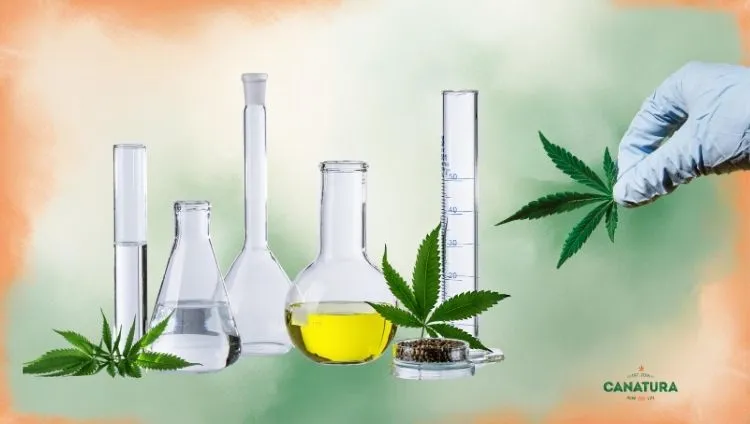
Although HHC occurs naturally in cannabis, the actual process of extracting it takes place mainly in the laboratory – which is one of the reasons why HHC is usually referred to as a synthetic cannabinoid.
Tip: The substances contained in cannabis can be extracted using various methods. We explore this topic in more detail in the article A Guide to the Most Common Methods of Extracting Compounds from Cannabis.
Is HHC legal?
The legal status of HHC has changed significantly in recent years. Whilst HHC was legal in a number of countries when it first came onto the market, its production and sale are now banned or strictly regulated in most European countries.
In the Czech Republic, it was added to the list of prohibited psychoactive substances in March 2024. This is primarily due to concerns regarding the safety of this substance.

Previously, however, various HHC-containing products were widely sold, such as HHC vape pens, HHC cartridges, HHC flowers, HHC liquid, HHC distillate, HHC gummies and other HHC edibles.
Is HHC safe?
Although HHC was very popular amongst users whilst it was legally available, it is important to bear in mind that, despite a few studies, hexahydrocannabinol has not yet been thoroughly researched.
HHC is often compared to THC, not only in terms of its effects but also its potential risks. However, it is not yet possible to say definitively what impact it may have on the human body in the long term.
HHC effects: What does the research say?
As with many other newer cannabinoids, the number of high-quality studies on HHC remains limited. Scientists are therefore not yet able to confirm with certainty the effects of HHC or its long-term impact on human health.
HHC is structurally similar to THC and is therefore often compared to this substance, particularly in terms of its effects. Both cannabinoids interact with the endocannabinoid system and its endocannabinoid receptors, particularly the CB1 receptors, which are involved in the production of psychoactive effects.
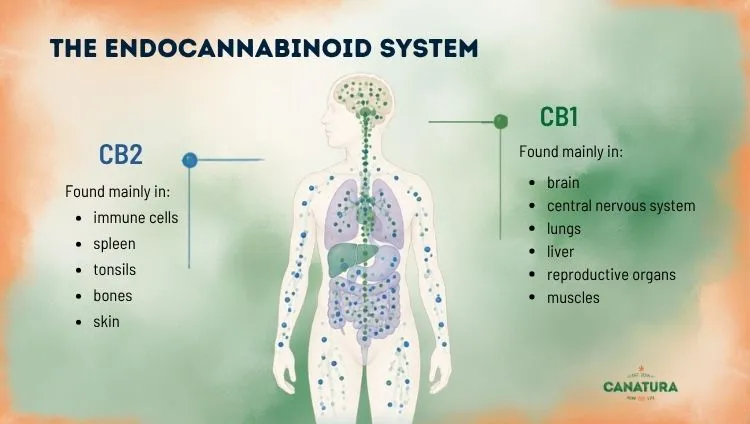
During the production of HHC, a mixture of two isomers of this compound is formed – 9R-HHC and 9S-HHC. These differ in their ability to bind to the endocannabinoid receptors.
According to available research, the 9R-HHC isomer exhibits an affinity for the CB1 receptor comparable to that of delta-9 THC. Furthermore, compared to the 9S-HHC isomer, 9R-HHC binds more effectively to these receptors and exhibits a higher affinity.
Due to its similarity to THC, HHC may cause:
- euphoria
- changes in mood and perception
- a feeling of relaxation
- drowsiness or, conversely, stimulation
However, like other psychoactive cannabinoids, HHC can also cause side effects. The most commonly reported include:
- altered perception
- paranoia
- dizziness and disorientation
- insomnia (sleep problems)
- rapid heart rate
- red eyes and dry mouth
HHC vs. THC: What is the difference?
Are you wondering what the difference is between HHC and THC? Both HHC and THC are psychoactive cannabinoids.
Both substances interact with the endocannabinoid system and can affect mood, perception or overall mental state. Nevertheless, there are a few important differences between them.
Amounts in cannabis
Both substances occur naturally in the cannabis plant. Whilst THC is present in significant quantities in cannabis, HHC is found only in trace amounts – which is why it is usually produced in a laboratory from other cannabinoids, such as CBD.
Structure
HHC is chemically similar to THC. It is produced by the hydrogenation of THC (or other substances), i.e. by adding hydrogen atoms to its molecule, thereby altering its structure and stability.
It is precisely because of this similarity that the effects of HHC are often compared to those of THC.
Legality
THC has long been classified as a psychotropic substance in Europe. An exception is made for industrial hemp varieties, which must not exceed a specified THC content limit (in the EU, this limit is currently 0.2–0.3 per cent, but rules may vary from country to country).
THC controls are based on the UN’s international conventions on narcotic drugs and psychotropic substances, on the basis of which EU Member States adapt their national legislation.
The legal status of HHC has only begun to change significantly in recent years. Whilst HHC was available in a number of countries following its launch, its production and sale are now banned or strictly regulated in most European countries.
The Czech Republic added HHC to its list of prohibited psychoactive substances in March 2024.
Tip: We’ve written more about the differences between HHC and THC in the article Comparing HHC and THC: what they have in common and how they differ.
HHC: between popularity and a lack of research
For a time, the popularity of HHC significantly outpaced the available scientific evidence. Although initial studies and user experiences suggest psychoactive effects, there is a lack of sufficient research to describe the actual impact of this substance on the human body.
Furthermore, the increased interest in HHC and the lack of legislation have opened the door to unscrupulous practices by some manufacturers and sellers. The risks, therefore, are not only related to the substance itself, but also to the quality of the final products.
The legal status of HHC has changed significantly in recent years, and in many countries its production and sale are now banned or at least restricted.
FAQ
1. Does HHC show up on a drug test?
As HHC is chemically similar to THC, a drug test may return a positive result even if the test does not have a specific marker for HHC.
Confirmatory laboratory tests, which use advanced methods, are able to detect HHC and its metabolites and distinguish them from THC. These methods are not standard for basic screening, but are used when a detailed analysis is required.
2. How long does HHC remain in the blood?
The exact length of time for which HHC can be detected in the blood has not yet been sufficiently researched. As with other cannabinoids, it depends on a number of factors, such as dose, frequency of use, body weight, metabolism or method of administration.
However, we have a rough idea of how it works with THC. Read our article How long does THC (and other substances) remain in the blood, and what factors influence this? An overview of measurement methods.
3. Does HHC get you high?
Yes, HHC is a psychoactive cannabinoid similar to THC. It can therefore affect perception, mood and mental state.
4. Is HHC stronger than THC?
Current evidence does not indicate whether HHC is stronger than THC. The resulting effects may also be influenced by various factors, such as the composition of a particular product, the ratio of individual HHC isomers, the dose, or the user’s individual sensitivity.
5. What are the alternatives to HHC?
There is a wide range of cannabinoids available on the market that are safer than HHC. Such options include more extensively researched non-psychoactive cannabinoids, such as CBD, CBG, CBN or H4CBD.
Author: Elena Moreau, updated by: Lucie Schmidtová
Photo: AI, Canva
“All information provided on this website, as well as information provided through this website, is for educational purposes only. None of the information contained herein is intended to be a substitute for a medical diagnosis and should not be considered medical advice or recommended treatment. This website does not endorse, condones or advocate the licit or illicit use of narcotic drugs or psychotropic substances or the commission of any other illegal activity. For more information, please see our Disclaimer .”

SEO & Content Specialist | Health, Phytotherapy & E-E-A-T Strategy
Vladana Milfaitová ist erfahrene Content-Strategin und SEO-Spezialistin mit Schwerpunkt auf Phytotherapie, Gesundheit und pflanzliche Wirkstoffe. Sie verbindet datenbasierte Suchmaschinenoptimierung mit wissenschaftlich fundierter redaktioneller Arbeit, um komplexe Gesundheitsthemen verständlich, vertrauenswürdig und barrierefrei aufzubereiten.
Imported from Canatura. Links have been converted to thcvapestores.com where possible.