
Cannabis and thyroid disorders – How can it help?
Currently, most patients suffering from thyroid disorders are prescribed hormone replacement therapy. This simply replaces the thyroid gland in performing the tasks it is unable to perform. However, it does not act directly on the thyroid gland itself and has many side effects, which can be very unpleasant in some cases. More and more patients are therefore turning to other types of medication. This raises the question of whether cannabis can play a role in combating thyroid disorders.
What is the thyroid gland and what does it do?
The thyroid gland is a gland in the endocrine system located below the larynx. Through the production of two hormones—T3 (triiodothyronine) and T4 (tetraiodothyronine)—it determines how the body’s cells use energy and is therefore important for regulating weight, mood, and controlling physical and mental energy levels, thus controlling metabolism.
However, sometimes the thyroid gland can malfunction. The two most common forms of thyroid dysfunction are hyperthyroidism (overproduction of thyroid hormones) and hypothyroidism (insufficient production of these hormones).
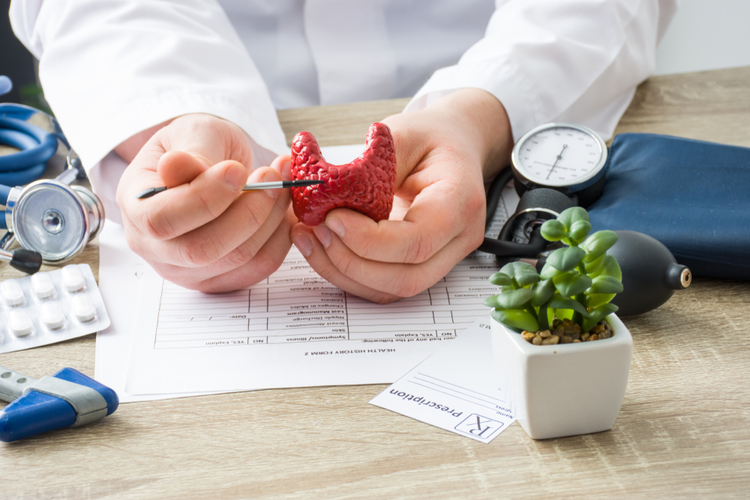
It is estimated that hyperthyroidism affects approximately one in every hundred women and can be caused by excessive consumption of iodine or tetraiodothyronine, inflammation, tumors (of the testicles, ovaries, pituitary gland, or thyroid gland itself), or certain diseases (Graves’ disease, multinodular goiter, or toxic nodular goiter). The most common symptoms of hyperthyroidism include tremors, heat intolerance and sweating, irritability, and increased appetite.
Hypothyroidism is usually caused by Hashimoto’s disease or damage to the thyroid gland from radiation therapy. Hypothyroidism is mostly benign, with symptoms such as fatigue, weight gain, constipation, hair loss, elevated cholesterol levels, and/or increased sensitivity to cold (chilliness).
Can cannabis help with thyroid problems?
Scientists are concerned about the possible effects of cannabis on thyroid function because several studies have shown that there is a close relationship between thyroid function and the endocannabinoid system. In the 1970s and 1980s, scientists found that cannabis reduced thyroid hormone levels in rats.
A recent study published in the European Journal of Endocrinology showed that CB1 receptors modulated the release of the thyroid hormones T3 and T4 in the same animals. The authors therefore suggested that cannabinoids may play a role in regulating thyroid function in rodents.
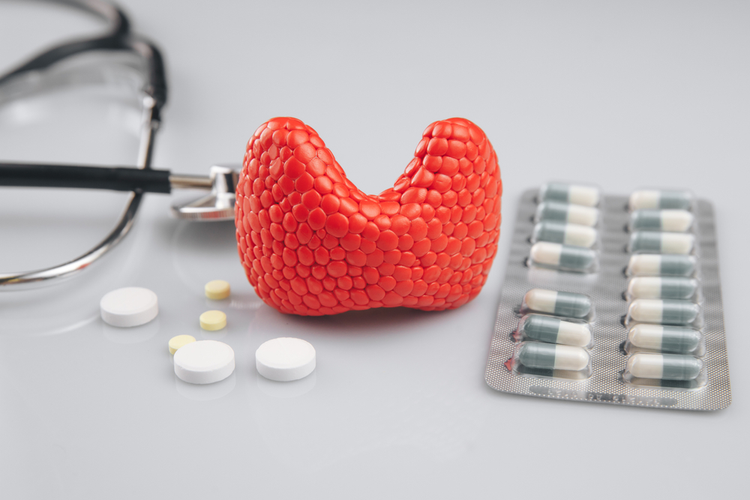
However, our knowledge of the relationship between cannabinoids, the endocannabinoid system, and the thyroid gland extends beyond rodents. A 2009 study showed that in humans, CB1 endocannabinoid system receptors directly interact with neurons responsible for controlling thyroid activity.
Another study, published in 2015, confirmed these findings and showed that cannabinoid receptors may act on thyroid damage. Given this link between the endocannabinoid system and the thyroid gland, it seems reasonable to investigate the possible relationship between cannabis use and thyroid disorders. Only a few studies have addressed this issue. Fortunately, one of them is quite remarkable in its scope.
For several decades, the National Center for Health Statistics in the United States has been producing annual reports assessing the health status of Americans.
In 2017, a team of researchers studied reports compiled between 2007 and 2012 to assess the impact of cannabis on thyroid function. Data from a total of 5,280 people aged 18 to 69 were analyzed. The result was that those who had used cannabis during the month prior to the analysis had lower levels of thyrotropin than non-users or those who had last used cannabis more than a month ago.
Thyrotropin is a hormone secreted by the pituitary gland that regulates the release of thyroid hormones. In other words, the higher the thyrotropin level, the more active the thyroid gland. This study therefore suggests that cannabis use leads to temporary hyperthyroidism.

This hypothesis is confirmed by another study conducted in 2008, in which the authors noted insufficient thyroid stimulation in individuals who use cannabis long-term. However, it is not that simple, because another study published in 2013 in the journal Pharmacopsychiatry looked at the thyroid function of regular cannabis users and concluded that its consumption has no effect on them.
While it is unfortunate that there are few studies on the relationship between cannabis use and thyroid disorders, it is encouraging that scientists’ interest in this issue is growing. The discrepancies between individual studies are caused both by the fact that the sample groups are often too small to be truly significant and by the complexity of cannabis itself. With such a wide range of plant varieties with such diverse properties, the validity of conclusions about the effect of cannabis on the thyroid gland is very limited.
In other words, research in this area simply divides people into two groups: those who use cannabis and those who do not. However, consuming strains with a high CBD content does not have the same effects as using cannabis with a high THC content.
Until researchers are able to divide the users under study according to the cannabinoid content and strain of cannabis consumed, the conclusions of the studies will remain speculative. Therefore, if you suffer from thyroid dysfunction and are tempted to try cannabis treatment, avoid self-medication and consult a specialist.
Author: Elena Moreau
Photo: Shutterstock
“All information provided on this website, as well as information provided through this website, is for educational purposes only. None of the information contained herein is intended to be a substitute for a medical diagnosis and should not be considered medical advice or recommended treatment. This website does not endorse, condones or advocate the licit or illicit use of narcotic drugs or psychotropic substances or the commission of any other illegal activity. For more information, please see our Disclaimer .”
Imported from Canatura. Links have been converted to thcvapestores.com where possible.