
What is CBDV and what are its effects?
- What is CBDV?
- What are the benefits of CBDV?
- Does CBDV have any side effects?
- What is the difference between CBDV and CBD?
- How does CBDV work?
- How CBDV works: TRPV channels
- Where in the body are these receptors found?
- What do TRPV1 receptors do?
- CBDV and TRPV
- How CBDV works: 2-AG
- Which varieties are rich in CBDV?
- CBDV: worth paying attention to?
- How CBDV works: TRPV channels
- Where in the body are these receptors found?
- What do TRPV1 receptors do?
- CBDV and TRPV
- How CBDV works: 2-AG
What is CBDV?
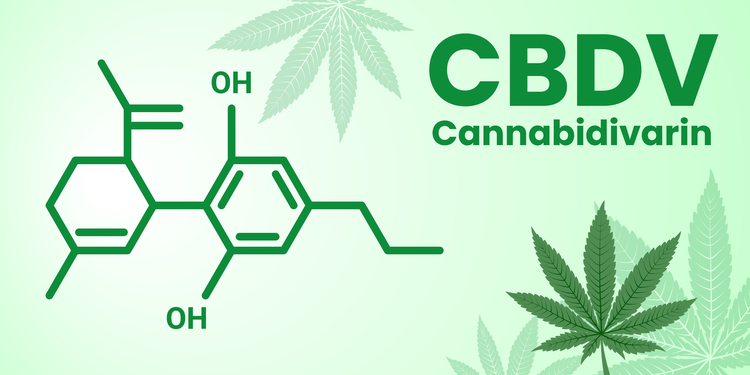
Cannabidivarin (CBDV) is one of more than 120 identified cannabinoids found in cannabis. Although it was discovered by Dr Vollner and his team back in 1969, research into CBDV has only recently begun due to the criminalisation of cannabis around the world. CBDV is similar to cannabidiol (CBD) in many ways. Both have 7 double bond isomers and 30 stereoisomers. CBDV is found in the highest concentrations in cannabis plants with high CBD and low THC content. As a result, until the recent surge in CBD content in cultivated varieties, cannabidivarin was almost non-existent in most cannabis varieties. Furthermore, cannabis is the only plant in which CBDV has ever been identified, making this compound difficult to find. The naturally occurring varieties with the highest concentrations of CBDV are genetically pure native Indicas from Africa and Asia.
What are the benefits of CBDV?
Research into the possible effects of CBDV on the body is still in its infancy and ongoing. However, we already know that CBDV, like CBD, is non-psychotropic, meaning it has no psychoactive effects. It is therefore suitable for use during the day, at work or at social events, and in other situations where being “under the influence” is not the best idea. Among those interested in cannabis products are people who dislike the effects of THC but still want to experience the health benefits of cannabis. For these cases, products with a high CBDV content and low THC content offer a solution.
Does CBDV have any side effects?
No side effects of CBDV are known at this time. However, there is so little research dedicated exclusively to the effects and side effects of CBDV that we have no idea whether any side effects exist at all. Therefore, it is better to approach this issue with the assumption that they may exist. Cannabidivarin is very closely related to CBD. CBDV is a precursor to CBD, so it seems likely that its effects and side effects will be similar.
What is the difference between CBDV and CBD?
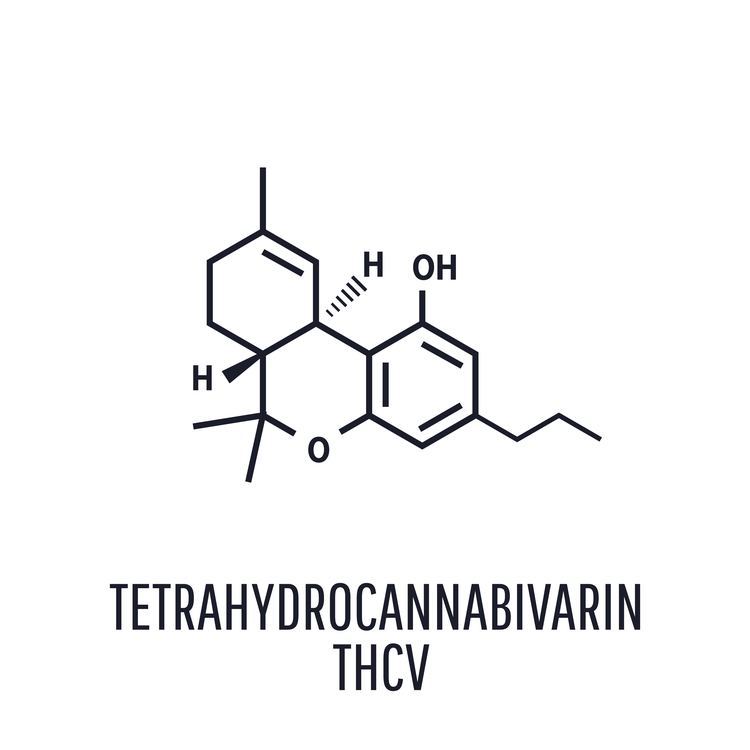
The main (structural) difference between CBD and CBDV is that the side chain of CBDV has two fewer methyl (CH₂) groups. What are the consequences of this? We are not entirely sure yet, although it seems to significantly affect the ways in which it interacts with the body compared to CBD.
How does CBDV work?
Tetrahydrocannabinol (THC) binds primarily to CB1 in the brain, which is what causes its psychoactive effects. CBD, on the other hand, appears to inhibit these receptors, which may be why it likely counteracts the effects of THC. CBD also interacts with the body’s endocannabinoid system by mimicking the body’s own endocannabinoids. It can thus influence homeostasis, immune function, cognition and a number of other bodily functions. However, CBDV appears to work in a slightly different way and offers even more possibilities for the use of cannabis.
How CBDV works: TRPV channels
CBDV appears to affect TRPV channels. These are both ion channels and receptors. TRPV channels have an affinity not only for CBD, but also for many other naturally occurring and highly popular plant chemicals. These receptors are known as vanilloid or capsaicin receptors. The reason for these names is that, in the first case, certain health-promoting compounds found in vanilla readily bind to TRPV receptors, and in the second case, because the anti-inflammatory compound capsaicin (found in chilli peppers) also binds to them.
Where in the body are these receptors found?
Most TRPV1 receptors are found in the peripheral nervous system. These are all your nerves that are not located in the brain, brain stem or spine. They are found in such high concentrations throughout the body because they are essential for the perception of discomfort or pain. Therefore, they must be present in all limbs and tissues. They are also found in smaller concentrations in the brain, but their exact function there remains a mystery. It is believed that their activity is somehow related to neurological disorders, and determining the role they may (or may not) play could be the key to unlocking some secrets that will change people’s lives in the future.
What do TRPV1 receptors do?
TRPV1 receptors are associated with unpleasant sensations. When activated, they cause discomfort. However, like all receptors, if they are activated for a long period of time, they become desensitised, thereby reducing the experience of discomfort. Their ability to receive necessary signals is reduced. While substances that simply deactivate these receptors are considered dangerous because they can suppress our ability to feel, substances that only desensitise these receptors could have the effect of greatly reducing pain without completely “numbing” the user.
CBDV and TRPV
Both CBD and CBDV have demonstrated affinity for TRP channels. Their dose-dependent activation subsequently desensitises the TRPA1, TRPV1 and TRPV2 channels. Desensitisation of these ion channels causes a reduction in neuronal hyperexcitability.

How CBDV works: 2-AG
It appears that CBDV may be able to inhibit the activity of diacylglycerol (DAG). This is the primary enzyme involved in the synthesis of the endocannabinoid 2-AG.
What is 2-AG
2-AG (2-arachidonoylglycerol) is a naturally occurring endocannabinoid. It is found in the breast milk of cattle and humans. It acts as a CB1 receptor agonist and CB2 receptor ligand. Essentially, this means that it activates them.
CBDV and 2-AG
By inhibiting the production of 2-AG, CBDV can reduce the stimulation of CB1 and CB2 receptors. It can thus affect the endocannabinoid system and, consequently, physiological functions such as emotions, cognition and energy balance.
Which varieties are rich in CBDV?
As mentioned earlier, CBDV occurs naturally in the highest concentrations in native Indica varieties, particularly those from north-western India and Pakistan. However, companies operating in the market eventually get hold of them, and varieties rich in CBDV can now be purchased commercially. They are specially bred to achieve the highest possible concentrations.
CBDV: is it worth paying attention to?
Probably yes. As you might expect, research into CBDV is in its infancy, so we can say very little about it. However, we can safely assume that it probably does not have any unusual adverse effects. So why not try it and see if it suits you? Especially if you know that CBD is beneficial, you may also find CBDV useful.
Author: Elena Moreau
Photo: Shutterstock
“All information provided on this website, as well as information provided through this website, is for educational purposes only. None of the information contained herein is intended to be a substitute for a medical diagnosis and should not be considered medical advice or recommended treatment. This website does not endorse, condones or advocate the licit or illicit use of narcotic drugs or psychotropic substances or the commission of any other illegal activity. For more information, please see our Disclaimer .”
Imported from Canatura. Links have been converted to thcvapestores.com where possible.