
A guide to the most common methods of extracting compounds from cannabis
- Why is cannabis extraction performed?
- What substances are extracted from cannabis?
- The most commonly used cannabis extraction methods
- 1. Solvent-based cannabis extraction methods
- 2. Solventless cannabis extraction methods
- Other less traditional extraction methods
- Comparison table of cannabis extraction methods
- Conclusion: Extraction is not the end
- FAQ
- a. Ethanol extraction
- b. CO₂ extraction (carbon dioxide extraction)
- c. Hydrocarbon extraction
- d. Vegetable oil extraction
- a. Mechanical separation (ice water separation)
- b. Cold pressing
- c. Resin extraction by pressing
- d. Kief made using a sieve
- a. Hydrodynamic cannabis extraction
- b. Soxhlet extraction
- c. Dynamic maceration
- d. Microwave extraction
- e. Pressurized hot water extraction in a supercritical environment
Why is cannabis extraction performed?
Extraction makes it possible to separate valuable compounds and other naturally occurring substances from the cannabis plant. The raw materials obtained are then used to produce various cannabis products – for example oils, capsules, concentrates, cosmetics or foods.
Extraction can influence the composition of the final product, its purity, consistency, and aromatic profile.
In this article, we will introduce you to the most commonly used cannabis extraction methods. We will also explain which methods are most suitable for different types of products.
Some of the following extraction methods are relatively new, while others are thousands of years old and have changed very little throughout history.
What substances are extracted from cannabis?
The following are obtained from cannabis during extraction:
- Cannabinoids – these are among the best-known compounds found in cannabis. Depending on the variety and type of the final product, these may include, for example, CBD, THC, CBG, CBN and others.
- Terpenes – aromatic substances that determine the smell and flavor profile of cannabis.
- Flavonoids – organic chemical compounds that can provide color and protect cells from free radicals.
- Other components naturally occurring in cannabis.
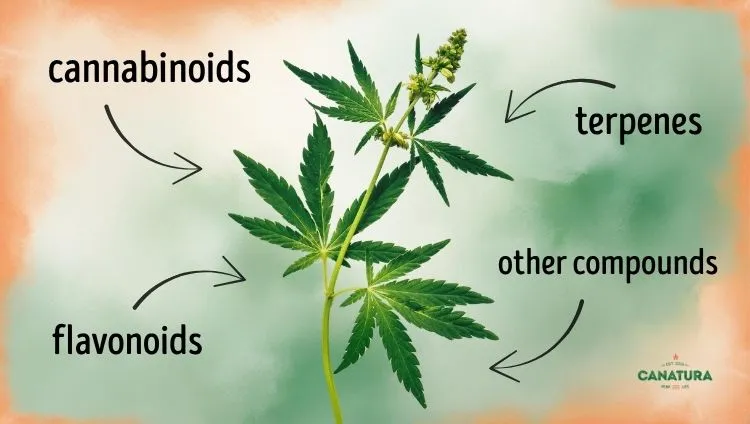
Each of these compounds affects the final product – from the content of active substances to aroma and color. The specific composition depends on the cannabis variety, the parts of the plant used, and the extraction method chosen.
The most commonly used cannabis extraction methods
The choice of extraction method has a major impact not only on the quality of the final extract, but also on the efficiency of the entire processing operation.
It is estimated that 30 to 60% of the cannabinoids contained in the cannabis plant can be lost during extraction and subsequent purification. This is particularly important for the historically most significant segments of the cannabis market – CBD products.
The chosen extraction method should therefore be not only safe, but also efficient (both financially and in terms of time), while also enabling the highest possible yield of the given substance with the lowest possible losses.
Solventless and solvent-based extraction
Extraction methods can be divided into two basic groups: methods using solvents and those without the use of solvents.
The difference between them lies in whether a chemical solvent or a physical process, such as heat or pressure, is used to separate substances from cannabis.
1. Solvent-based cannabis extraction methods
The use of solvents to extract cannabinoid derivatives has been popular in the cannabis industry for many years, for one good reason – solvents are effective, easy to adjust in composition, and relatively safe to use when proper procedures are followed.
Various types of solvents are used to extract cannabinoids, including ethanol, butane, propane, hexane, carbon dioxide (CO₂), diethyl ether, petroleum ether, methyl tert-butyl ether, as well as olive oil.
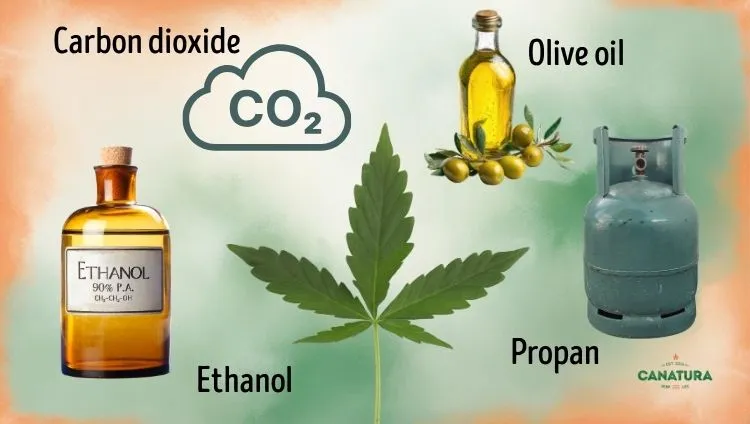
Solvents are usually divided into polar and non-polar according to which types of substances they are best able to dissolve. Polar solvents are more suitable for polar compounds, while non-polar solvents work better with lipophilic substances:
- polar solvents – have an unevenly distributed charge in their molecules and therefore dissolve polar or ionic substances well. These include water, ethanol, methanol, isopropanol, and acetone. They dissolve polar compounds well, such as chlorophyll, sugars, amino acids, and others.
- non-polar solvents – have an evenly distributed charge in their molecules and therefore dissolve non-polar, i.e. lipophilic, substances better. These include butane, propane, hexane, and petroleum ether. They work well with lipophilic, non-polar compounds, such as most cannabinoids, as well as terpenes, lipids, fats, or waxes.
The type of solvent plays an important role in cannabis extraction because it affects which compounds are obtained from the plant material and what the final extract profile will be.
a. Ethanol extraction
Ethanol or ethyl alcohol is a colorless, volatile, and flammable liquid that is also found in alcoholic beverages, but is also used in many industrial sectors (for example, it is added to motor fuels).
In the cannabis industry, it is one of the popular solvents because it efficiently enables the extraction of cannabinoids such as CBD, CBG, CBN or THC.
Ethanol can be both polar and non-polar, making it suitable for dissolving most mildly non-polar as well as mildly polar molecules. This makes it incredibly versatile, and therefore ideal for extracting a wide range of cannabinoids and other compounds, such as terpenes. The polarity of ethanol can be slightly adjusted simply by changing its temperature.
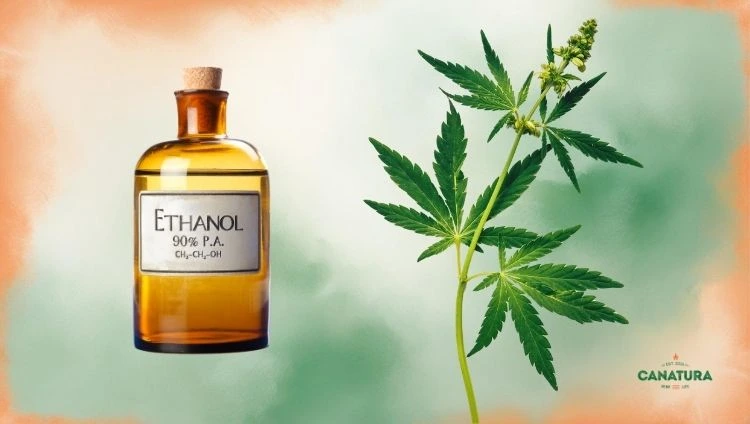
How does ethanol extraction work?
The ethanol extraction process begins by soaking plant material (biomass) in chilled ethanol or ethanol at room temperature. The purpose of this step is to separate cannabinoids and other compounds, including some of the terpenes.
The resulting solution is then evaporated to remove solvent residues using heat and vacuum, producing a crude extract. This can then be further distilled and refined. The result is a purified CBD, THC or CBG distillate.
The ethanol extraction process can then take place in two ways:
- Cold – chilled ethanol is used. The lower temperature can help limit the extraction of some unwanted substances, such as chlorophyll or some of the waxes, thereby making subsequent purification of the extract easier.
- At higher temperature – the biomass is processed with ethanol at a higher temperature, often room temperature. This approach may be simpler from a process point of view, but it usually also leads to a broader extraction of other plant components, which then need to be addressed more in subsequent purification steps.
The colder the ethanol, the higher its affinity (ability to combine with another substance or particle) for fat-soluble compounds, and therefore its extraction of cannabinoids and terpenes is more effective.
If extraction is performed using ethanol at room temperature or higher, it can “pull” from the plant not only cannabinoids, but also a broader spectrum of terpenes and other water-soluble compounds.
Advantages of ethanol extraction
Ethanol is great for extracting a wide spectrum of cannabis compounds and is therefore most often used in the production of full-spectrum extracts. When the process is correctly set up, no unwanted solvent residues remain in the final product.
Compared to some other extraction methods, ethanol extraction is generally perceived as safer and technologically less demanding. Ethanol is less explosive and toxic than hydrocarbon extraction systems. Another advantage is considered to be the lower acquisition cost of the equipment compared to CO₂ extraction.
Ethanol extraction is also associated with higher throughput, meaning the ability to process a larger volume of biomass, or plant material, in a given time or batch. The relative simplicity of the process is also beneficial (it does not require changing the phase of the solvent).
Disadvantages of ethanol extraction
As flexible as ethanol is, it has its limits. If the goal is to isolate only specific cannabinoids – for example, CBD isolate – ethanol may not be the ideal solvent, because it usually cannot separate one specific substance, but only a broader spectrum of compounds.
b. CO₂ extraction (carbon dioxide extraction)
This method uses carbon dioxide (CO₂) under high pressure to extract compounds from cannabis. Under certain temperature and pressure conditions, CO₂ behaves like a solvent and makes it possible to separate the desired substances from cannabis.
There are three types of CO₂ extraction:
- Supercritical – liquid CO₂ is used and the temperature and pressure are increased to the point where CO₂ reaches the so-called supercritical point, meaning it has the properties of both a liquid and a gas at the same time.
- Subcritical – CO₂ is used at low temperature and low pressure.
- Mid-critical – medium temperature and pressure values are used and some properties of both approaches are combined.
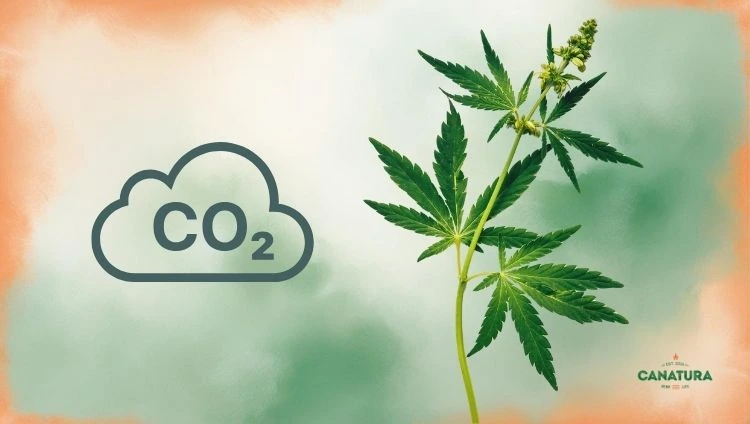
How does carbon dioxide extraction work?
Supercritical extraction is used most often, in which CO₂ is brought into a so-called supercritical state under precisely controlled conditions – that is, into a phase where it exhibits the properties of both a liquid and a gas at the same time. With a correctly configured process, a very pure final extract can be obtained.
In the supercritical state, CO₂ behaves like a non-polar solvent, which should be capable of efficiently separating a broad spectrum of non-polar substances, including cannabinoids.
Compared to other substances, supercritical CO₂ also has the advantage that it requires a relatively lower temperature and pressure to reach this state, which makes it a practical choice for extraction.
CO₂ extraction is carried out using a “closed-loop extractor”. All extraction equipment essentially has three chambers:
- The first chamber contains pressurized liquid CO₂ – the chilled CO₂ is pumped from the first chamber into the second.
- The second chamber contains the cannabis biomass – this is where the supercritical transformation takes place; the supercritical CO₂ passes through the cannabis biomass and extracts cannabinoids and terpenes.
- The third chamber separates the final extracted product – the resulting solution is pumped into the third chamber, where CO₂ changes state back into gas, while the precious cannabinoid extract remains at the bottom and the CO₂ is ready for reuse.
Advantages of CO₂ extraction
The main advantages of CO₂ extraction are primarily its cleanliness and gentleness. Carbon dioxide is often described as a “green” solvent because it does not leave unpleasant chemical residues, resulting in a cleaner and healthier end product.
Other benefits include the fact that it is non-flammable, non-toxic, chemically stable, easy to remove after extraction, and relatively affordable. In addition, the critical temperature of CO₂ is close to room temperature, which makes it an ideal solvent for materials more sensitive to heat.
CO₂ extraction is often used in the production of full-spectrum cannabis extracts because it can obtain a broad spectrum of cannabinoid compounds. At the same time, it is valued for its ability to work gently with terpenes, which determine the typical smell and taste of individual strains.
Disadvantages of CO₂ extraction
Supercritical CO₂ extraction requires specialized high-pressure equipment, which means higher acquisition costs. The process is also more demanding than some other extraction methods.
c. Hydrocarbon extraction
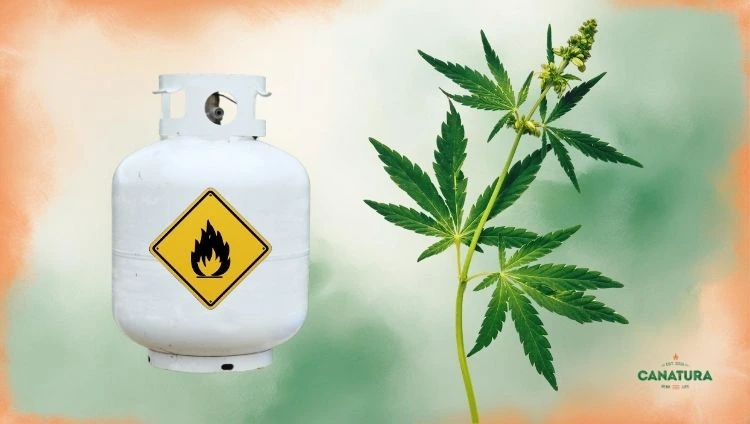
In hydrocarbon extraction, butane is usually used as the primary solvent, although other hydrocarbons can sometimes be used depending on the desired final product (e.g. propane and hexane).
Butane extraction is very popular due to its great versatility, efficiency, and ability to achieve cannabinoid concentrations of up to 90%. It is also valued for its use in producing various types of concentrates (such as shatter).
Butane has a low boiling point of -1 °C and is used during extraction as a liquefied gas. This low temperature preserves the integrity of heat-sensitive terpenes and other delicate derivatives. Propane, on the other hand, has an even lower boiling point of -42 °C.
A mixture of both hydrocarbons is often used. The reason is an effort to take advantage of the properties of both solvents — for example, to efficiently extract cannabinoids as well as more delicate aromatic components. At the same time, such a combination is also said to contribute to more efficient removal of residual solvent from the final extract.
How does hydrocarbon extraction work?
During hydrocarbon extraction, the cannabis material is placed inside a closed extraction vessel. Pressurized gas then passes through this vessel, “pulling” terpenes and cannabinoids from the plant together with plant waxes and lipids.
Because the flowing gas can also carry along tiny pieces of plant material, the biomass inside the vessel is usually retained by a screen or filter. The cannabinoid concentrate is then ready for further refinement (depending on the desired final product):
- Dewaxing can be performed using a dewaxing element, which is usually part of most closed-loop hydrocarbon extraction equipment.
- Centrifugation can separate delicate plant terpenes if needed.
- Winterization using chilled ethanol then separates lipids and waxes from the cannabinoid solution.
The concentrated cannabinoid solution then ends up in a collection vessel, where the butane (or other hydrocarbon solvent) should be purged using heat and vacuum. The separated butane solvent is then collected for reuse in the next batch.
To minimize the risk of unwanted toxic hydrocarbons or heavy metals in the final product, the purity of the solvents used is important.
Advantages of hydrocarbon extraction
The advantages of hydrocarbon extraction mainly include the fact that butane does not dissolve polar compounds, such as chlorophyll. Compared to some other methods, butane is therefore an ideal solvent for the selective extraction of neutral cannabinoids and terpenes.
Disadvantages of hydrocarbon extraction
Propane and butane are highly flammable gases – due to the risk of explosion, safety equipment is required during extraction. Butane also has a greater tendency to extract waxes, which must be removed in later purification steps.
The nature of these solvents is also a risk – as volatile and non-polar substances, they may show higher toxicity when inhaled than more polar solvents, partly because their high lipophilicity enables them to be rapidly absorbed by the respiratory system.
Another disadvantage is the more difficult scaling of production. This type of extraction usually takes place in batches, so increasing production capacity generally means the need for additional equipment.
d. Vegetable oil extraction
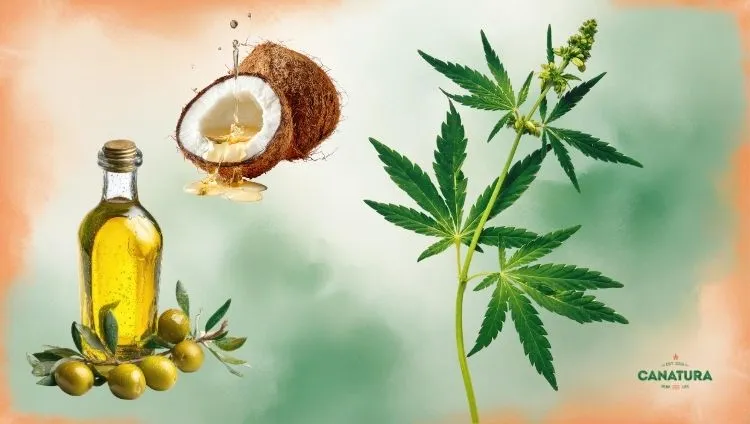
To extract fat-soluble cannabinoids, extra virgin olive oil, coconut oil, butter, and other edible oils can be used. The basis is heating decarboxylated cannabis flower directly in edible oil.
In a 2013 study, researchers found that extraction with olive oil yielded a greater amount of terpenes than the other methods they used, especially with longer heating times (120 min). The authors explain this by the fact that olive oil has a non-polar and at the same time non-volatile nature, which leads to good terpene solubility while also limiting their losses through evaporation.
How does vegetable oil extraction work?
Vegetable oil extraction begins by heating the plant material, during which the acidic forms of cannabinoids are converted into their neutral forms (e.g. CBDA into CBD and THCA into THC).
This process is called decarboxylation, and a temperature of approximately 140 °C for 30 minutes or 120 °C for 60 minutes is recommended – but this depends on the plant material, the strain, and also the quality of the oven.
After this step is completed, the plant material is added to the oil and heated to 100 °C for 1 to 2 hours. This allows the decarboxylated cannabinoids, which love fats, to bind to the fat molecules in the oil, and extraction thus takes place.
The plant material is then filtered out and only the infused edible oil remains. The resulting solution is a mixture of vegetable oil, terpenes, waxes and cannabinoids, etc. Unlike other forms of solvent-based extraction, the cannabinoid solution is not separated from the solvent.
Edible oil infusions are significantly “unrefined” and are suitable for those who do not mind their cannabis oil tasting like cannabis.
Advantages of vegetable oil extraction
The main advantages of vegetable oil extraction are primarily its relative simplicity and lower technological complexity.
Compared to some other methods, it usually does not require specialized equipment and is therefore considered a more accessible extraction option.
Disadvantages of vegetable oil extraction
Although this extraction method is popular among small home producers, the resulting oil has lower potency and shelf life, and is also not as strong as products obtained by more industrial extraction methods.
For this reason, vegetable oil extraction is generally not considered an ideal solution for larger-scale commercial production. Even so, some producers see it as a more natural alternative to chemical extraction types.
A further limitation is the nature of vegetable oils themselves, which are more prone to spoilage and oxidation. The resulting product therefore requires appropriate storage, ideally in the cold, in the dark, and at a stable temperature.
2. Solventless cannabis extraction methods
Methods that use physical processes such as pressure, heat, or ice water instead of solvents are also used to obtain substances from cannabis.
These approaches are often perceived as a more natural alternative, and some producers therefore consider them “cleaner” and safer for consumption. Whether this is true or not remains the subject of endless debate in the industry.
a. Mechanical separation (ice water separation)
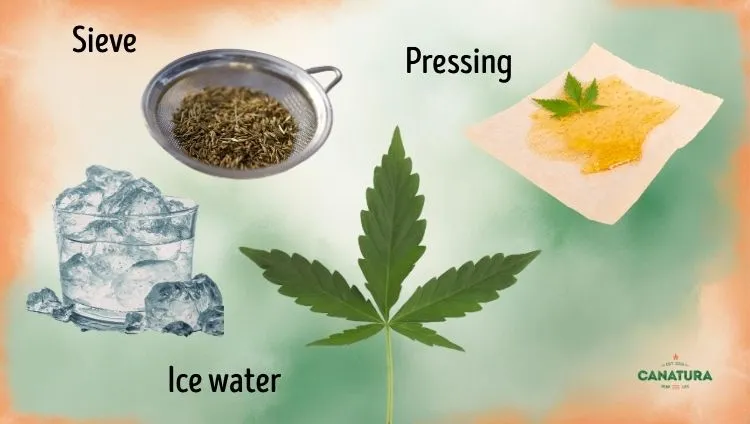
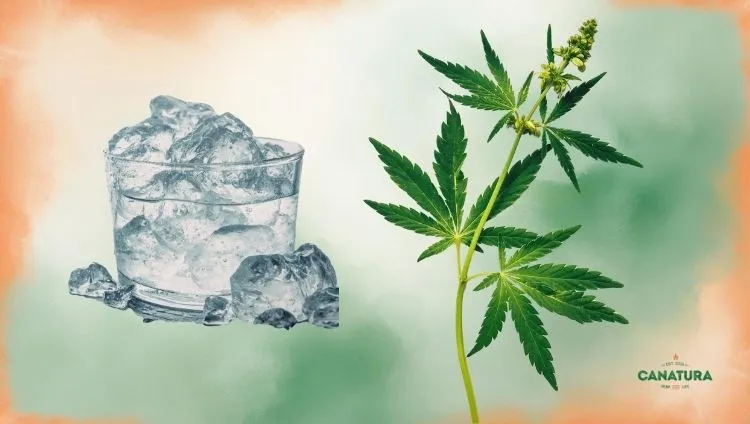
This method mechanically separates cannabinoid-rich trichomes from plant material by submerging it in ice water and stirring. The trichomes are then filtered through screens, allowed to settle, and finally collected and dried. The result is a product known as water hash or bubble hash.
This method is often called “water extraction”, but technically it is not really “extraction” in the true sense of the word. That is because cannabinoids are not actually chemically extracted from the plant material, but removed by physical force.
A disadvantage of this method is poor scalability for larger production and also less control over the final efficiency of the process.
b. Cold pressing
Similar to cold-pressed olive oil (or any other plant extract), the plant material is cooled and crushed using high pressure to squeeze out hemp oil. This can be used on its own or combined with other ingredients.
Although cold pressing at lower temperatures preserves desirable terpenes, flavonoids, and cannabinoids, the yield of this extraction method is relatively low.
Cold-pressed hemp oil often appears in wellness products such as tinctures and topical products.
c. Resin extraction by pressing
resin extraction by pressing is similar to the cold-press extraction method, but adds heat and pressure to squeeze hemp oil from the plant material. It is this combination of these two factors that makes it possible to release cannabinoids, terpenes, and other desirable components contained in trichomes from the cannabis material.
Resin and live resin are especially popular among consumers looking for solventless concentrates and who appreciate their clean character and distinctive aromatic profile.
Professional resin extractors use a small hydraulic press with a heat controller to produce larger quantities.
Thanks to its relative safety, lower technological complexity, and low costs, this is a popular solventless extraction method when used on a smaller scale.
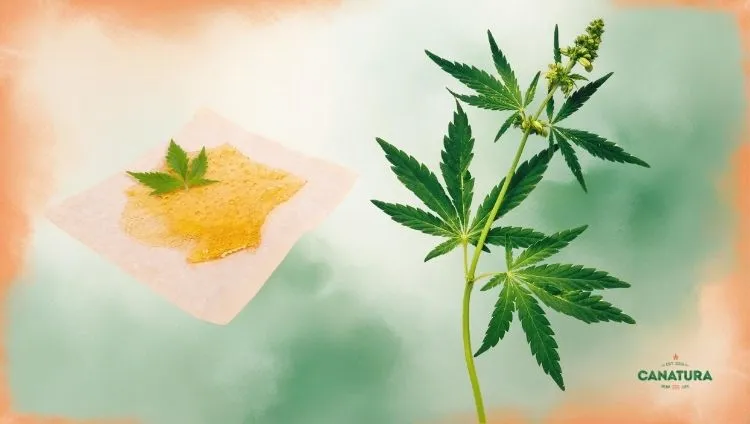
d. Kief made using a sieve
Kif (kief) is among the oldest known cannabis extracts and its history goes back thousands of years. Sieves used for manual extraction were found in archaeological excavations as early as around 3,000 BC.
The principle of obtaining it has not changed much over that time – even today it is produced by mechanically separating tiny resinous particles from plant material using a sieve.
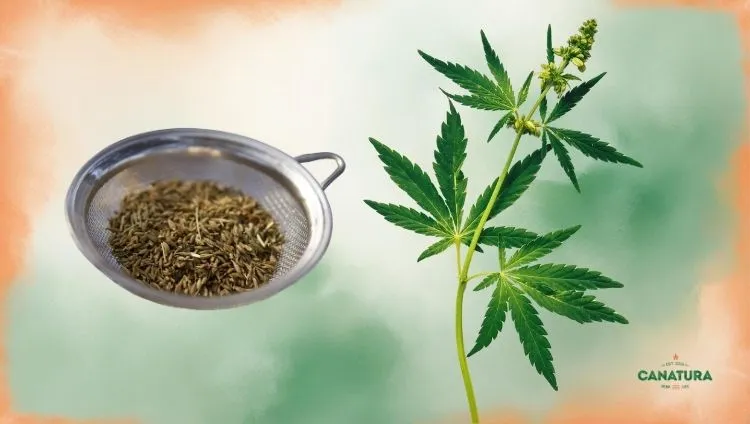
As the most natural extract from cannabis flower obtained without the use of solvents, it is popular because of its purity, strength, and versatility of consumption.
After the plant material has been dried and cured, a sieve or grinder is used to make kief. The resulting product can then be pressed into hash using a press if needed.
Other less traditional extraction methods
In addition to the most commonly used procedures, there are also other less traditional extraction methods, which are generally considered alternative approaches to processing substances from cannabis:
a. Hydrodynamic cannabis extraction
Hydrodynamic extraction is one of the newer and at the same time unconventional approaches in the cannabis industry. It is a method suitable for producing full-spectrum extracts and extracts with high bioavailability.
The principle of this method lies in freezing fresh plant material and then transforming it into a nanoemulsion using ultrasound. Using hydrodynamic force, the cell walls of the plant material are then disrupted and its contents released. This step is followed by solvent extraction, centrifugal separation, and subsequent low-temperature drying.
An advantage of the initial freezing of the plant mass is the preservation of volatile substances and acidic forms of cannabinoids during the later processing phases. However, further research is needed to fully understand the effectiveness of this method.
b. Soxhlet extraction
Soxhlet extraction was previously used primarily for lipid extraction, but it gradually began to be applied to the extraction of bioactive substances from plant material as well.
The principle consists of the repeated action of heated solvent, which gradually releases the desired compounds from the sample.
This method is considered advantageous for its relatively simple principle and the ability to achieve a good yield.
c. Dynamic maceration
Dynamic maceration is another conventional extraction method, now primarily used to extract solid lipids.
In this process, the plant material is soaked in an organic solvent for a certain period of time, at a certain temperature and with subsequent stirring. The specific solvent is selected according to the polarity of the target substance.
The main advantages of this method are low costs and use in obtaining essential oils and bioactive compounds.
d. Microwave extraction
Microwave extraction can be described as a mechanical pretreatment at the molecular level, in which microwave radiation penetrates plant tissue, where it generates heat and disrupts the biomass structure. This facilitates the release of desired substances and their subsequent separation.
Compared with some traditional methods, this process is faster and appears to be an effective alternative to more common extraction techniques. Another advantage is that the biomass does not need to be dried.
e. Pressurized hot water extraction in a supercritical environment
New “green” approaches to extracting substances from cannabis continue to emerge, including pressurized hot water extraction in a supercritical environment. In this state, water can act as a solvent and have solubility properties similar to ethanol and methanol.
In a 2020 study, researchers used this technique to extract compounds of CBD, CBN, CBG and THC from hemp seeds. Compared with traditional methods, they stated that this approach may be faster and more selective for extracting less psychoactive substances.
However, the disadvantages of this method may include the high costs associated with bringing water into the supercritical state, as well as safety risks.
Comparison table of cannabis extraction methods
In the following table, we have compared the most commonly used extraction methods for you.
You will find in it the main advantages and disadvantages as well as an overview of which types of cannabis products the individual methods are most suitable for.
| Extraction method | Main advantage | Disadvantage | Suitable for production of |
|---|---|---|---|
| Ethanol extraction | efficiency, safety and scalability | usually cannot separate one specific substance, only a broader spectrum of compounds | almost all cannabinoid derivatives and isolates on a larger scale |
| CO₂ extraction | CO₂ is non-flammable, non-toxic, chemically stable, easy to remove and generally affordable | more demanding method requiring special equipment, which means higher acquisition costs | most often full-spectrum cannabis distillates, but overall for all cannabis products |
| Hydrocarbon extraction | ability to achieve up to 90% concentration of plant cannabinoids | propane and butane are highly flammable, safety equipment is required due to the risk of explosion
more difficult scaling of production |
most often cannabinoid derivatives intended for dabbing (budder, BHO, crumble, shatter, resin and wax), but also ointments, edibles, cartridges, tinctures or capsules |
| Olive oil extraction | good terpene solubility
affordable non-flammable solvent non-toxic for topical application and oral consumption |
extracts cannot be concentrated by evaporation
toxic when inhaled into the lungs |
significantly “unrefined” cannabis oils that will taste like cannabis |
| Ice water separation | gentle separation of trichomes | poor scalability of production
less control over process efficiency |
bubble hash |
| Cold pressing | gentle processing and preservation of terpenes, flavonoids and cannabinoids | relatively low yield | wellness products – tinctures and topical preparations |
| resin extraction by pressing | production of a product with a clean character and a distinctive aromatic profile | lower technological complexity
relatively low costs |
resin concentrates |
| Kief made using a sieve | purity and strength of the product made | poorer production scalability
lower control over consistency and yield |
kief (one of the oldest known cannabis extracts) |
Conclusion: Extraction is not the end
The extraction methods listed above are generally only the first stage of cannabis processing, which follows cultivation, harvesting, drying, curing, etc..
After this stage, the crude product, often in the form of crude oil, may continue into further processing steps. In some cases, however, it may also serve as a final product ready for sale (e.g. full-spectrum extract or live resin).
FAQ
1. Which extraction method should I choose?
There is no universally “best” extraction method for cannabis substances. Each has its advantages and disadvantages – and the right choice always depends on what final product the company wants to achieve.
Moreover, the decision is usually not simple, because the selection is influenced not only by the form of the final extract, but also by the technological complexity, process efficiency, and acquisition costs of the extraction equipment.
2. Which extraction method is the simplest?
One of the simpler and technologically less demanding methods is considered to be vegetable oil extraction. Ethanol extraction is also often ranked among practical and widely used methods, especially in comparison with the more technologically demanding CO₂ extraction.
However, which method is the simplest also depends on whether we are talking about small-scale or industrial processing.
3. How is CBD obtained from cannabis?
CBD is obtained from cannabis by extraction from plant material, using various methods. During the extraction process, cannabinoids and other compounds are separated from the cannabis biomass.
This may then be followed by solvent removal and additional purification and refining steps depending on what type of final product is to be created.
The result can be a more or less broad-spectrum, full-spectrum or isolated form of CBD.
4. Can I extract substances from cannabis at home?
Theoretically yes. For example, the vegetable oil extraction method is considered simpler because it does not require any special tools. It is therefore ideal for complete beginners.
However, that does not mean that home processing automatically leads to results comparable to professional production.
5. Are concentrates stronger than flowers?
Concentrates tend to be more intense than flowers because they contain a higher proportion of cannabinoids and other substances in a smaller volume. However, it depends on the type and composition of the specific product.
6. What is “full melt” hash?
Full melt hash is bubble hash of the highest quality. It is usually very pure and melts without residue when used.
7. Live Resin vs. Live resin – what is the difference?
The main difference lies in the method of processing. Live resin is produced using solvents, while live resin is obtained with the help of heat and pressure.
8. Do concentrates have a less pronounced smell than flowers?
Some concentrates may seem less “plant-like” than flowers, but many of them are actually appreciated precisely for their very pronounced aroma.
However, it depends on the type of concentrate and on how well the terpene profile has been preserved in it.
9. Can I make concentrates from CBD cannabis?
In general, yes. The principle is the same as with other types of cannabis — the desirable compounds are separated and concentrated from the plant material, in this case mainly CBD and other accompanying substances.
The final product then depends on the processing method used and the type of input raw material.
10. Can hash be made from trim?
Trim is used industrially to produce some extracts. The resulting quality then depends on the quality of the input material, the amount of resin, and the processing method chosen.
Sources:
- Extraction of Cannabinoids from Cannabis sativa L. (Hemp) — Review
- Cannabis: Chemistry, extraction and therapeutic applications
- Cold Ethanol Extraction of Cannabinoids and Terpenes from Cannabis Using Response Surface Methodology: Optimization and Comparative Study
- Cannabis oil: Chemical evaluation of an upcoming cannabis- based medicine
- Comprehensive comparison of industrial cannabinoid extraction techniques: Evaluation of the most relevant patents and studies at pilot scale
- Selective Extraction of Cannabinoid Compounds from Cannabis Seed Using Pressurized Hot Water Extraction
Author: Matthias Roth, update: Lucie Schmidtová
Photo: AI
“All information provided on this website, as well as information provided through this website, is for educational purposes only. None of the information contained herein is intended to be a substitute for a medical diagnosis and should not be considered medical advice or recommended treatment. This website does not endorse, condones or advocate the licit or illicit use of narcotic drugs or psychotropic substances or the commission of any other illegal activity. For more information, please see our Disclaimer .”

SEO & Content Specialist | Health, Phytotherapy & E-E-A-T Strategy
Vladana Milfaitová ist erfahrene Content-Strategin und SEO-Spezialistin mit Schwerpunkt auf Phytotherapie, Gesundheit und pflanzliche Wirkstoffe. Sie verbindet datenbasierte Suchmaschinenoptimierung mit wissenschaftlich fundierter redaktioneller Arbeit, um komplexe Gesundheitsthemen verständlich, vertrauenswürdig und barrierefrei aufzubereiten.
Imported from Canatura. Links have been converted to thcvapestores.com where possible.