Bedsores: CBD and herbs as complementary care?
- What are bedsores and how do they develop?
- What are the treatment options?
- How can cannabis help?
- CBD for bedsores? Is ointment best?
- What other herbs can help?
- Studies suggest that…
- How to treat it? The importance of prevention and early treatment under medical supervision
What are bedsores and how do they develop?
Bedsores are unpleasant and painful injuries that affect many people around the world. What causes them? When movement is restricted, the skin is exposed to prolonged pressure and friction, causing strain. This pressure also reduces blood flow to the affected areas, leading to tissue damage and necrosis. Bedsores often appear on the skin covering bony areas, most commonly on the heels, ankles, hips and tailbone.
When a patient is confined to bed for a long time, certain parts of the body may be repeatedly exposed to pressure and friction. This is the greatest risk factor for bedsores. A typical example is when the head of the bed is raised and the patient slides down easily, causing the tailbone to shift downwards and the skin above the bone to stretch in the opposite direction.
In addition to immobility, the likelihood of bedsores occurring is increased by:
- impaired blood circulation
- excessive moisture
- irritated skin (e.g. due to incontinence)
- age over 70 (fragile skin and mobility problems)
- incontinence
- spinal cord injury, neurological disorders and other conditions causing loss of sensation
- poor nutrition and hydration
- health problems that can affect blood flow (diabetes and vascular disease)
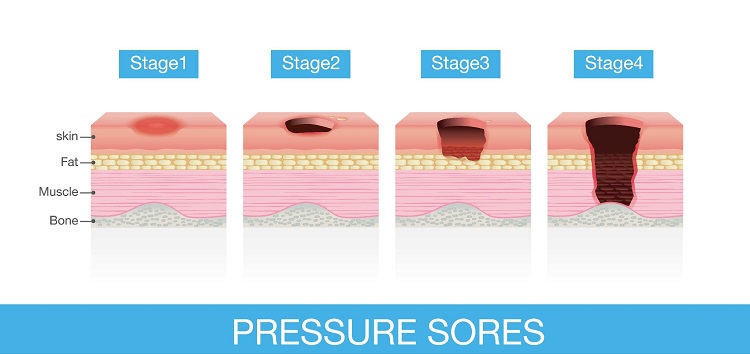
Stages of pressure ulcers
Pressure injuries are divided into four stages based on depth, severity and other characteristics. In the most severe cases, muscle and bone damage may also occur.
Pressure sores develop within a few hours or days. Symptoms usually include a change in skin colour and texture. The most vulnerable group are people who have limited ability to change position or are confined to bed or a wheelchair most of the time.
The good news is that pressure ulcers can be treated. An individual’s prognosis depends on several factors, including underlying health conditions and the stage of the ulcer. Stage 1 and 2 ulcers usually do not require surgery, but stage 3 and 4 ulcers may require it.
What are the treatment options?
Before treating bedsores, it is important to assess the stage and condition of the ulcer. Healing can be promoted by frequent repositioning and keeping the area clean, dry and free of irritants.
Treatment may include:
- treatment of infection (antibiotic cream, oral antibiotics, intravenous antibiotics)
- local wound care, including recommendations for cleaning and dressing using special dressings that help remove dead tissue
- medication
- removal of dead or infected tissue
- frequent dressing changes
- reduction of friction and moisture at the site
- use of special pressure-relieving pads to reduce pressure on the sore
- surgery (Stage 3 and 4 ulcers may require surgical debridement and negative pressure wound therapy. Chronic deep ulcers can be difficult to treat.)
It is essential that a doctor professionally assesses the patient’s health and proposes an appropriate treatment strategy. This may include, for example, advice on how to relieve pressure on the affected areas, treatment of any infection and support for tissue healing.
How can cannabis help?
Are you interested in what cannabis can be used for? According to Evidence Based Medicine, the proven effects, which are determined on the basis of sufficient scientific and clinical evidence, include:
- intractable chronic pain (adjunctive treatment in combination with normal medication)
- treatment of nausea and loss of appetite in cancer patients
- spastic conditions (spasms accompanying multiple sclerosis)
- two syndromes of childhood epilepsy
- nausea, vomiting and muscle pain in AIDS
It must be said that experts on the therapeutic effects of cannabis always point out: “It does not always cure, it does not cure everyone, it does not cure every disease, and it does not cure every stage of the disease. It is not a universal cure.”
CBD for bedsores? Is ointment best?
There are many ways to use CBD as a complementary treatment for bedsores, but one of the best is to use a CBD ointment. Ointments contain concentrated CBD and are applied directly to the affected area.
To protect the skin from drying out, it is better to choose hemp ointments made from lanolin, as they are gentler than those made from petroleum jelly, moisturise the skin and create a layer that serves as protection against drying out.
Some ointments also contain other natural herbs, such as arnica, eucalyptus and calendula, which can help with the effectiveness of the ointment.
What other herbs can help?
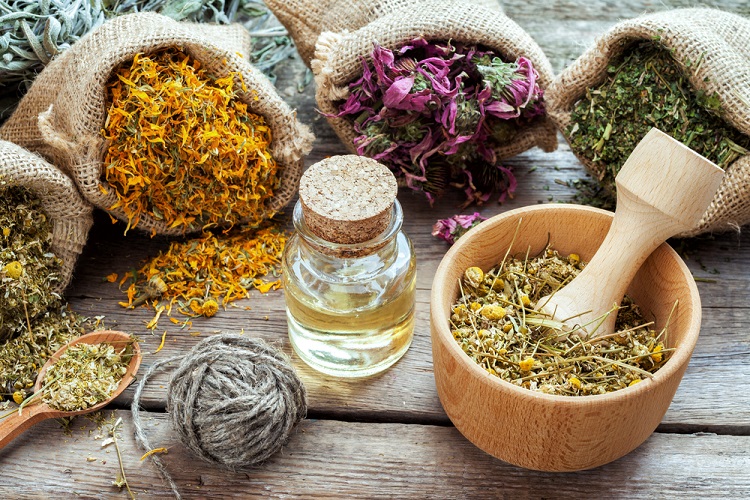
There are many natural herbs that can help prevent and alleviate the symptoms of bedsores. For example, arnica and calendula are herbs that have alleged anti-inflammatory properties and can help heal bedsores.
The results of a study focusing on arnica suggest that arnica could be a complementary therapy in the care of clients during wound healing. Another study examined the anti-inflammatory effects of calendula flower extract.
Eucalyptus, lavender, yarrow, ginkgo biloba, and tea tree are also useful herbs that may help. These herbs can be used in various forms, including ointments, teas, tinctures, or oils.
If you have serious health problems or are taking any medication, consult your doctor before using natural herbs. They are not suitable for everyone and may have side effects.
Studies suggest that…
Studies on the use of CBD in the treatment of bedsores are not yet extensive, but in recent years this area has become a subject of interest to scientists. Studies suggest that CBD may help treat inflammation and pain and reduce the risk of infection.
In 2020, the journal Wound Repair and Regeneration published a study examining the use of CBD ointment in the treatment of bedsores in laboratory mice. The results showed that the application of CBD ointment had a positive effect on wound healing, reducing inflammation and improving tissue quality at the site of the bedsore.
However, it should be noted that this study was conducted only on animals, and further research is needed to confirm the effectiveness of CBD ointment in treating bedsores in humans.
In 2020, a study entitled “The Therapeutic Potential of Cannabidiol (CBD) for Skin Health and Disorders” was published. It includes an overview of research conducted in this area and summarises the current state of knowledge about the effects of CBD on the skin and various skin diseases. In conclusion, the authors state that CBD could be a useful natural remedy for improving the condition of skin diseases and for improving the overall condition of the skin.
Another clinical study from 2020 examined topical cannabis-based preparations – a new paradigm – and their effect on non-haemorrhagic calcifylactic leg ulcers.
These studies suggest that CBD may have potential in the care of patients suffering from bedsores and may help reduce inflammation, pain and infection. However, further research is needed to better understand its effects on the skin and to obtain information on its use in the care of patients suffering from various skin diseases.
How to treat? The importance of prevention and early treatment under medical supervision
The most important thing is to take measures to reduce the risk of developing bedsores. If you are dependent on lying or sitting for long periods of time, you should change position at least every 2 hours to reduce pressure on the affected areas. You can also use special pillows or mattresses to help distribute pressure on the body.
If not treated promptly, pressure injuries can lead to serious health problems, including infection, pain, bleeding, and even death. CBD, or cannabidiol, is becoming increasingly popular as a complementary treatment for bedsores caused by prolonged lying or sitting.
Bedsores are a serious medical condition and treatment must be consulted with a doctor. The doctor will recommend how to treat them (appropriate treatment methods) and advise on the best ointments and herbs for the specific case.
Author: Patricie Mikolášová
Photo: Shutterstock
“All information provided on this website, as well as information provided through this website, is for educational purposes only. None of the information contained herein is intended to be a substitute for a medical diagnosis and should not be considered medical advice or recommended treatment. This website does not endorse, condones or advocate the licit or illicit use of narcotic drugs or psychotropic substances or the commission of any other illegal activity. For more information, please see our Disclaimer.”
Imported from Canatura. Links have been converted to thcvapestores.com where possible.