CBD and rheumatism
- Use of CBD for rheumatism
- Benefits of using CBD for rheumatism
- Tips for maximizing CBD
- What is rheumatism?
- Rheumatism vs. arthritis: What’s the difference?
- Rheumatoid arthritis vs. osteoarthritis
- Seropositive vs. seronegative rheumatoid arthritis
- Causes of rheumatism
- Guide to using CBD for rheumatism
- What the research says
- How much CBD to take?
- 1. CBD dosing for internal use
- General dosing guidelines for rheumatic conditions
- Daily CBD doses by weight and strength (mg)
- 2. CBD dosing for topical use
Rheumatism was once synonymous with arthritis—painful inflammatory disorders of joint tissues throughout the body. The definition also included other connective tissue disorders, including fibromyalgia, Lyme disease, and gout.
CBD may be an effective support option for people with various forms of rheumatism and joint damage. In this article, we will focus on the traditional definition of rheumatism and discuss how CBD can be used to alleviate symptoms and slow down disease progression.
Using CBD for Rheumatism
All forms of rheumatism involve pain and inflammation of the joints and connective tissues. The causes of pain and inflammation can vary.
The reason CBD is so effective in combating rheumatic conditions is that it offers a broad spectrum of anti-inflammatory effects rather than targeting one specific pathway.
This is useful because it means we don’t need to know exactly which inflammatory markers are causing the most trouble.
CBD is useful for these conditions because it offers what we call an immunomodulatory effect. Instead of forcing the immune system to overreact (like immunostimulants) or suppress (like immunosuppressants), CBD has a modulating effect. It turns the immune system up when it is working too slowly and down when it is working too much.
Rheumatism usually involves excessive activity of the immune system, causing widespread inflammation and tissue damage in the joints.
The last benefit of CBD we will discuss is its effect on pain management. CBD is known for its effects in relieving pain, which is exactly what people suffering from rheumatism need. This disease can be extremely painful, and sufferers then seek strong painkillers such as opioids.
The problem with these drugs is that they are addictive and come with a long list of negative side effects, such as liver and kidney damage, sedation, and dependence.
Benefits of using CBD for rheumatism
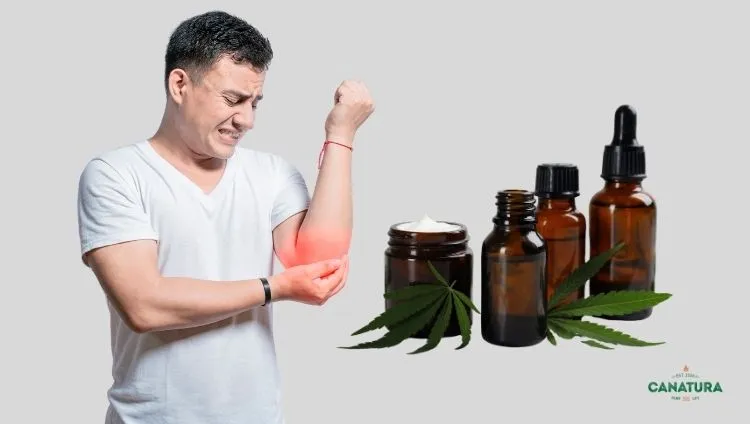
- Strong anti-inflammatory properties may help slow the progression of the disease
- Modulates the immune system and keeps the progression of the disease under control
- Possible effects against pain symptoms
- May provide relief from some other side effects of the disease, including insomnia, depression, and anxiety
Tips for getting the most out of CBD
- Always consult your doctor before using CBD in conjunction with other medications
- Avoid low-quality CBD products to eliminate the likelihood of consuming contaminants such as heavy metals or pesticides, which can further exacerbate the disease
- Start with a very small dose of CBD and increase it each day to find the optimal dose
- Choose full-spectrum extract over isolate to reap the full benefits of the other cannabinoids in the cannabis plant
What is rheumatism?
Rheumatism is a medical term for joint pain that was used in the past. It has since been replaced by more specific terms depending on the cause of the joint pain.
Rheumatic diseases include:
- Rheumatoid arthritis – autoimmune causes
- Osteoarthritis – traumatic injury and inflammatory causes
- Gout – formation of uric acid causing inflammation and joint damage
- Fibromyalgia – unknown cause
- Lyme disease – blood-borne parasitic infection affecting the joints
Symptoms of rheumatism
- Depression
- Enlarged joints
- Fatigue
- Fever
- Joint pain and stiffness
- Loss of appetite
- Redness around the joints
- Weight loss / weight gain
Rheumatism vs. arthritis: What is the difference?
Technically speaking, rheumatism refers to all joint pain—but the term has evolved over the years.
Most people who use the word rheumatism today are referring to a specific type of arthritis known as rheumatoid arthritis. The disease is an autoimmune disorder involving pain and inflammation of the joint tissues in the body. There are other forms of arthritis and joint pain—such as osteoarthritis and gout.
Rheumatoid arthritis vs. osteoarthritis
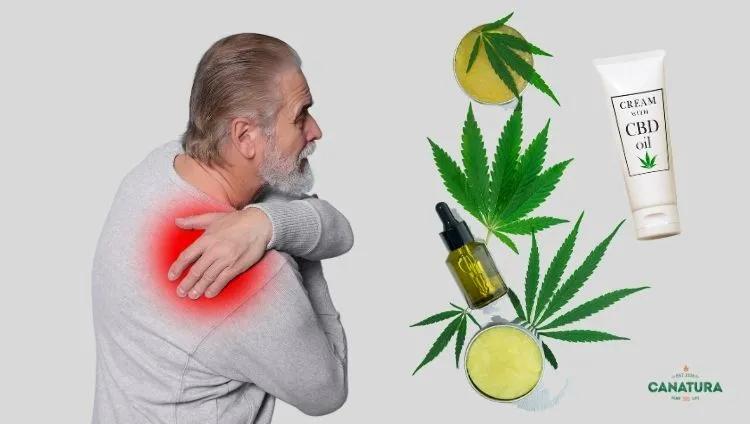
Although the symptoms of arthritis are very similar, there are some key differences between them.
The main difference is in the cause—rheumatoid arthritis is caused by an autoimmune reaction, while osteoarthritis is caused by mechanical damage and breakdown of cartilage tissue.
The patterns of pain and disease progression are also different—rheumatoid arthritis affects the body equally on both sides and tends to affect smaller joints first, such as the fingers and toes.
| Rheumatoid Arthritis | Osteoarthritis | |
|---|---|---|
| Cause / Influencing Factors | Autoimmunity | Joint wear or traumatic injury |
| Affected Joints | Any, but usually affects smaller joints first | Any, but usually affects larger joints first |
| Patterns | Affects the same joints on both sides of the body (symmetrical) | Affects random joints; may or may not be symmetrical |
| Other Symptoms | Fever, fatigue, weight loss or gain, and depression | None |
Arthritis is considered one of the 10 most common disabilities in the world.
Osteoarthritis is the most common form of arthritis, but rheumatoid arthritis is more serious. Worldwide, rheumatoid arthritis affects approximately 1% of the entire population—that’s 1 in 100 people.
Unfortunately, there is still no cure for rheumatoid arthritis—which is common with autoimmune disorders.
The nature of autoimmunity is incredibly complex and involves multiple organ systems functioning simultaneously. Because of this, it is challenging to determine the exact cause—and even more difficult to treat the disease.
There are several common treatment options for rheumatoid arthritis, including the use of CBD and many other phytocannabinoids.
Seropositive vs. seronegative rheumatoid arthritis
Rheumatoid arthritis is characterized by an inflammatory response occurring throughout the body. For this reason, it is relatively easy to test for the disorder by looking for known inflammatory markers in the blood.
When these inflammatory markers are found, the person is said to be seropositive (their blood serum is positive for these markers).
Conversely, when these markers are not found but the patient still shows clear signs of rheumatoid arthritis, they are said to be seronegative.
Although whether a patient is seropositive or seronegative does not greatly change the treatment, it can be a complication. If the inflammatory markers associated with rheumatoid arthritis are not found in the blood, this may indicate the activation of other inflammatory reactions that may require different forms of treatment.
It is also possible that those who are seronegative are simply in remission, with the disease temporarily suppressed.
Causes of rheumatism
The exact cause of rheumatism depends on the type of joint pain.
- Atypical physique
- Bacterial, viral, or parasitic infection
- Exposure to heavy metals or other environmental toxins
- Genetic predisposition
- Heart disease
- Hormonal imbalance
- Kidney disease
- Lack of exercise
- Liver disease
- Smoking
- Tick-borne infection
- Traumatic injury
Guide to using CBD for rheumatism
One of the most common uses of CBD is for joint pain relief. CBD has both anti-inflammatory and analgesic properties, both of which are directly beneficial for various types of joint pain.
CBD products can be used to relieve joint pain both externally and internally. For minor joint pain, such as minor athletic injuries, mild osteoarthritis, or early stages of rheumatoid arthritis, CBD products for external use are likely to provide sufficient relief.
On the other hand, more severe joint inflammation often requires a combination of externally applied CBD products with internally administered CBD products, such as oils, tinctures, capsules, or vaporizing oils.
For best results, combine CBD with other treatment methods.
- Dietary changes – eliminate inflammatory foods from your diet
- Glucosamine supplements – for joint repair
- Omega 3 supplement – for inflammation
- Herbal supplements – such as turmeric or frankincense
- Vitamin C – antioxidant support
- Vitamin D – support for joint repair
- Physical therapy – restoration of joint function
- Yoga – acceleration of healing and restoration of joint function
What the research says
Animal studies have found that transdermal (external) CBD at a dose of 6.2 mg/day offers significant reduction in joint pain symptoms. Studies involving oral CBD have shown similar benefits.
One study found that long-term treatment with CBD and THC for rheumatoid arthritis did not lead to tolerance, meaning that the effective dose of CBD and THC did not need to be increased over time. This is an important finding because when people use conventional treatments for this condition, many eventually develop tolerance and dependence (especially pain medications).
How much CBD should you take?
There are two types of CBD that help combat joint pain and inflammation associated with rheumatism—CBD for internal use (such as oils, tinctures, capsules, or vaporizing oils) and CBD for external use (such as creams and ointments).
For milder symptoms, one type of these products is likely to provide sufficient relief. However, for more severe symptoms, it is best to use a combination of both.
1. Dosage of CBD for internal use
The CBD dosage can vary greatly from person to person. Start with a low dose and gradually increase it over several days. Try starting with the lowest dose listed in the table below according to your weight and add 2 to 5 mg daily until you feel relief from your symptoms.
For minor joint pain, a low-strength dose is usually sufficient.
For more severe joint pain or joint pain that has not improved with over-the-counter pain medications, you will likely need a much higher dose to achieve the same level of relief.
Here are some general guidelines for the strength you are likely to need, depending on the severity of your condition.
General dosage guidelines for rheumatic diseases
| CBD with Low Strength | CBD with Medium Strength | CBD with High Strength |
|---|---|---|
|
|
|
- Early stages of arthritis
- Acute flare-ups of arthritis
- Rheumatoid arthritis
- Osteoarthritis
- Acute flare-ups of arthritis
- Rheumatoid arthritis
- Osteoarthritis
- Gout
You can use the table below to determine the general range for low to high potency CBD doses based on your weight.
Keep in mind that these are general guidelines, and your individual dose will likely vary greatly. Take the time to test different doses until you find the one that works for you.
Some people experience minor side effects such as fatigue or decreased appetite at high doses—if this happens to you, simply reduce your dose.
Daily CBD doses by weight and potency (in mg)
| Weight (kg) | Low Strength | Medium Strength | High Strength |
|---|---|---|---|
| 45 kg | 10 mg | 30 mg | 60 mg |
| 55 kg | 13 mg | 38 mg | 75 mg |
| 70 kg | 15 mg | 45 mg | 90 mg |
| 80 kg | 17 mg | 52 mg | 105 mg |
| 90 kg | 20 mg | 60 mg | 120 mg |
| 100 kg | 22 mg | 67 mg | 135 mg |
| 115 kg | 25 mg | 75 mg | 150 mg |
2. CBD dosage for external use
Using CBD for external use is much easier than CBD for internal use when it comes to dosage. If you are using a product with a high concentration of cannabinoids, you will get the correct dose when you apply it to your skin.
These products vary greatly between manufacturers, so we recommend following the instructions on the packaging.
In general, when using CBD to support rheumatism, we recommend choosing a product with at least 3 mg per 1 g of cream or ointment. Anything weaker than this will not be strong enough to provide the level of relief reported in scientific literature.
If you are trying a new CBD product for external use for the first time, we recommend first applying a small amount of the product to another area of your body to make sure you do not have an allergy that could further aggravate your joint inflammation. If you do not experience any irritation after about two hours, you can safely use it directly on the joint.
This procedure is recommended for any new product for external use, including pharmaceutical or over-the-counter products.
Author: Elena Moreau
Photo: Shutterstock
“All information provided on this website, as well as the information provided on this website, is for educational purposes only. None of the information provided herein is intended to be a substitute for a medical diagnosis, and such information cannot be considered medical advice or recommended treatment. This website does not endorse, approve or advocate the permitted or illegal use of narcotics or psychotropic substances or the commission of other illegal activities. For more information, please see our Disclaimer.”
Recommended products
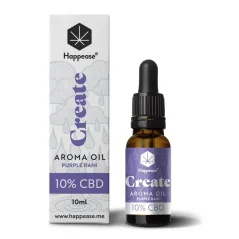
Happease Create CBD Oil Purple Rain, 10 % CBD, 1000 mg, 10 ml
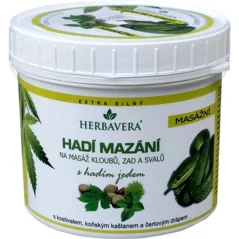
Herbavera Snake ointment with hemp and chestnut 500 ml
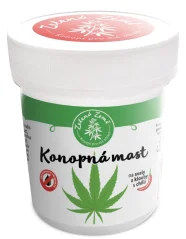
Zelená Země Hemp ointment with chili for muscles and joints, 100 ml

Orange County CBD Gummies Strawberries, 400 mg CBD, 150 g
Imported from Canatura. Links have been converted to thcvapestores.com where possible.