
CBD oil as an aid for epilepsy in cats
- How does CBD oil work for seizures in cats?
- Epilepsy in cats and research into the effects of CBD oil
- How to administer CBD to cats
- How much CBD should you give a cat suffering from epilepsy?
- Benefits of using CBD oil for seizures in cats
- What can you give your cat for epilepsy?
- What is a natural remedy for seizures in cats?
- Epilepsy in cats: signs and symptoms
- Causes of seizures in cats
- How to recognise an epileptic seizure in cats and what to do
How does CBD oil work for seizures in cats?
CBD interacts with the endocannabinoid system (ECS) in cats (as it does in humans). The ECS is a regulatory system responsible for controlling many bodily functions (metabolism, appetite, sleep, pain, inflammation, mood, memory), thereby maintaining health and balance (homeostasis). More specifically, CBD exerts its effects by binding to cannabinoid receptors – CB1 and CB2. CB1 receptors are found primarily in the brain and nervous system, while CB2 receptors are scattered throughout several peripheral organs.
Studies suggest that the ECS is closely related to epilepsy and neurological inflammation. To be more precise, CBD oil contains two anti-epileptic compounds – cannabidiol (CBD) and cannabidivarin (CBDV). Cannabidiol and cannabidivarin affect TRPV1, a pain receptor found in areas of the brain associated with epileptic seizures. Based on current information, a working theory has been developed that cannabidiol and cannabidivarin can prevent epileptic seizures by inhibiting TRPV1 located in the hippocampus.
In addition, a recent study conducted on rats has shown that synthetic forms of CBD can also be used to manage seizures, reducing both the frequency and severity of these episodes.
Epilepsy in cats and research into the effects of CBD oil
CBD oils help maintain normal nervous system function by supporting normal healthy brain activity, nerve conduction and memory function. In terms of seizure treatment, a 2010 study showed that CBD has powerful anti-epileptic and anti-convulsant properties. A study published in 2017 in the Journal of Epilepsy Research, which compared the anticonvulsant effects of CBD and THC, found that CBD has a more pronounced anticonvulsant profile in animals.
In 2019, a group of researchers from the University of North Carolina School of Medicine demonstrated the role of CBD in normalising brain rhythms in mice with Angelman syndrome. Similarly, cannabidiol (CBD) may also work in cats with epilepsy.
However, perhaps the most groundbreaking clinical study in this area was conducted by Dr Stephanie McGrath, a neurologist at Colorado State University. Based on her findings, 89% of dogs treated with CBD oil experienced a “reduction in seizure frequency”. Seizures can be defined as electrical discharges between different neurons (brain cells). Abnormal distribution of electrical signals causes inflammation of these neurons (neuroinflammation). Since CBD oil has strong anti-inflammatory properties, CBD can help manage neuroinflammation.
How to administer CBD to cats
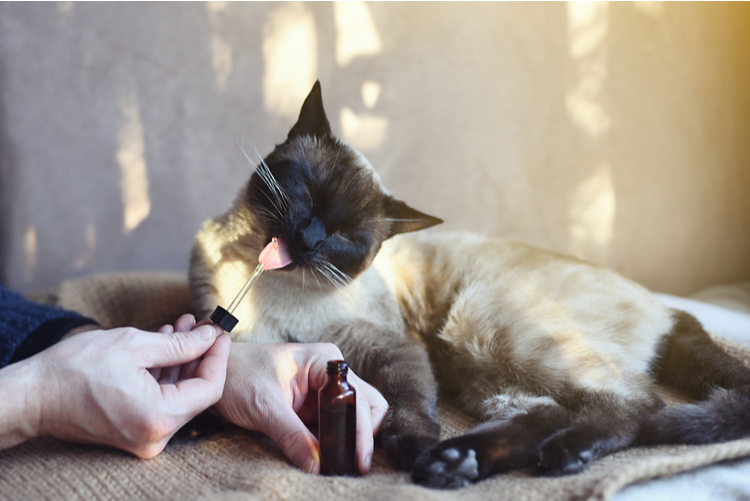
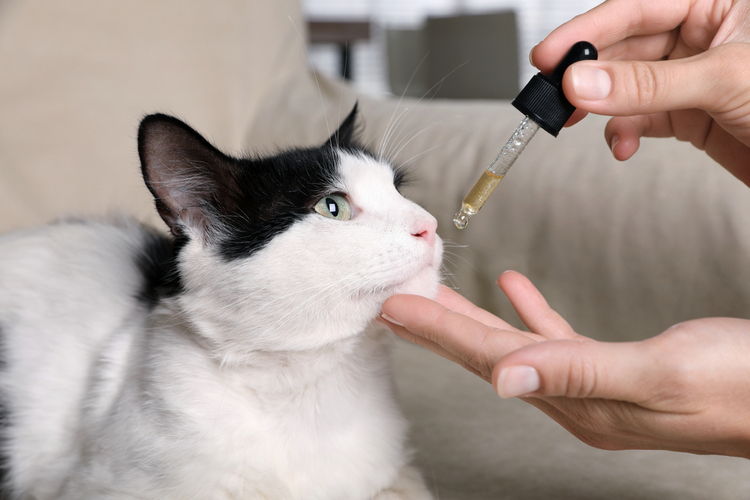
It all starts with choosing the right CBD product. Ideally, it should be broad-spectrum (i.e. an extract without THC – tetrahydrocannabinol), made from organic hemp, extracted using CO2 and free of additives, fillers and allergens. With the above in mind , you can choose between CBD oils, CBD sprays and CBD treats. CBD oils work faster and are more affordable. However, their use in picky cats is complicated due to their earthy smell and bitter taste typical of hemp extract.
On the other hand, CBD treats are more expensive and their effects are slower to take effect because they must first pass through the digestive tract. However, they are extremely practical. CBD treats for cats come in flavours that cats enjoy, but they are also suitable for other animals with a sweet tooth.
How much CBD should you give a cat suffering from epilepsy?
Cats suffering from seizures can be given 1 to 5 mg of CBD per 10 kg of body weight. Since most cats weigh the same, the recommended CBD dosage is always the same – 1 dropper per day at a concentration of 125 mg CBD, which translates to 4 mg CBD per day. In general, veterinarians recommend starting with a smaller amount of CBD and waiting for a positive response. In terms of epileptic episodes, a positive response would mean a decrease in the frequency of episodes. If the cat does not show a positive response, you can gradually increase the dose.
On the other hand, if the dose not only reduces the number of seizures but also causes side effects, it can be slightly reduced. All in all, finding the right dose of CBD oil for cats suffering from epileptic seizures requires a bit of experimentation and regular consultation with your vet.
Benefits of using CBD oil for seizures in cats
Research on the use of CBD for cats suffering from seizures is still in its infancy. However, based on studies and anecdotal evidence, it can be assumed that CBD works on several levels.
Here is a list of the health benefits of CBD drops for cats with epilepsy:
- Reduced seizure intensity – CBD affects the severity of seizure episodes, leading to less pronounced electrical discharges.
- Reduced frequency – CBD promotes balance in the central nervous system, leading to fewer epileptic episodes.
- Increased effectiveness of anti-epileptic drugs – CBD can increase the effect of common anti-seizure medications, allowing for less to be used.
- Management of neuroinflammation – CBD has significant anti-inflammatory properties that can manage the inflammation accompanying electrical discharges.
- Calming and relaxation – After seizures, cats feel confused, stiff and disoriented. In such cases, CBD helps to promote calmness and relaxation.
What can you give your cat for epilepsy?
You can give your cat anti-epileptic drugs to manage seizures. These are human medicines that are prescribed off-label in veterinary medicine (use of pharmaceutical drugs for an unapproved indication or for an unapproved age group, dosage or method of administration).
Below is a list of some of the most popular anti-epileptic drugs:
- Phenobarbital
- Levetiracetam
- Zonisamide
- Gabapentin
- Pregabalin
These common anti-seizure medications have several drawbacks. For example, they are not universally effective, and not all cats suffering from seizures respond positively to them. Even if they manage to overcome an epileptic seizure, they can be accompanied by serious side effects, and over time, cats tend to build up a tolerance to these medications.
What is a natural remedy for seizures in cats?
CBD, as a cannabis extract, is a herbal alternative to traditional medicines with anti-epileptic and anti-convulsant effects. CBD is the most commonly used alternative treatment for seizures in cats, but it is not the only one.
Passion fruit (also known as maracuja), goosefoot, and ginger also have anticonvulsant properties (i.e., they act against convulsions) that can be used to treat epilepsy in pets.
Although the available studies were conducted on mice, the endocannabinoid system works similarly in all mammals, which means that we can expect the same effects in cats. Currently, there are CBD oils enriched with extracts of passion fruit, ginger and goosefoot, which allow for better results. In addition, the British Journal of Nutrition published a study that demonstrated the positive effect of a keto diet (high in fat and low in carbohydrates) on seizure control and epilepsy in dogs. It is believed that this concept will also work in cats.
Epilepsy in cats: signs and symptoms
Seizures are defined as sudden and uncontrolled electrical activity in the brain accompanied by involuntary muscle movements. Simply put, a seizure is a discharge of electrical impulses that can occur unpredictably and randomly or at regular intervals. On the other hand, epilepsy is defined as a condition characterised by repeated seizures. At least two unprovoked episodes are usually required to diagnose epilepsy. Both seizures and feline epilepsy are serious conditions that require veterinary care.
Causes of seizures in cats
Before discussing the causes of seizures, it should be noted that the exact cause cannot always be determined. In most cases, we will never know what triggers the seizures. With this in mind, here is a brief overview of some possible causes of seizures in cats:
- Toxin exposure – Many natural and artificial toxins can cause seizures in cats. The list includes ethylene glycol (antifreeze), chocolate, xylitol (artificial sweetener), pesticides, pyrethrin-based flea treatments for dogs, and some human medications (antidepressants, ADHD medications).
- Head injuries – Cats sometimes develop seizures after severe head injuries, such as car accidents or falls from trees. Head injuries are not always associated with physical trauma. Tumours, parasites and infections can also cause brain damage and subsequent seizures.
- Systemic diseases – Health problems outside the brain can also be associated with episodes of seizures in cats. Common triggers include untreated hypertension, hypoglycaemia, kidney or liver disease.
- Noise-induced seizures – Cats are sensitive to specific sounds. Like some humans, cats cannot tolerate the clinking of metal against metal, the sound of aluminium foil, the tearing of Velcro, and the clinking of glass. Seizure episodes triggered by these sounds are called “audiogenic reflex” seizures.
- Idiopathic epilepsy – Idiopathic epilepsy is a hereditary disease that usually affects dogs and causes concern primarily for dog owners. However, cat owners should also be aware of its existence, as it can rarely occur in these pets as well.
How to recognise a cat’s epileptic seizure and what to do
Seizures occur in three different stages, and their symptoms vary.
Below is a description of each stage and its accompanying symptoms:
- Preictal state (known as aura): the preictal state (aura) phase occurs shortly before the seizure itself and lasts for a few seconds. It manifests itself in walking in circles, circling, panting and sometimes vomiting.
- Seizure phase: cats fall on their side and begin to experience characteristic twitching, tremors and convulsions. Other symptoms such as paddling with the paws, jaw clenching, urination and defecation are also possible, but may not be present.
- Postictal state: This state occurs immediately after the seizure. Temporary paralysis and extreme confusion and disorientation can be expected during this phase. Cat owners often say that it looks as if their cats have lost their sight.
During a seizure, pet owners must ensure that their cats do not hit their heads on the floor or other hard surfaces. If the episode lasts longer than five minutes, it is essential to seek veterinary help immediately, as there is a significant risk of permanent brain damage and death.
Author: Elena Moreau
Photo: Shutterstock
“All information provided on this website, as well as information provided through this website, is for educational purposes only. None of the information contained herein is intended to be a substitute for a medical diagnosis and should not be considered medical advice or recommended treatment. This website does not endorse, condones or advocate the licit or illicit use of narcotic drugs or psychotropic substances or the commission of any other illegal activity. For more information, please see our Disclaimer.”
Imported from Canatura. Links have been converted to thcvapestores.com where possible.