
How is the CBD dose calculated?
- What is the usual CBD dosage?
- Determining the CBD dosage based on your body weight
- Table – CBD dosage by body weight and potency (in mg)
- Which potency is right for me?
- CBD dosage: 4 steps to finding your ideal CBD oil dose
- How much CBD should I take?
- FAQ
- Step 1: Determine your optimal CBD dosage
- Step 2: Determine the strength of your CBD oil
- Step 3: Convert your dose into drops (optional)
- Step 4: Adjust the dosage to your body
- Standard CBD oil dosages in drops (assuming 30 drops/ml)
- Reference table for number of drops by CBD oil potency
In this article, you will learn more about dosing CBD oil. We will explain how much the dosage can vary depending on various factors, such as body weight, age, ailments you suffer from, and the potency of the oil you use.
You will learn how to determine the optimal dose for your body and what to do if you experience side effects.
What is the usual dose of CBD?
Most people take 20-40 mg of CBD per dose. Some people take much smaller doses (up to 1 mg), while others need much more (up to 100 mg).
Depending on the potency of the product, this could be a few drops, but also several milliliters of oil. Or it could be 1 to 5 capsules or gummies per dose. It is true that the optimal dosage of CBD varies from person to person.
It is quite common for two people of the same body weight to react very differently to the same dose of CBD. For one person, the ideal dose may be 30 mg of CBD, while another may respond better to just 10 mg.
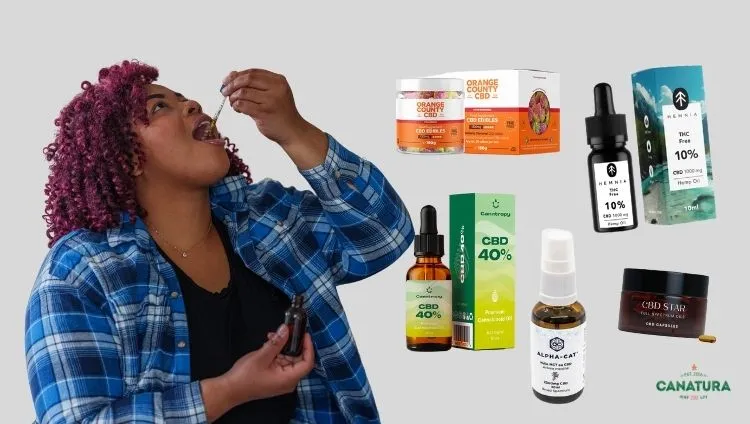
What factors influence the ideal dose?
The factors depend on:
- Your height and weight
- The severity of your condition
- Your tolerance to CBD
- Your body’s individual chemical composition
- The strength of the CBD oil, capsules, gummies, or other CBD products you are taking
The best way to find the right dosage is to start with a very small dose (for example, 2 mg) and gradually increase it by 2–5 mg until you find the dose that works best for you.
Determining your CBD dosage based on your body weight
Although CBD dosages vary from person to person, a general rule of thumb can be used to determine an estimated dosage based on your body weight and the intensity of the effects you are seeking (low, medium, and high potency).
See below for dosage guidelines. These are only estimated doses and should not be used as a substitute for medical advice on dosage.
When you first start using CBD, it is advisable to start with a small dose and then increase it slowly. Once you find a dose that is effective, that is the dose that is right for your body.
If you experience side effects, you have reached the upper limit. Reduce the dose to an amount at which no side effects were observed.
Determining CBD dosage based on body weight and product potency:
- Low potency → 2 mg CBD per 10 kg
- Medium potency → 7 mg CBD per 10 kg
- High potency → 13 mg CBD per 10 kg
It is important to note that this measurement is made with pure CBD, not CBD oil. Later, we will show you how to calculate the amount of CBD oil for this dose.
Once you have determined how much CBD you should take, determine the appropriate amount of CBD oil depending on the strength of the oil you are using.
Table – CBD dosage according to body weight and potency (in mg)
| Body weight (kg) | Low impact | Medium effectiveness | High impact |
|---|---|---|---|
| 45 kg | 10 mg | 30 mg | 60 mg |
| 57 kg | 13 mg | 38 mg | 75 mg |
| 68 kg | 15 mg | 45 mg | 90 mg |
| 80 kg | 17 mg | 52 mg | 105 mg |
| 90 kg | 20 mg | 60 mg | 120 mg |
| 102 kg | 22 mg | 67 mg | 135 mg |
| 113 kg | 25 mg | 75 mg | 150 mg |
What potency is right for me?
The more CBD you take, the more intense its effects are. To treat certain conditions, relatively high doses of CBD are needed to achieve the desired effects, while for other conditions, only low-potency products are sufficient—and you can still expect remarkable results.
Ask yourself the following question: “Why am I using CBD oil?”
This is a very important question to answer, as it is the only way to determine the optimal dose for you.
Recommended potency according to condition
- Anxiety → medium to high potency
- Arthritis → medium to high potency
- Cancer → high potency or pharmaceutical alternative
- Chronic pain → medium to high potency
- Colitis and inflammatory bowel disease → medium to high potency
- Epilepsy → high potency or pharmaceutical alternative
- General health → low potency
- Hypertension → medium to high potency
- Migraine-type headaches → low to high potency
- Muscle recovery → low to medium potency
- Nausea → low to medium potency
- Polycystic ovary syndrome (PCOS) → low to medium potency
- Premenstrual syndrome (PMS) → low to high potency
- Insomnia → medium to high potency
- Weight loss → low to medium potency
CBD dosage: 4 steps to the ideal CBD oil dosage
The easiest way to determine the optimal CBD dosage is to use the CBD dosage table above and find the “small impact” using the table.
From this point on, you can slowly increase the dose each day until your symptoms subside or until side effects appear
(most commonly fatigue or dizziness).
If you experience side effects, reduce the dosage to the last dose you took that did not cause any negative side effects. Never start with a high potency if you have not used CBD oil before. For even more accurate dosing, follow the four steps below.
Step 1: Determine your optimal CBD dose
First, you should determine the ideal starting dose of CBD that you can take. This depends on your body weight.
Below is a general rule for dosing CBD based on body weight and the potency of the product in question:
| Low impact | Medium effectiveness | High impact |
|---|---|---|
| 2 mg per every 10 kg (0.2 mg/kg) | 7 mg per every 10 kg (0.7 mg/kg) | 13 mg per every 10 kg (1.3 mg/kg) |
How to calculate your dose based on your body weight
[YOUR BODY WEIGHT IN KG] x [DESIRED POTENCY (0.2 or 0.7 or 1.3 mg)] = [YOUR CBD DOSE IN MG]
Practical example:
Let’s say you are a man who weighs 80 kilograms and is looking for a medium-strength dose.
Now you need to multiply your total weight (80 kilograms) by the desired dosage equivalent (0.7 mg per kilogram for medium potency).
[80] x [0.7 mg] = 56 mg CBD
In this case, a suitable starting dose would be approximately 56 mg of CBD per day. Now you need to determine how much CBD oil you need to achieve this dose. You can measure it by drops or by the amount of oil in milliliters.
Step 2: Determine the strength of the CBD oil
The strength of the CBD oil you use directly affects the amount needed to achieve the optimal dose.
For example, a very strong CBD oil with 200 mg of CBD per milliliter will require ten times less oil to achieve the appropriate CBD dose than low-potency oils (only 20 mg per milliliter).
You also need to know how much CBD is contained in a milliliter of oil.
Sometimes this is easy, as there are manufacturers who list the concentration of CBD in a milliliter of oil directly on the bottle. Sometimes this information is missing, but fortunately, the formula for calculating the concentration of oil is very simple.
What to consider:
- Bottle size (in ml)
- Amount of CBD listed on the bottle (300 mg, 600 mg, 1,000 mg, etc.)
Use this formula to determine potency:
[CBD IN MG] ÷ [BOTTLE SIZE IN ML] = [CBD IN MG/ML]
For example: A CBD manufacturer produces hemp oil that lists 600 mg of CBD per bottle. The bottle size is 30 ml.
Let’s plug that into our formula:
[600 MG] ÷ [30 ML] = [20 MG CBD/ML].
Our answer: 20 mg of CBD per 1 ml of liquid.
Now that you know how potent the oil is, you can determine how much you need to take to get that dose.
For example, if you need a dose of 20 mg of CBD, use 1 milliliter of oil—that’s a full dropper. If you only need 10 mg, use half a dropper. For 30 mg, use one and a half droppers, and so on.
Reference table—CBD oil potency
| Bottle size | 300 mg CBD oil | 600 mg CBD oil | 1,000 mg CBD oil | 1,500 mg CBD oil |
|---|---|---|---|---|
| 15 ml | 20 mg/ml | 40 mg/ml | 66 mg/ml | 100 mg/ml |
| 30 ml | 10 mg/ml | 20 mg/ml | 33 mg/ml | 50 mg/ml |
| 50 ml | 6 mg/ml | 12 mg/ml | 20 mg/ml | 30 mg/ml |
Step 3: Convert the dose to drops (optional)
To make dosing easier, you can convert the dose to drops. The number of drops needed to achieve each dose depends on how strong the oil is.
This information is very useful when working with highly potent CBD oils. It can also be helpful if you are using CBD oil to treat your four-legged friends or children—in these cases, even small changes in dosage can make a big difference.
Most pipettes dispense 30 drops per 1 ml of oil – we get the dose per drop by dividing the dose per milliliter by thirty.
The formula is as follows:
[CBD PER ML] ÷ [30 DROPS] = [MG / DROPS]
Let’s look at the example above – 600 mg of CBD oil in a 30 ml bottle. The strength of this oil was 20 mg per 1 milliliter, so the CBD dosage can be calculated by dividing this number by 30 (30 drops in 1 ml):
[20 MG PER ML] ÷ [30 DROPS] = 0.7 MG CBD PER DROP
Conventional doses of CBD oil in drops (assuming the pipette dispenses 30 drops per milliliter)
| Bottle size | 300 mg CBD oil | 600 mg CBD oil | 1,000 mg CBD oil | 1,500 mg CBD oil |
|---|---|---|---|---|
| 15 ml | 0.7 mg/drop | 1.3 mg/drop | 2.2 mg/drop | 3.3 mg/drop |
| 30 ml | 0.3 mg/drop | 0.7 mg/drop | 1.1 mg/drop | 1.7 mg/drop |
| 50 ml | 0.2 mg/drop | 0.3 mg/drop | 0.6 mg/drop | 0.8 mg/drop |
How to determine the required number of CBD oil drops based on your target dose:
You can use all this information to determine the number of drops needed to reach your target dose.
To determine the exact number of drops needed to maintain a specific CBD level, all you need to do is divide the total dose by the potency of one drop of CBD oil.
[TARGET CBD DOSAGE (example: 51 mg)] ÷ [CBD OIL POTENCY PER DROP (example: 0.7 mg)] = CBD OIL DOSAGE IN DROPS
Our example would look like this in practice:
[51 mg] ÷ [0.7 MG/DROP] = 73 drops of CBD oil
Reference table for determining the number of drops per dose for conventional CBD oil potencies
| Dosage | 300 mg | 600 mg | 1,000 mg | 2,500 mg |
|---|---|---|---|---|
| 5 mg | 15 drops | 7.5 drops | 4 drops | 2 drops |
| 10 mg | 30 drops | 15 drops | 9 drops | 4 drops |
| 15 mg | 45 drops | 22 drops | 13 drops | 5 drops |
| 20 mg | 60 drops | 30 drops | 18 drops | 7 drops |
| 25 mg | 75 drops | 37 drops | 22 drops | 9 drops |
| 30 mg | 90 drops | 45 drops | 27 drops | 11 drops |
| 35 mg | 105 drops | 52 drops | 31 drops | 13 drops |
| 40 mg | 120 drops | 60 drops | 36 drops | 14 drops |
| 45 mg | 135 drops | 67 drops | 40 drops | 16 drops |
| 50 mg | 150 drops | 75 drops | 45 drops | 18 drops |
| 55 mg | 165 drops | 82 drops | 49 drops | 20 drops |
| 60 mg | 180 drops | 90 drops | 54 drops | 22 drops |
| 65 mg | 195 drops | 97 drops | 58 drops | 23 drops |
| 70 mg | 210 drops | 105 drops | 63 drops | 25 drops |
| 75 mg | 225 drops | 112 drops | 67 drops | 27 drops |
| 80 mg | 240 drops | 120 drops | 72 drops | 29 drops |
Step 4: Adjust the dose to suit your body
Using the steps above, you can determine the ideal target dose of pure CBD and how much CBD oil is needed to achieve that dose.
The next step is to take this dose daily and adjust it slightly each day until you find the amount that works best for you. This is one of the most important steps.
As mentioned above, reactions to CBD oil can vary quite a bit. This means that you need to see how CBD oil affects you personally—the experiences of others are not relevant here.
- Your friend may take 20 mg, while you need a much higher or lower dose.
- The only way to get the right dose is clear – start with the dose specified above and then gradually adjust it.
- Maybe you took 20 mg and your symptoms still haven’t subsided – now is the right time to increase the dose and then evaluate.
- Or you took 20 mg and experienced significant relief – but ended up feeling too tired, so you need to lower the dose a little.
This process is never-ending – you must constantly pay attention to how CBD affects you and adjust the dosage accordingly to suit your needs.
Whenever you try a new brand of CBD product, you may need to adjust your dosage – the following factors come into play:
- The ratio of cannabinoids in the oil
- The ratio of terpenes in the oil
- Full-spectrum oil or CBD isolate?
- The overall potency of the oil
Pro tip: Compare the potency of the oil with your estimated target dose.
CBD oils are available in many potencies. It is advisable to match the potency of the oil to the most likely dose you should be taking.
It probably doesn’t make sense to use a highly potent CBD oil if you only want to take 5 mg per dose. Each drop of oil may contain more active ingredient than your desired dose, making it difficult to avoid taking too much of the active ingredient.
Accordingly, if you want to use high-potency CBD, then buying low-potency CBD oil (300 mg or less) does not make sense, as you will have to use a quarter of the bottle for a single dose.
Here are some general recommendations for CBD oil effectiveness depending on your target dose:
- CBD dose 5 mg – CBD oil 250 mg or weaker
- CBD dose 10 mg – CBD oil 250 mg or weaker
- CBD dose 15 mg – CBD oil 250 – 500 mg
- CBD dose 20 mg – CBD oil 250 – 500 mg
- CBD dose 25 mg – CBD oil 500 – 1,000 mg
- CBD dose 30 mg – CBD oil 500 – 1,000 mg
- CBD dose 35 mg – CBD oil 500 – 1,000 mg
- CBD dose 40 mg – CBD oil 500 – 1,000 mg
- CBD dose 45 mg – CBD oil 500 – 1,000 mg
- CBD dose 50 mg – CBD oil 1,000 mg or stronger
- CBD dose 55 mg – CBD oil 1,000 mg or stronger
- CBD dose 60 mg or more – CBD oil 1,000 mg or stronger
How much CBD should I take?
CBD has quite different effects, so it is advisable to start with a small dose when using CBD for the first time and then slowly increase it day by day, for example, by 2–5 mg every few days, until you find the optimal effect.
The usual dosage range for CBD products is between 20 and 40 mg per dose. Some people take one dose per day, but two or even three doses per day are not uncommon.
The key factor here is the strength of the CBD oil, capsules, or other CBD products you are taking. Compared to low-potency CBD oil, you need a much smaller dose of high-potency CBD oil.
FAQ
1. How can I easily calculate the dose of CBD oil?
- Find the CBD concentration in the product (mg/ml)
- Find the volume of a single dose (e.g., how many ml the dropper holds)
- Calculate how many mg of CBD a single dose contains
- Start with a low dose and gradually adjust it based on your body’s response
2. How to quickly calculate the CBD concentration (mg/ml)
You can determine the concentration with a simple calculation:
total amount of CBD (mg) / bottle volume (ml) = mg/ml
For example:
1000 mg of CBD in a 10 ml bottle = 100 mg/ml
3. How many drops of oil correspond to a dose of CBD?
Most droppers contain approximately 20 drops per 1 ml, but this may vary by product.
This means that: 1 drop ≈ 0.05 ml
If you know the concentration (mg/ml), you can calculate the amount of CBD in a single drop.
Example: If the oil is 100 mg/ml: 1 drop contains approximately 5 mg of CBD
4. What is the recommended dosage of CBD oil based on the intended use?
The recommended dose may vary depending on the intended use:
- general health support: low doses
- stress, anxiety, sleep: moderate doses
- chronic conditions: higher doses
Always start with a lower dose and gradually increase it.
5. How does the dosage of CBD capsules differ from that of CBD oil?
The dosage of CBD capsules and CBD oil differs primarily in the method of absorption, the speed of onset, and dosage flexibility.
CBD oil is usually taken under the tongue (sublingually), where part of the active ingredient is absorbed directly into the bloodstream. As a result, it has a faster onset of action (approx. 15–45 minutes) and higher bioavailability than capsules.
CBD capsules, on the other hand, are swallowed and pass through the digestive system, where first-pass metabolism occurs in the liver. This means a slower onset of action (approx. 30–120 minutes), but the effect may last longer.
In terms of dosing:
- CBD oil allows for very precise and flexible dosing (drop by drop)
- CBD capsules have a predetermined amount of CBD per dose (e.g., 10 mg/capsule), which is simpler but less variable
The difference lies not in the potency of the product, but in how effectively the CBD is absorbed—the sublingual form may have higher bioavailability than capsules.
For a rapid onset and dose adjustment, CBD oil is more suitable, while capsules are ideal for convenient and consistent use without the need to count drops.
Author: Elena Moreau
Photo: Canva
“All information provided on this website, as well as information provided through this website, is for educational purposes only. None of the information contained herein is intended to be a substitute for a medical diagnosis and should not be considered medical advice or recommended treatment. This website does not endorse, condones or advocate the licit or illicit use of narcotic drugs or psychotropic substances or the commission of any other illegal activity. For more information, please see our Disclaimer .”
Recommended products
Enecta CBD Hemp Oil 24%, 90 ml, 21600 mg CBD
Cannastra CBD Flowers Cosmic Cream, CBD 15 %, 1 g – 100 g
Orange County CBD Gummies Strawberries, 70 pcs, 4800 mg CBD, 550 g
CANNALINE CBD Hemp Oil THC FREE 40%, 4000 mg, 10 ml
Herbican Full Spectrum CBD Oil, 30%, 10 ml
Cibdol softgel capsules 40% CBD, 4000 mg CBD, 60 capsules
Hemnia Full-Spectrum CBD Hemp Oil 25%, 7500 mg, 30 ml
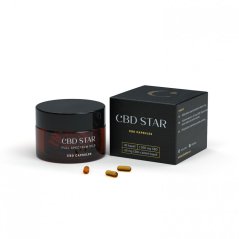
CBD Star CBD Hemp capsules 10%, 1000 mg, 30×33 mg
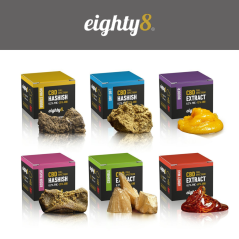
Eighty8 CBD Concentrates – All in One Set, 6 types x 1 gram
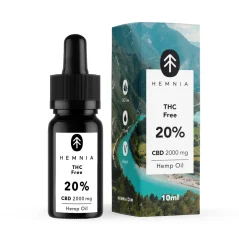
Hemnia CBD Oil 20% THC Free, 2000 mg, 10 ml
Imported from Canatura. Links have been converted to thcvapestores.com where possible.