
Making homemade herbal tinctures – How to do it
- What are herbal tinctures?
- Benefits of tinctures
- How to make your own herbal tincture
- Ingredients and equipment
- Procedure
- The best herbs for making your own herbal tinctures
- How to use herbal tinctures
People use a huge variety of herbs for different purposes. Their effects have been tested by time and science; some help us relax and unwind when we feel nervous or under pressure, while others stimulate the mind and improve concentration.
There are several ways to enjoy herbs and their effects. Herbal tea is one of the easiest options, but it is not the most effective or discreet. Herbal tinctures, on the other hand, are highly concentrated and more effective. In addition, they are more discreet and easy to make.
What are herbal tinctures?
A tincture is essentially a type of extract that uses alcohol as a solvent to utilise the essential oils of the herbs in question. Other similar herbal extracts use water, vinegar, and glycerine to obtain these desired molecules, but what makes a tincture a tincture is the addition of alcohol. Alcohol, especially stronger alcohol, is not only an easily available solvent, but it also does a good job of preserving the ingredients. In addition, it usually extracts more of the desired components than other solvents.
Benefits of tinctures
Making tinctures is fun, and they also add a degree of self-sufficiency to your herbal regimen. Creating your own tinctures empowers you and gives you a better understanding of the benefits of different herbs and how to best use them. Tinctures are also fast-acting extracts that provide their effects quickly after administration. You can take tinctures orally or apply them externally.
Tinctures are much more effective and discreet than other methods of herbal intake, such as drinking tea or chewing raw plant matter. In addition, the high concentration of active ingredients in tinctures allows you to achieve more effective doses of selected herbs.
How to make your own herbal tincture
Making a tincture is not complicated and does not require any special or expensive equipment. All you need are your chosen herbs and a few items that are commonly found in every household, and you’re ready to go!
Ingredients and equipment
- Herbs of your choice
- Several jars with lids
- A cloth or coffee filter
- High-quality, very strong alcohol (vodka, brandy, other strong spirits)
- Bottles with droppers
- A sharp knife (for chopping herbs)
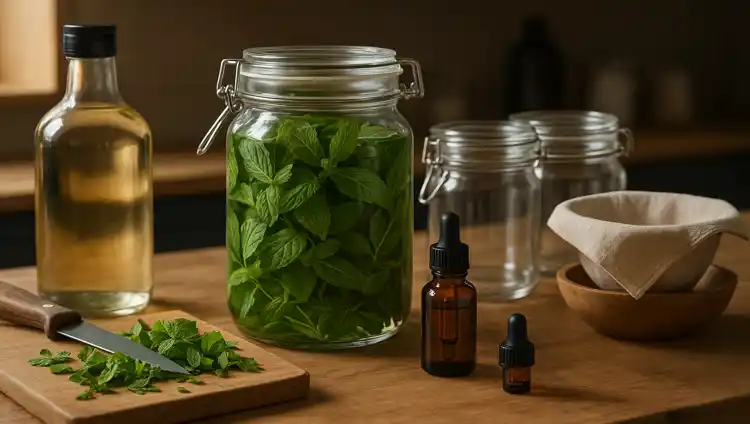
Procedure
Now that you have the equipment, it’s time to start making your own tincture. When preparing a tincture, it is not necessary to measure everything precisely. Many herbalists use a more relaxed and traditional approach, estimating the quantities by eye.
- Chop the herbs in a clean and open workspace.
- Fill one of the jars approximately ? full with plant material.
- Fill the jar to the brim with alcohol. The higher the alcohol percentage, the more compounds will be extracted from the herbs. The typical alcohol percentage used for most tinctures is between 40-50%.
- Close the lids on the jars and place them in a cool, dry, dark place. Shake the jars several times a week to mix the contents.
Tip: If you notice that some of the alcohol has evaporated, top it up. Keep the container full and sealed to prevent mould or bacteria from forming.
After about 6-8 weeks, your tincture is ready to be poured into smaller containers. Pour the tincture through a thin or coffee filter to separate the liquid from the solid plant matter.
Pour the filtered tincture into dropper bottles for easy and effective use. Don’t forget to label the bottles with the name of the herb inside and the date the tincture was made. You can also add information about dosage, alcohol content, and other information you may want to know when using it later.
The best herbs for making your own herbal tinctures
As mentioned, there are many herbs that can provide an incredible range of benefits. Here are our suggestions for the best herbs to use in your tinctures.
Chamomile
- Aids digestion
- Calming effect
- Rich in antioxidants and flavonoids
Two types of chamomile are used in tinctures – German chamomile and English chamomile. This herb has been used in various cultures for hundreds of years for many reasons. Chamomile is best known for its relaxing effect, which promotes quality sleep, but it also relieves stomach irritation, aids digestion and soothes the skin.
Chamomile is a good source of antioxidants, which are compounds that help prevent oxidative stress caused by free radicals. The herb is also praised for its high levels of flavonoids. Flavonoids are compounds associated with good cardiovascular health.
Catnip
- Relaxing effect
- Helps with feelings of restlessness or nervousness
- Promotes a good night’s sleep
Catnip is usually associated with the powerful mind-altering effect it has on cats. However, catnip is also beneficial for humans. The flowers of this herb are traditionally used for their calming effect on the mind and body.
The same compound in catnip that makes cats euphoric has the opposite effect on humans. It has a relaxing effect that helps when you feel restless or nervous and can help you achieve deep, restorative sleep. Catnip also contains a number of beneficial vitamins and minerals.
Peppermint
- Calming and cooling effect
- Aids digestion
- Reduces appetite
Peppermint is a plant that grows very vigorously and, if allowed, will gradually take over the entire garden. Thanks to its fresh and cooling scent, it is used in aromatherapy to ensure concentration and clarity of mind. Mint also has a calming effect on the stomach and aids digestion.
The cooling effect of peppermint is mainly due to the aromatic compound menthol. When used externally, peppermint provides a soothing and cooling sensation. Some active ingredients in peppermint have been linked to a reduction in appetite. For this reason, peppermint is also thought to be beneficial for weight loss.
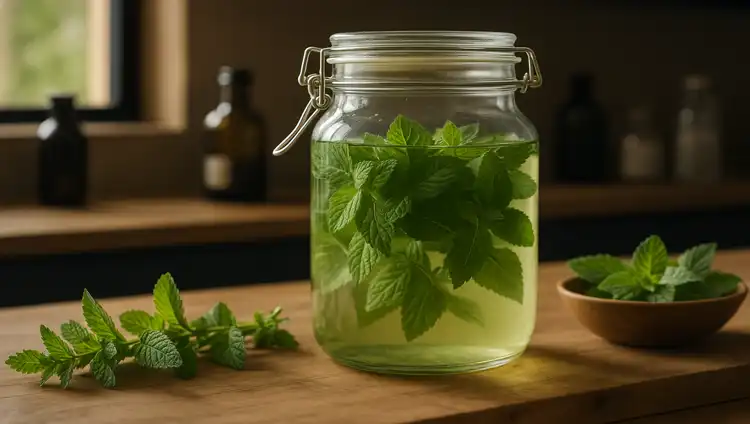
Lemon balm
- Aids digestion
- Calming effect
- Fights microbes
Lemon balm is a perennial herb. Its leaves have a pleasant lemon scent and are used to make teas and extracts. Lemon balm has historically been used for a variety of purposes, such as promoting healthy digestion and regular menstruation.
Lemon balm has a relaxing effect on the nerves. For this reason, it is good to take the herb when you feel nervous or agitated. In addition, it can promote a good night’s sleep. Lemon balm has also shown impressive activity against bacteria. Studies even show that it is effective against Listeria monocytogenes (listeria) and Staphylococcus aureus (golden staphylococcus).
How to use herbal tinctures
Herbal tinctures are usually filled into small dropper bottles containing alcohol with an extract. Tinctures are quite flexible in how they can be administered.
One way to take a tincture is to place a few drops under the tongue, where it is quickly absorbed into the bloodstream. Alternatively, tinctures can be mixed into soups, smoothies, juices and even teas.
Tinctures can also be used externally. You can apply them directly to the affected area or use a cotton swab or piece of cloth.
There are virtually no restrictions on how to use tinctures – just be careful with the dosage. Fortunately, many plants have a high safe dosage limit. Nevertheless, it is always best to start with a low amount to see how the tincture affects you.
Last but not least: the tincture has a high alcohol content, so keep it out of the reach of children!
Author: Elena Moreau
Photo: Shutterstock
“All information provided on this website, as well as information provided through this website, is for educational purposes only. None of the information provided herein is intended to replace medical diagnosis, and such information should not be considered medical advice or recommended treatment. This website does not endorse, approve or advocate the lawful or unlawful use of narcotic or psychotropic substances or the commission of any other illegal activity. For further information, please see our Disclaimer.”
Imported from Canatura. Links have been converted to thcvapestores.com where possible.