- What exactly is CBD?
- Can CBD have psychoactive effects on me?
- Why is CBD found in so many different products today?
- How does CBD work?
- So what exactly does CBD do in cosmetics?
- What is the difference between isolate and full-spectrum CBD?
- Is CBD actually legal?
- What’s next for cannabis in cosmetics?
There are celebrities like Emma Roberts and Melissa McCarthy who rubbed CBD oil on their feet before the Oscars, and Kim Kardashian who considered CBD baths for her newborn baby. Vertly, Flora + Bast, and Lord Jones have instantly become highly acclaimed fragrances and are considered the modern-day Chanel No. 5. Barneys, for example, opened a high-end cannabis store in Beverly Hills this year, and retailers such as CVS and Walgreens are following suit.
If you were planning to wait for CBD to become fashionable, you may want to reconsider—according to Cowen & Co., the US CBD market could reach $16 billion in annual revenue by 2025. You’ve probably seen CBD versions of everything from mascara to intimate lubricant, but you probably don’t know how these products actually work. Will it relieve your stress? Will you get great skin? Can these products get you high? And if not, why are people so concerned about it?
What exactly is CBD?
CBD, short for cannabidiol, is one of more than 80 compounds called cannabinoids that are extracted from the cannabis plant. The two best known are CBD, which cannot get you high, and THC, which does exactly that. During the Reefer Madness era, attention was primarily focused on THC. Individual cannabis strains were bred to contain a high percentage of THC because people who bought cannabis generally wanted to achieve the intoxicating feeling that THC induces. There was not much interest in CBD until scientists began to study how it could be helpful in medicine.
Can CBD have psychoactive effects on me?
No, no, and no again. That is precisely the reason for CBD’s growing popularity.
Why is CBD found in so many different products today?
“To be honest, before legalization, people didn’t know all the effects of CBD,” says Claudia Mata, co-founder of Vertly, a company dedicated to infusion skin care. It has anti-inflammatory properties, vitamins A, D, and E, and essential fatty acids. The public is now beginning to view CBD in a similar way to vitamins.
Now that cannabis is legal in most US states (medical marijuana in 33 states, recreational marijuana in 10 states), more people have had the opportunity to experience cannabis products for themselves. “It was the experiences of individuals that began to spread the fastest,” says Cindy Capobianco, co-founder of Lord Jones, among other things. “The enthusiasm and awareness of CBD is contributing to the destigmatization of cannabis products more than we could ever have imagined.”
How does CBD work?
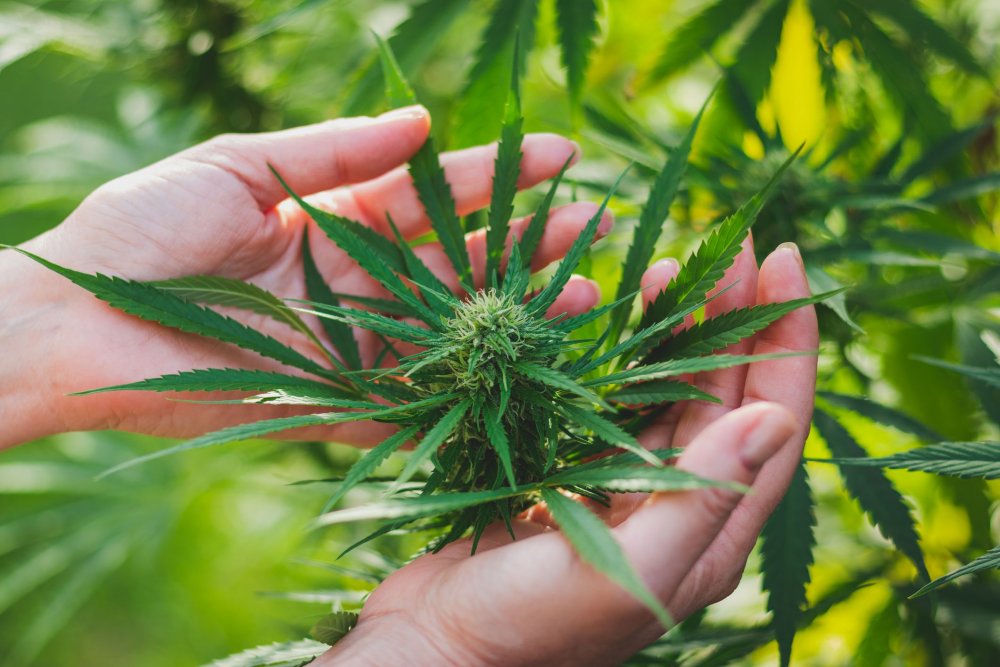
Our bodies produce their own cannabis-like chemical called anandamide, also known as the “bliss molecule”. “CBD naturally increases the level of this endocannabinoid,” says Michele Ross, founder of Infused Health, a cannabis and health education program. “Increasing the amount of anandamide in your body and brain has anti-inflammatory effects, but it also contributes to other receptor activities.”
All the other benefits that we don’t yet know about are being intensively researched in laboratories around the world. Most of the media attention initially came from the use of CBD in controlling treatment-resistant epilepsy. Today, however, there is also discussion of many other benefits that CBD can bring us, such as helping with depression or breast cancer.
When you take CBD as a dietary supplement, it enters the bloodstream like a Tylenol tablet, affecting many endocannabinoid receptors. When applied to the skin, it only acts in the area of application. “It is unlikely that CBD will penetrate deeply enough to enter the bloodstream, and it also tends to accumulate in the upper layers of the skin,” says Bonni Goldstein, a Los Angeles physician and medical advisor to Weedmaps. It is believed that CBD can provide, among other things, longer-lasting relief.
So what exactly does CBD do in cosmetics?
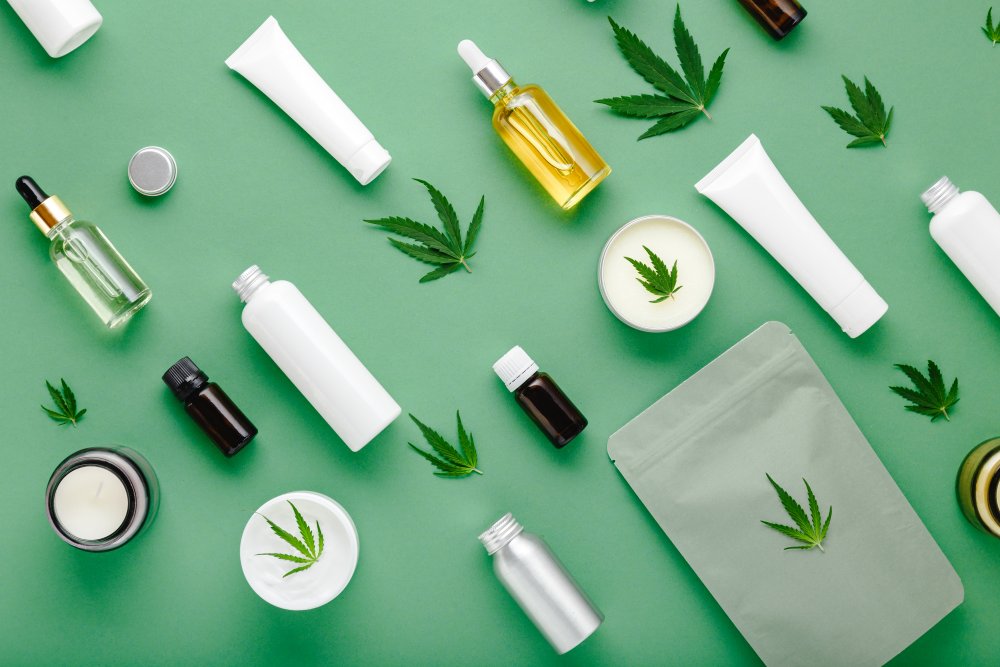
Among the most beneficial attributes of CBD are its anti-inflammatory and analgesic properties. Scientists are finding more and more evidence that CBD can help with dry skin, psoriasis, and eczema, which is why this ingredient is found in many face creams and body lotions. “Inflammation is the root of all evil, whether it’s acne or signs of aging,” says New York dermatologist Dendy Engelman, who notes that while the incidence of acne is rising, there aren’t many new treatment options.
“Most often, it’s still benzoyl peroxide, retinoids, or some kind of acid,” he says. As it turns out, CBD may be the recipe for clear skin, among other things.
Acne is very difficult to treat because it involves many components: blocked pores, excess oil, inflammation, and bacterial proliferation. A 2014 study found that CBD helps suppress oil production from the sebaceous glands. This could be good news if you have acne and want to avoid medications such as Accutane or Spironolactone. Of course, more research needs to be done, but dermatologists are very excited about the potential of CBD.
“If it can control inflammation and oil production, it would treat two parts of acne formation at once. That’s a big problem today because we currently have to do that with retinoids, which often make the skin worse at first,” says Engelman.
Topical application of CBD also reduces pain and swelling in people who cannot—or do not want to—take pain medication. That’s why we see it in so many balms used for sore joints or aching muscles.
What is the difference between isolate and full-spectrum CBD?
CBD isolate is exactly what it sounds like—CBD alone. Some users prefer it because they feel safe knowing they won’t be affected by any other cannabis compounds. On the other hand, some users believe in the “entourage effect” – that the countless compounds in the whole cannabis plant work much better in combination than isolated CBD alone. (A recent study from Israel even showed that CBD isolate was not as effective against pain as whole-plant extract).
Lord Jones is one company that prefers to use whole plants: “We found a whole-plant cannabis extract with a full cannabinoid profile—not just CBD, but also CBN and many other compounds that work in concert—to be the most effective,” says Capobianco. Cannuka, a CBD-and-manuka-honey product line, prefers to use CBD isolate. “Using isolate allows us to deliver the most effective ingredient consistently,” says founder Michael Bumgarner. “Our customers want to get the primary benefits that cannabis provides,” he says.
Is CBD actually legal?
Yes, if it is obtained from industrial hemp. In 2018, the US Farm Bill relaxed regulations on CBD by allowing the cultivation of industrial hemp (i.e., hemp with less than 0.3% THC). However, the FDA has only approved one CBD-powered drug so far—Epidiolex. It is mainly used to treat seizures in children with rare types of epilepsy.
Otherwise, it’s a bit more complicated. In April, when Scott Gottleib was still head of the FDA, he tweeted about the FDA’s next steps regarding CBD regulation. Keep in mind that according to the FD&C Act, cosmetic products and ingredients do not require prior FDA approval; this only applies to food and drugs. The FDA is working to determine its “regulatory path” (a public hearing is scheduled for May), has sent out a number of warning letters to companies that claimed that CBD cures one thing or another, and is updating its frequently asked questions about cannabis.
Currently, companies that want to operate in compliance with the law are struggling with how to legally market their products. So far, there has been no specific answer from the FDA, except that cannabinoids cannot be added to food. Fortunately, this leaves plenty of room on the market for our favorite cosmetic products containing CBD.
Garrett Graff of the Hoban Law Group, which specializes in cannabis law, says, “Our understanding is that cannabinoids derived from industrial hemp are fine as long as they do not reach the 0.3% THC threshold.”
So you don’t have to worry that if you buy a cosmetic product containing CBD, the police will come looking for you.
What’s next for cannabis cosmetics?
Terpenes! Terpenes are a component of cannabis that causes its aroma. In short, they are something like essential oils from weeds. Research suggests that terpenes in cannabis may work synergistically with cannabinoids to enhance therapeutic effects. “They are very important in pain relief and make all cannabinoids much more bioavailable and effective,” says Capobianco. So who’s ready for cannaromatherapy?
Author: Elena Moreau
Photo: iStock
“All information provided on this website, as well as information provided through this website, is for educational purposes only. None of the information contained herein is intended to be a substitute for a medical diagnosis and should not be considered medical advice or recommended treatment. This website does not endorse, condones or advocate the licit or illicit use of narcotic drugs or psychotropic substances or the commission of any other illegal activity. For more information, please see our Disclaimer.”
Imported from Canatura. Links have been converted to thcvapestores.com where possible.