Restless Leg Syndrome, Cannabis, and Sleep
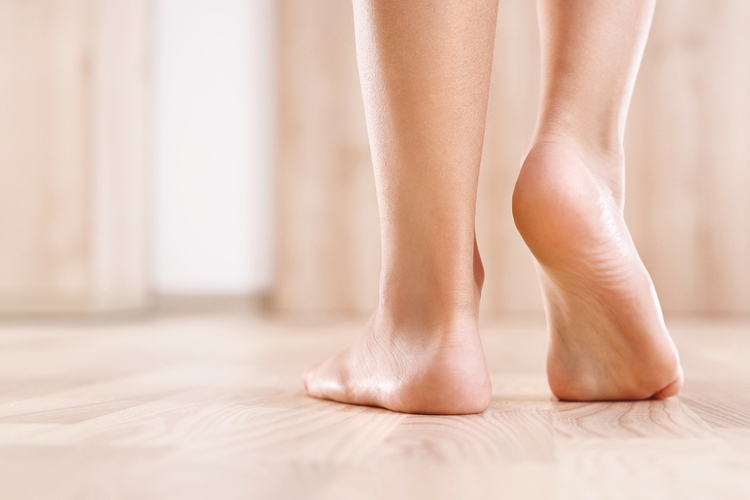
Restless legs syndrome is one of the least understood diseases for doctors. However, cannabis can provide much-needed relief to patients who have suffered from sleep disruption for years.
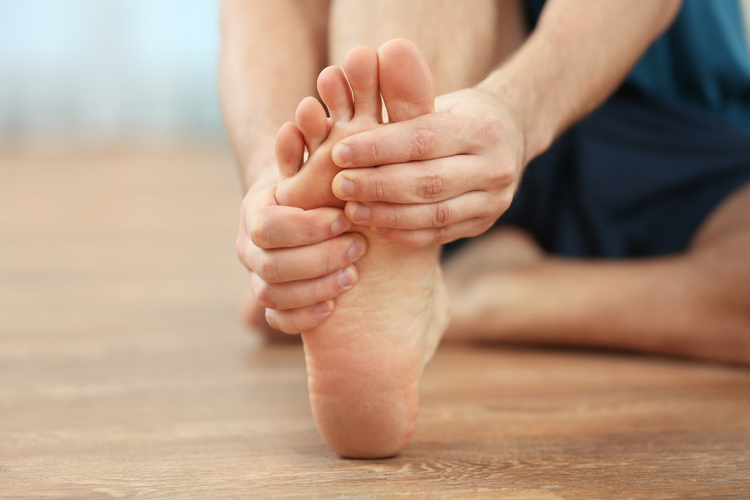
Imagine lying in bed and being woken up every hour by an irresistible urge to move your legs. It is a very unpleasant, intrusive urge that spreads from the feet to the calves and up to the thighs. The only way to stop it is to get up and walk around until it subsides. It can take 10 minutes, but it can also take hours. And it happens every night, without exception. Patients suffering from this syndrome are usually unable to sleep for more than two hours at a time.
“It’s pure torture,” says 61-year-old Julie, whose life has been affected by restless legs syndrome for almost three decades. “Imagine trying to sleep while someone pokes you every hour. But it’s not just that, it’s the feeling inside, it’s so awful.”
Julie suffers from refractory RLS, which doctors say is caused by scarring of the spinal cord as a result of multiple sclerosis (MS), which she was diagnosed with in 1994. Although she took strong medication for five years, none of it worked for her condition. She wakes up three to four times a night, which of course completely disrupts her sleep and ultimately exacerbates her MS symptoms.
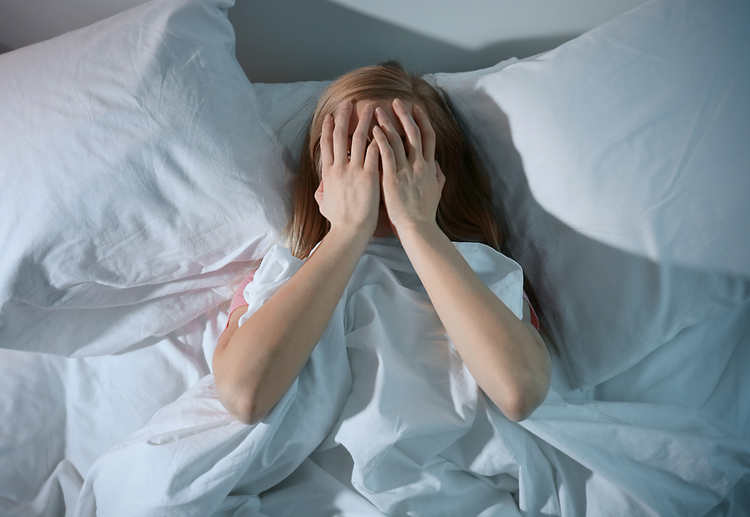
“It starts every time I lie down or sit down, and the only way to stop the urge is to move,” says Julie. “It affects my MS, but MS is nothing compared to restless legs syndrome. It’s a really agonising condition. I wish doctors would understand how serious it is.”
It’s all in the mind
Although restless legs syndrome affects almost a million patients in the Czech Republic, medical schools still do not pay enough attention to it. “Unfortunately, general practitioners know practically nothing about it, and what’s more, they treat it poorly because they don’t know what to do with the medications available for it,” explains Julie. “It has been confirmed to me that medical schools do not pay attention to this syndrome, it is not taught during general practitioners’ training, and doctors therefore have no idea what medications to prescribe.
People can lose their jobs because of it, they can’t travel by plane or car, their lives are seriously disrupted because doctors dismiss it with the words, ‘Oh, it’s just restless legs’. They say it’s all in your head, that it’s psychological.”
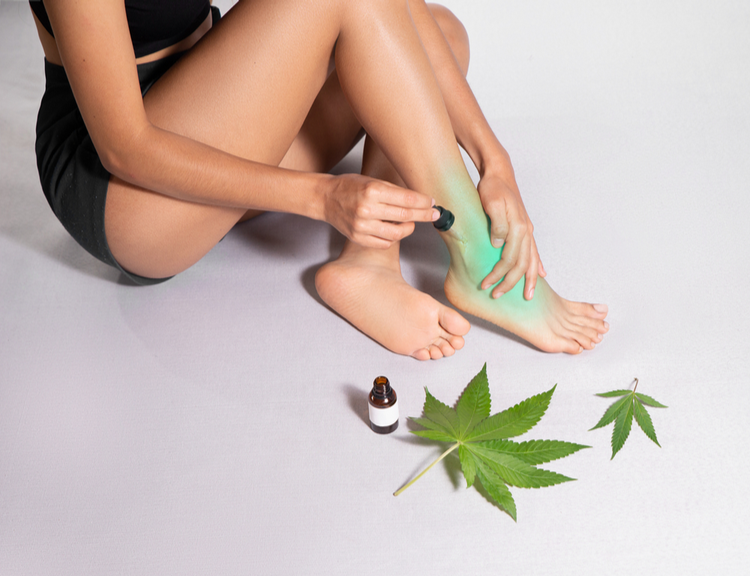
Until Julie gained access to medical cannabis, she had slept for no more than an hour at a time for the past 28 years. Using cannabis oil allowed her to sleep deeply for three to four hours. “I took it at night in the form of drops and it gave me deep sleep, so RLS didn’t manifest itself until the effects of the cannabis wore off. The urge to move my legs seemed to be suppressed, so it didn’t wake me up,” she says.
“Sleeping for four hours straight after 28 years, when I couldn’t sleep for more than an hour before, was just fantastic. Those four hours make a big difference. It changed my life. , just being able to sleep is the most precious thing in the world.”
Although sleep disorders are not among the main conditions for which doctors can prescribe cannabis, poor sleep affects many patients who use cannabis on prescription for other conditions. More than half of them report that their inability to sleep properly interferes with their daily activities, either quite a lot or significantly, with 31.5% citing insomnia as a secondary problem. Follow-up analysis of these patients should answer the question of whether prescribed cannabis helps improve sleep and its quality.
The worst pain imaginable
As soon as the use of cannabis for medical purposes was approved in our country, Julia knew she wanted to get involved. She first tried cannabis to manage her MS symptoms 20 years ago, which at the time meant asking her adult children to get it for her when she had an attack. “With MS, you can experience excruciating nerve pain, which is said to be the worst pain imaginable,” she says. “You literally can’t move, you just have to sit and endure it. No other pain even comes close.” Julie continues: “I’ve known for a long time that cannabis can help with MS.
When I had attacks in the past, I used to get illegal cannabis with the help of my children, because it was the only thing that relieved my pain. The doctors didn’t give me anything for it, and I didn’t care if they locked me up.” She adds: “The only thing I was worried about was the quality of the cannabis you could get on the street, but at the time I was grateful for anything that helped me cope with the pain.”
Symptom-free for the first time in ten years
While researching SNN, Julie came across studies showing that buprenorphine, a drug similar to methadone that is commonly used to treat people struggling with drug addiction, has positive results in low doses for patients with this condition.
While most doctors are reluctant to prescribe this drug, Julie’s GP was open to the idea. She found that a combination of buprenorphine and medical cannabis – which helps manage common side effects such as nausea – brought her condition under control for the first time. “For the first time in ten years, I had no symptoms of RLS day or night, but I was waking up with extreme nausea,” she says.
“Then it occurred to me: people use cannabis to combat nausea. Now I’m taking a drug that stops RLS, and cannabis oil has completely suppressed the extreme nausea so far. I’m thrilled, and I hope this miracle lasts.”
“I know that some doctors now know that RLS is a neurological disorder where cannabis can help with sleep and can actually lessen the effects of the syndrome in many people,” she says. “Whenever I talk to other patients, I tell them that if they have problems with restless legs syndrome or sleep, they should consider this option.” Julie adds: “I have no problem whatsoever with the stigma associated with using certain medications. I don’t care if someone looks down on me just because I use opioids or cannabis. I’m just an advocate for openness, and if something helps, let’s talk about it.”
Author: Elena Moreau
PHOTO: Shutterstock
“All information provided on this website, as well as information provided through this website, is for educational purposes only. None of the information provided here is intended to replace medical diagnosis, and such information should not be considered medical advice or recommended treatment. This website does not promote, endorse or advocate the legal or illegal use of narcotic or psychotropic substances or the commission of any other illegal activity. For more information, please see our Disclaimer.”
Imported from Canatura. Links have been converted to thcvapestores.com where possible.