
What are the effects and properties of 10-OH-THC and how does it differ from 11-OH-THC?
⚠️ Legal and health warning
10-OH-THC often falls into a gray area — its legality varies by country and can change quickly. There is very limited scientific research on this substance, particularly in humans, and its long-term effects remain unknown.
This article is for educational and informational purposes only. It is not a recommendation or instruction for consumption. Any use of this substance is entirely at your own risk.
- What is 10-OH-THC and how is it produced?
- What are THC metabolites?
- Effects of 10-OH-THC
- What is 11-OH-THC and how is it produced?
- Effects of 11-OH-THC
- 10-OH-THC vs. 11-OH-THC
- Products with 10-OH-THC and 11-OH-THC
- Conclusion
What is 10-OH-THC and how is it made?
10-OH-THC, also known as 10-hydroxy-THC, is a relatively new cannabinoid derivative – a semi-synthetic cannabinoid that is primarily produced in the laboratory by altering the original structure of THC (tetrahydrocannabinol) through chemical processes.
This is a process of hydroxylation and hydrogenation of classic THC, which leads to the creation of a compound with unique chemical properties:
- Hydroxylation is a natural process that occurs in the body after THC is consumed. When THC enters the body, it is metabolised by the liver, which can produce various hydroxyl derivatives of THC, such as 10-OH-THC. Scientists can mimic this process in the laboratory using enzymatic, chemical, photochemical or other methods.
- Hydrogenation, on the other hand, does not occur naturally in the human body. It is a process that requires laboratory conditions and is used in science and industry to modify chemical structures.
What are THC metabolites?
THC metabolites are substances that are produced when another substance is broken down in the body. When THC enters the body, it is gradually converted in the liver into various metabolites (such as 10-OH-THC and 11-OH-THC).
These metabolites do not occur naturally in cannabis – they are only produced during the metabolic process.
Effects of 10-OH-THC
Research into the effects of 10-OH-THC is still in its infancy. The exact pharmacological profile of 10-OH-THC and its effects on the human body have not yet been sufficiently studied.
However, current research suggests that 10-OH-THC interacts with the endocannabinoid system in the same way as other cannabinoids, which is involved in the regulation of various physiological processes, such as:
- pain perception
- immune response
- appetite
- sleep and mood
The endocannabinoid system consists of two main receptors: CB1 receptors are mainly found in the brain and central nervous system, while CB2 receptors are mainly found in the immune system.
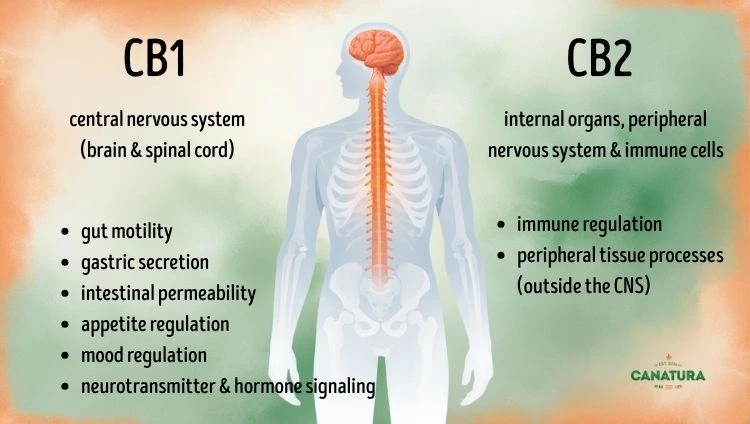
Since 10-OH-THC binds primarily to CB1 receptors, it can affect various cognitive and psychological functions, among other things. However, the psychoactive effects of 10-OH-THC are thought to be negligible and much weaker than those of THC because it has a lower affinity for these receptors.
Other likely effects of 10-OH-THC can be inferred based on the chemical structure of this compound and known information about other cannabinoids.
Possible potential benefits of 10-OH-THC may include:
- Relaxation and stress reduction: due to its ability to interact with cannabinoid receptors in the brain, 10-OH-THC is hypothesised to have a calming effect and help relieve stress and anxiety, as studies have found with other cannabinoids. Compared to THC, these effects would also be milder.
- Better sleep: Some cannabinoid users report that it helps them fall asleep or improves the quality of their sleep. In a 2023 study published in the journal Exploration of Medicine, 80% of people reported that cannabis helped them fall asleep and more than half said it made them sleep more deeply.
- Many cannabinoids are also associated with potential benefits in inflammatory conditions and pain reduction, according to It is therefore possible that 10-OH-THC could have similar effects.
However, there are currently no studies confirming these possible effects of 10-OH-THC. The above-mentioned presumed effects are based primarily on experience with other cannabinoids that have a similar structure.
What is 11-OH-THC and how is it produced?
11-OH-THC, or 11-hydroxy-THC, is a cannabinoid that, like 10-OH-THC, does not occur naturally in cannabis. Unlike 10-OH-THC, however, it cannot be created in a laboratory – it is only produced by the human body when THC is broken down.
When you consume a product containing THC, your liver processes it and converts it into 11-OH-THC. This is why 11-hydroxy-THC is considered the main active metabolite of THC. However, its amount in the body depends on the individual, their metabolism, the method of cannabis use, and other factors.
Effects of 11-OH-THC
Several studies are available that examine the effects of 11-OH-THC on the brain and body:
Psychoactivity may be stronger than THC
A study in The Journal of Clinical Investigation compared the psychological and physiological effects of intravenously administered THC and its metabolite 11-OH-THC in 9 occasional cannabis users. After administration of synthesised 11-OH-THC (1 mg i.v.), all participants experienced significant tachycardia (rapid heartbeat) and a “high” within 3-5 minutes. After administration of the same dose of THC (1 mg i.v.), the “high” was delayed, occurring only after approximately 10-20 minutes.
Another study from 2025 showed that approximately half of the modelled population could achieve tachycardia at a resting heart rate with a dose of approximately 60 mg of THC when administered orally and approximately 15 mg of THC when inhaled.
More 11-OH-THC when taken orally
Available data show that in daily users, repeated oral consumption of THC can result in measurable THC remaining in the blood for a longer period of time, while metabolites, mainly 11-OH-THC and THCCOOH, accumulate significantly. This is probably because when ingested, THC first passes through the digestive tract and liver, where part of the THC is more easily converted to 11-OH-THC.
When smoked or vaped, THC is absorbed through the lungs directly into the bloodstream, so it quickly enters the circulation and the central nervous system, and the liver does not have time to convert as much THC into 11-OH-THC. A study examining marijuana smoking also shows that THC levels in the blood rose rapidly, peaked before the end of smoking, and then declined rapidly.
The maximum average levels of 11-OH-THC were significantly lower than THC levels and appeared immediately after smoking ended.
Tip: We have written more information about 11-OH-THC for you in the article 11-OH-THC in a nutshell: properties and effects.
10-OH-THC vs. 11-OH-THC
In terms of common properties, neither substance is naturally found in cannabis – they only appear after THC consumption as products of its metabolism. The two cannabinoids have more differences than similarities:
| 10–OH–THC | 11–OH–THC | |
|---|---|---|
| THC metabolite | Secondary metabolite | Primary active metabolite |
| Receptor binding | Lower binding to CB1 receptor | Stronger binding to CB1 receptor |
| Psychoactivity | Weaker psychoactive effects | More intense psychoactive effects (stronger than THC) |
| Effects | Weaker other potential effects | More pronounced other potential effects |
11-OH-THC is considered to be the main metabolite of THC, which occurs naturally in the body when THC is processed in the liver. In contrast, 10-OH-THC is often described as a secondary metabolite and is most commonly encountered in practice as a substance produced in the laboratory.
Another difference lies in how strongly each substance binds to cannabinoid receptors. 11-OH-THC is reported to have a stronger binding to CB1, so it can usually have more pronounced psychoactive effects. In contrast, 10-OH-THC is typically described as having a weaker binding to CB1 and, therefore, weaker or less pronounced effects.
Products with 10-OH-THC and 11-OH-THC
In practice, 10-OH-THC most often appears in the form of vapes, flowers, pre-rolls and hash, as it can be specifically produced and added to products.
11-OH-THC, on the other hand, cannot be purchased as a separate “ingredient” – it is only produced in the body after THC consumption (higher levels of 11-OH-THC in the blood after consuming THC in food).
Conclusion: from the same cannabinoid, yet different
10-OH-THC is a relatively new cannabinoid derivative. It is produced by chemically modifying classic THC, specifically through hydroxylation and hydrogenation. Research into its effects is still limited.
This cannabinoid, which binds primarily to CB1 receptors in the brain, may have weaker psychoactive effects than THC and show potential for improving sleep quality, relieving stress, anxiety, pain and inflammatory conditions.
In contrast, 11-OH-THC is not produced in the laboratory, but naturally in the body as the main active metabolite of THC. It is found in the blood mainly after oral use. Although 10-OH-THC and 11-OH-THC are similar in name and are derived from THC, they differ in how they are produced and how they work.
FAQ
1. What is the main difference between 10-OH-THC and 11-OH-THC?
The main difference is in their potency and origin: 11-OH-THC is a natural metabolite produced in the body after THC consumption and is associated with more pronounced psychoactive effects, while the effects of 10-OH-THC are typically described as weaker and there is less quality data available on it.
2. Which is stronger?
It is believed that 11-OH-THC may have a stronger effect than THC alone. However, the strength depends on the THC dose, method of use and individual metabolism.
3. Why do edibles have a stronger effect?
Because when THC is taken orally, it first passes through the digestive tract and liver, where part of the THC is converted to 11-OH-THC. This metabolite is considered to be significantly active, so the effects of THC-infused foods can be more intense and longer-lasting than when smoking or vaping.
4. Is 10-OH-THC legal?
10-OH-THC products are in a grey area, and their legality varies significantly from country to country. It depends on how local legislation defines THC and its derivatives.
If you want to be sure, it is always worth checking the current rules in your country (possibly also for the specific type of product and its composition).
5. How long does 11-OH-THC last?
After inhalation, the effects of THC usually wear off within about 2-4 hours, while after oral use, they can last for approximately 6-12 hours.
6. Can 11-OH-THC be purchased?
Not directly, because it is a metabolite that is produced in the body after THC is consumed. It is most commonly produced in higher amounts when consumed orally (e.g., edibles – gummies, brownies).
7. Is 10-OH-THC safe?
There are not yet enough high-quality studies to reliably describe the safety of 10-OH-THC. Therefore, caution is advised, especially with higher doses, regular use, and in more sensitive individuals.
8. Will 10-OH-THC and 11-OH-THC show up in blood tests?
11-OH-THC may show up in tests because it is a metabolite of THC that is produced in the body after its use. This is unclear for 10-OH-THC.
Sources:
- Quantifying Heart Rate Changes After Delta-9-Tetrahydrocannabinol Administration Using a PBPK-PD Model in Healthy Adults
- Comparative Pharmacology of Δ9-Tetrahydrocannabinol and its Metabolite, 11-OH-Δ9-Tetrahydrocannabinol
- Blood Cannabinoids. I. Absorption of THC and Formation of 11-OH-THC and THCCOOH During and After Smoking Marijuana
- Δ9-Tetrahydrocannabinol (THC), 11-Hydroxy-THC, and 11-Nor-9-carboxy-THC Plasma Pharmacokinetics during and after Continuous High-Dose Oral THC
- The Intoxication Equivalency of 11-Hydroxy-Δ9-Tetrahydrocannabinol Relative to Δ9-Tetrahydrocannabinol
Author: Pavla Skřivánková; Update: Lucie Schmidtová
Photo: AI
“All information provided on this website, as well as information provided through this website, is for educational purposes only. None of the information contained herein is intended to be a substitute for a medical diagnosis and should not be considered medical advice or recommended treatment. This website does not endorse, condones or advocate the licit or illicit use of narcotic drugs or psychotropic substances or the commission of any other illegal activity. For more information, please see our Disclaimer .”

SEO & Content Specialist | Health, Phytotherapy & E-E-A-T Strategy
Vladana Milfaitová ist erfahrene Content-Strategin und SEO-Spezialistin mit Schwerpunkt auf Phytotherapie, Gesundheit und pflanzliche Wirkstoffe. Sie verbindet datenbasierte Suchmaschinenoptimierung mit wissenschaftlich fundierter redaktioneller Arbeit, um komplexe Gesundheitsthemen verständlich, vertrauenswürdig und barrierefrei aufzubereiten.
🔗 Vernetzen Sie sich mit Vladana auf LinkedIn
Recommended products
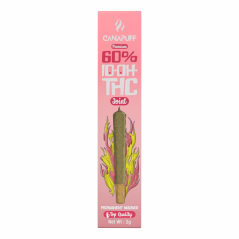
CanaPuff 10-OH-THC Preroll Permanent Marker, 10-OH-THC 60 %, 2 g
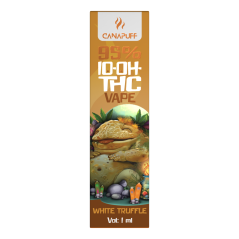
CanaPuff 10-OH-THC Disposable Vape Pen White Truffle, 10-OH-THC 95 %, 1 ml
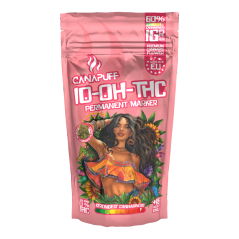
CanaPuff 10-OH-THC Flower Permanent Marker, 10-OH-THC 60 %, 1 – 5 g
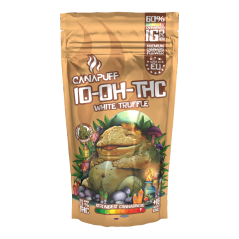
CanaPuff 10-OH-THC Flower White Truffle, 10-OH-THC 60 %, 1 – 5 g
Imported from Canatura. Links have been converted to thcvapestores.com where possible.