
- Can I give my dog or cat “human” CBD oil?
- CBD oil for pets vs. regular CBD oil: What’s the difference?
- What kind of CBD oil can I give my pet?
- 1. Always use CBD products without THC
- 2. Use CBD oils without added sugar
- 3. Use a lower dose than recommended on the bottle
- 4. Consider using CBD treats instead
- CBD products for animals are less effective… and more expensive
- How does CBD work in animals?
- 1. CBD can help dogs with osteoarthritis
- 2. CBD can reduce epileptic seizures in dogs
- Is it safe to give my cat or dog “human” CBD oil?
We are often asked: “Is it safe to give ‘human’ CBD to my dog? What is the difference between human and animal CBD oil?”
You know that CBD is a natural choice for helping with anxiety, pain, and inflammation… for humans. The compound is non-addictive, non-toxic, and completely natural. So when your little friend started having health problems and medication didn’t help, you started asking yourself, “What if I give my pet the CBD oil I’ve been using?”
It sounds like a complicated question, but we have the answers. Let’s take a look at veterinary research on the safety of using CBD for pets and whether you can give your pet “human” CBD oil.
Can I give my dog or cat “human” CBD oil?
The simple answer is yes—it is safe to give your pet CBD intended for human consumption—with a few key caveats:
– Do not give your pets any hemp oil containing more than 0.3% THC
– Use smaller doses than those recommended on the bottle
– If your animal has any underlying health issues, talk to your veterinarian before administering CBD
All animals have an endocannabinoid system—including some of the most primitive animals, such as sea cucumbers. This means thatanimals, like humans, have cannabinoid receptors, a key component of the endocannabinoid system.
Although animals may process CBD differently (which is still being researched), they have the necessary mechanisms to benefit from CBD. Cannabidiol may be able to relieve pain, inflammation, and anxiety in animals, just as it does in humans.
However, there are a few things you need to know before giving your pet CBD intended for human consumption.
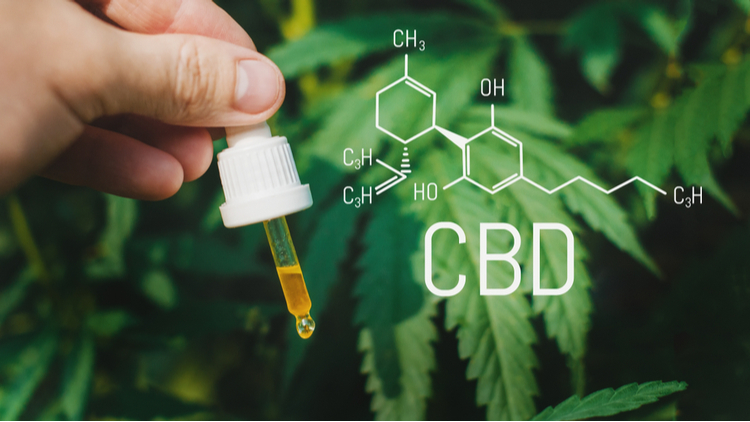
CBD oil for pets vs. regular CBD oil: What’s the difference?
The extraction process for both animal and human CBD is the same—both types should be derived from pure organic hemp and contain less than 0.3% THC.
So, CBD products intended for humans are essentially the same as CBD products for pets—with a few minor differences in potency and flavor options.
What kind of CBD oil can I give my pet?
Not all types of CBD oils are created equal. However, if you are using CBD isolate derived from hemp with no THC content, you can give your pet the same CBD oil that you use.
1. Always use THC-free CBD products
It is common for pets to end up at the vet with toxicosis after consuming their owners’ cannabis supplies. On the other hand, pets with health problems such as arthritis, cancer, and other chronic conditions can use a controlled dose of medical cannabis to relieve their symptoms.
Some studies show that THC has low toxicity in animals, while others report fatal cases of marijuana use in pets. It all depends on the individual dose.
Giving CBD oil that contains THC to animals is the subject of research. Although your pet may benefit from THC, you should not give them cannabis oils with high THC content. Instead, you should stick to pure CBD or cannabis oil without THC content. CBD oil with less than 0.3 percent THC is generally considered safe—it will not harm your pet.
Too high a dose can cause side effects in smaller animals. This could be a problem due to the unregulated CBD oil market — THC levels in full-spectrum CBD oil for human consumption may be higher than manufacturers officially claim.
Another issue is terpenes present in both broad-spectrum and full-spectrum CBD oil for human consumption. Terpenes such as limonene, myrcene, pinene, or eucalyptol are essential oils found in various plants (including cannabis) that can be harmful to pets, even in small amounts.
Here are the three main types of CBD oil for human consumption that you will encounter:
– CBD isolate – 99.99% pure CBD, no THC – recommended for pets.
– Broad-spectrum CBD oil – CBD and terpenes, no THC. Use with caution in animals.
– Full-spectrum CBD oil – CBD, terpenes, 0.3% THC – this type contains THC, but in very small amounts, which is unlikely to have a negative effect on your pet. However, it is still recommended to use CBD oil from isolate.
There are certain exceptions to this rule, and several companies produce excellent broad- or full-spectrum CBD oils for pets. All have been approved by veterinarians and have safe levels of certain terpenes, as well as THC.
Reviews of the best CBD oils for dogs and cats and other articles on the use of CBD products in animals can also be found on the Země Zvířat website.
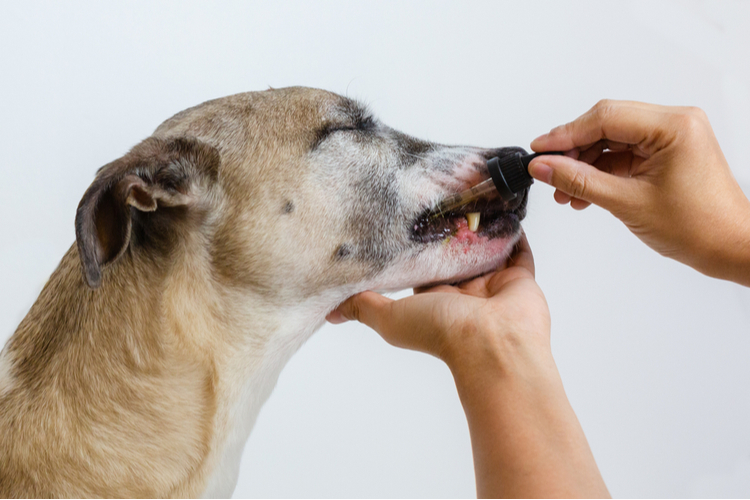
2. Use CBD oils without added sugar
Pure CBD oil leaves an earthy, bitter taste in the mouth, which is why people mask CBD oil with their coffee or tea. To cover up the true taste of CBD, many manufacturers have started adding artificial flavors or sugars similar to dextrose.
Animal products also come with flavors such as beef or fish to make them taste better to animals. Although it will not be harmful in small amounts, using CBD supplements containing artificial sweeteners and sugar can lead to long-term health problems for your pet.
It is better for you and your pet if the CBD oil is sugar-free and does not contain any artificial sweeteners. As with humans, excessive sugar consumption can lead to health problems such as diabetes, upset stomach and sinuses, and weight gain in pets. Some artificial sweeteners found in CBD oil, such as xylitol or grape seed oil, can be harmful in other ways.
3. Use a lower dose than recommended on the bottle
When giving your pet CBD oil intended for humans, it is important to remember that our furry friends are smaller and more sensitive to CBD. Therefore, the dose should be much lower. The rule of thumb when administering CBD oil for human consumption is to start low and increase the dose slowly. A good starting point is 0.55-1.1 mg/kg every day.
|
Dog size |
Dose |
Notes and dosing instructions |
|
Small dogs (1 – 7 kg) |
0,5 mg – 5 mg |
You may need to give small dogs 3–4 doses per day, because they have a fast metabolism |
|
Medium-small dogs (7 –14 kg) |
5 mg – 10 mg |
You may need to give medium-small dogs 2–3 doses per day |
|
Medium dogs (14 – 27 kg) |
10 mg – 25 mg |
Medium dogs usually need approximately 2–3 doses per day |
|
Large dogs (27 – 70 kg) |
20 mg – 50 mg |
Large dogs can take higher CBD doses and will probably need two doses per day |
Dog size
Dose
Notes and dosing instructions
Small dogs (1 – 7 kg)
0,5 mg – 5 mg
You may need to give small dogs 3–4 doses per day, because they have a fast metabolism
Medium-small dogs (7 –14 kg)
5 mg – 10 mg
You may need to give medium-small dogs 2–3 doses per day
Medium dogs (14 – 27 kg)
10 mg – 25 mg
Medium dogs usually need approximately 2–3 doses per day
Large dogs (27 – 70 kg)
20 mg – 50 mg
Large dogs can take higher CBD doses and will probably need two doses per day
4. Consider using CBD treats instead
Another great way to give your pet CBD is in the form of CBD treats for dogs or cats.
These products are pre-mixed into a tasty biscuit optimized for cats or dogs. This method is the preferred form for most owners of picky dogs or those who want the easiest way to give their pet CBD. No measuring or mixing oil with food is necessary.
CBD products for animals are less effective… and more expensive
Products for animals contain less CBD, are technically identical to CBD for humans, but tend to be more expensive.
Animals require a lower dose compared to humans, so a 30 ml tincture with 300 mg of CBD is usually enough for a month’s supply. For humans, a 30 ml tincture with 300 mg of CBD can last a week or two, depending on the dose you take.
How does CBD work in animals?
Research is scarce, but so far, CBD appears to be safe for animals — and may be effective for several common ailments.
1. CBD may help dogs with osteoarthritis
A 2018 study (funded by a CBD producer) looked at the safety, anti-inflammatory properties of CBD, and its pain-relieving effects in dogs with osteoarthritis. Researchers found that giving 2 to 8 milligrams of CBD per kilogram of body weight twice daily can help increase comfort and activity in dogs with osteoarthritis.
The study showed that 80% of dogs showed improvement in pain severity and mobility. The dogs tested showed no side effects.
The only negative effect reported was an increase in alkaline phosphatase (ALP) during treatment with CBD. Alkaline phosphatase (ALP) is a liver enzyme, and elevated levels indicate that something is irritating the liver cell membrane. Elevated levels of this enzyme are common in dogs—veterinarians are only concerned if they are too high. Extreme ALP levels indicate that something is irritating or damaging the dog’s liver.
There are various reasons that explain elevated ALP levels, including infection, inflammation (osteoarthritis is an inflammatory condition), certain medications, ingestion of toxic substances, and certain diseases. However, it is perfectly normal for dogs with elevated ALP levels to act and appear healthy.
2. CBD can reduce epileptic seizures in dogs
Another study published in 2019 found that CBD helps dogs with epileptic seizures. In the study, one group of dogs was given CBD in addition to medication, and the other group was given a placebo along with medication.
The study showed a significant reduction in seizure frequency in the CBD group. In addition to anti-epileptic treatment, researchers administered 2.5 mg per kg of CBD oil twice daily for 12 weeks to the dogs.
It is important to note that the authors of the study recorded an improvement in seizures in both groups, which means that both groups responded to conventional treatment. Further research is needed to determine whether a higher dose of CBD will be effective in reducing seizures in dogs by 50% or more.
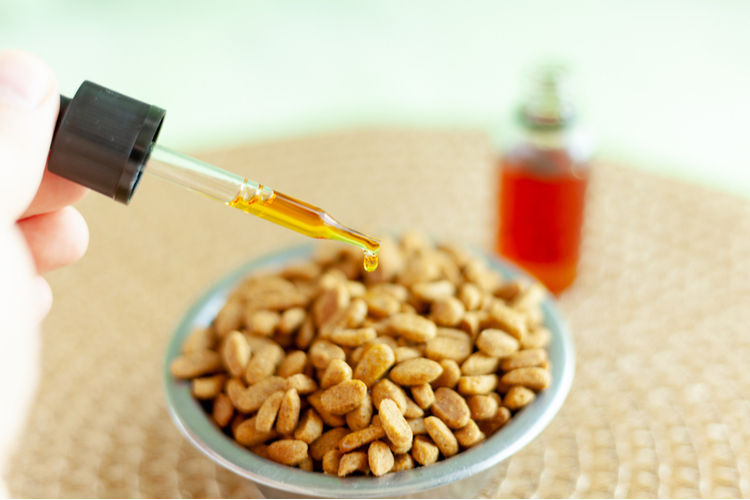
Is it safe to give your cat or dog “human” CBD oil?
Yes, you will not harm your pet by giving them some of your CBD oil if you use pure hemp CBD oil without THC, which contains no sugar or artificial sweeteners. You should also calculate the correct dose for your pet based on the strength of the CBD oil for human use.
Before giving your pet CBD oil, it is important to consult with your veterinarian about your pet’s overall health—especially if they are taking other medications or have other serious health issues.
Author: Elena Moreau
Photo: Shutterstock
“All information provided on this website, as well as information provided through this website, is for educational purposes only. None of the information contained herein is intended to be a substitute for a medical diagnosis and should not be considered medical advice or recommended treatment. This website does not endorse, condones or advocate the licit or illicit use of narcotic drugs or psychotropic substances or the commission of any other illegal activity. For more information, please see our Disclaimer .”
Imported from Canatura. Links have been converted to thcvapestores.com where possible.