
- Why do muscles ache after exercise?
- How does CBD work in the human body?
- How can CBD help with muscle recovery?
- How to use CBD for recovery
- What else can help with recovery?
- How to get the most out of CBD for muscle recovery
- FAQ
Athletes and active people often turn to CBD products as a recovery aid after workouts, competitions, or physical exertion. CBD is a non-psychoactive cannabinoid derived from hemp that is used in cosmetics, such as ointments, balms, and creams. In the context of muscle recovery, it is primarily being studied for its potential effects on inflammatory responses, pain perception, muscle relaxation, and the quality of rest. In this article, we’ll explore what science has to say about this potential and discuss how to choose the right ointment or cream.
Why do muscles ache after exercise?
What causes muscle soreness after exercise? And why does it occur even if you exercise regularly?
Every time you stretch your muscles, you cause microscopic damage to the millions of tiny proteins that make up your muscle cells. This damage leads to muscle inflammation—which causes the characteristic pain and stiffness felt after exercise. Inflammation is a natural part of muscle recovery. It helps deliver blood, oxygen, and nutrients to the damaged area while also promoting the removal of waste products produced during muscle exertion. However, if the inflammatory response is too severe or affects surrounding tissues, it can complicate your return to normal activity.
Post-workout pain usually begins the following day; this is known as delayed-onset muscle soreness (DOMS). The pain typically subsides on its own within 3–5 days. For most people who exercise regularly, however, this period is too long, so they look for ways to speed up recovery.
How does CBD work in the human body?
CBD works through the body’s endocannabinoid system (ECS), which is found in all mammals. This system helps maintain the body’s internal balance (homeostasis), for example, in areas such as sleep, mood, pain perception, and inflammatory responses. CBD does not act directly on the endocannabinoid system like THC does, but it modulates it and can influence its natural activity.
CBD may also affect other receptors in the body, including:
- vanilloid pain receptors
- 5HT1A receptors (serotonin receptors)
- PPAR receptors
How can CBD help with muscle recovery?
1. Effect on inflammation
CBD is being studied for its potential effects on inflammatory processes in the body.
Some studies suggest that CBD, thanks to its indirect effect on the endocannabinoid system and other processes, may influence the inflammatory response without disrupting the natural course of recovery. This is a different mechanism of action than that of conventional medications, where the goal is not to suppress inflammation but rather to support a return to greater comfort.
However, the effects of CBD can vary, and research into muscle recovery is still ongoing. Although current research suggests that CBD may be beneficial for recovery, it should not replace rest, proper recovery, or professional care in the event of an injury.
2. Reducing muscle tension
One of the characteristic symptoms of muscle pain is muscle tension. When it comes to injuries, tension in the muscles surrounding the affected area can make the pain even worse—which is why muscle relaxants are so popular for pain relief during recovery.
Some forms of prescription muscle relaxants used for treatment-resistant muscle tension are benzodiazepines, such as Valium. These medications work through GABA receptors, which are key regulators of muscle relaxation. However, benzodiazepines are powerful medications that can lead to tolerance, physical dependence, and withdrawal symptoms with prolonged use, and they may also be associated with serious side effects such as sedation, confusion, dizziness, or impaired coordination.
Research to date suggests that CBD may influence certain neural pathways associated with the body’s relaxation response, including the GABA system. Unlike benzodiazepines, however, CBD does not show potential for dependence, and side effects are generally less common and less severe—though not entirely ruled out, particularly when interacting with certain medications.
It is important to keep in mind that CBD does not work the same way as benzodiazepines and cannot be considered a substitute for them. For sore muscles, it may be more useful as a supplement to local treatment. If you are taking medication, it is advisable to always consult your doctor about the safety of using CBD.
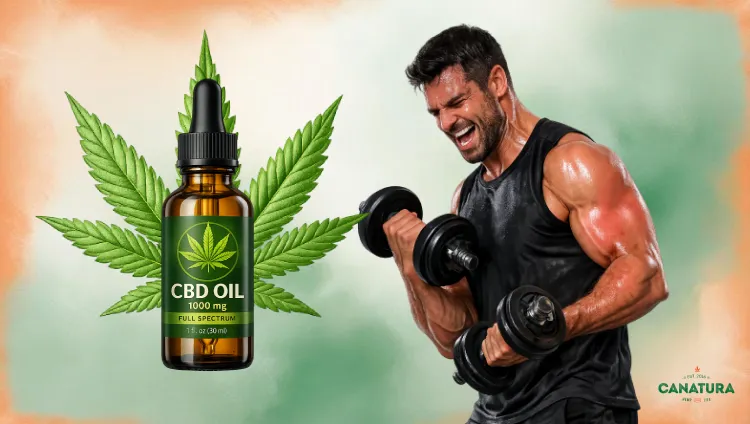
3. Pain relief
CBD is also being studied in relation to pain perception.
It is believed that CBD may influence pain perception in several ways:
- by regulating the inflammatory response,
- by acting on receptors involved in pain sensitivity, such as vanilloid receptors,
- by affecting the transmission of pain signals in the nervous system.
However, these mechanisms are still being studied, so it is best to view CBD as a supplement for sore muscles rather than a substitute for pain medication.
4. Improving sleep quality and duration
Most muscle recovery processes are activated while we sleep. Important processes that occur during sleep include:
- repair of damaged proteins, such as troponin, actin, and myosin,
- removal of cellular debris from damaged areas,
- conversion of lactic acid to glucose in the liver,
- stimulation of stem cell differentiation into new muscle fibers.
Sleep deprivation can negatively affect recovery in several key areas:
- It can lead to a decrease in insulin-like growth factor 1 (IGF-1), which is one of the main triggers for muscle stem cell differentiation.
- It can increase cortisol levels, which negatively affects protein synthesis.
- It can cause a decrease in testosterone levels, which plays a major role in the muscle recovery process in both men and women.
Some studies suggest that CBD may be beneficial for anxiety and stress, which are among the main causes of sleep problems.
💡 You might be interested in: CBD for sleep disorders: Insomnia, daytime fatigue, and more
How to use CBD for recovery
There are many different CBD supplements available today, making it very easy to incorporate them into your daily routine.
You can also use CBD topically. CBD ointments, creams, and gels are popular among athletes, as they can provide quick relief from sore muscles.
The best CBD ointments for muscle pain
In our product range, you’ll find a wide selection of CBD ointments, creams, and gels for tired muscles.
Among our long-standing bestsellers are cooling and warming ointments from SwissMedicus and warming gel from Annabis.
Cooling ointments are best used shortly after physical exertion, when you feel overworked, swollen, or experiencing acute discomfort. The cooling effect can help soothe the strained area, reduce the sensation of heat, and provide relief after an intense workout or exertion.
Warming ointments are better suited for later use, when muscles feel stiff. The warming effect promotes blood circulation and relaxation, which is why it’s often used before stretching, during massage, or for muscles that have been tense for a long time.
The gel is better suited for those who prefer a lighter texture and quick absorption, while the ointment is better suited for more intensive localized care and massage.
How much CBD should you take?
This varies greatly from person to person. In clinical studies, CBD doses range from tens to hundreds of milligrams per day. However, for general use of CBD supplements, there is no single universal recommendation that applies to everyone.
💡 You might be interested in: A beginner’s guide to CBD oil dosage
With topical products, the dosage isn’t measured in milligrams the same way it is with oils. Usually, it’s enough to apply a small amount to a specific area and gently massage it in. When using a product for the first time, it’s best to start on a small area of skin and monitor for any irritation. If no itching or redness occurs after the first 2–3 applications, you can continue and apply the product to the entire muscle group.
What else can help with recovery?
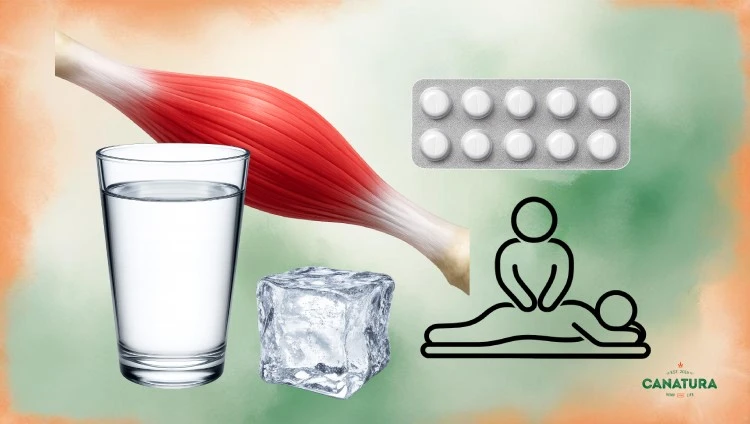
- Post-workout stretching: Stretching after a workout helps eliminate harmful lactic acid and improve blood flow to the muscles used during exercise.
- Adequate water intake: The recovery process releases large amounts of metabolic waste into the bloodstream, which must be filtered out by the kidneys.
- Rest: This is the simplest solution, but it takes the longest.
- Ice packs: Cooling the affected area slows blood flow and reduces inflammation. This only works if applied immediately after an injury or workout.
- Massage therapy: Physical massage of the muscles helps stimulate the affected area, removes lactic acid buildup—which can cause further inflammation in the area—and draws fresh blood to the affected area.
- Pain relievers: Nonsteroidal anti-inflammatory drugs (NSAIDs), such as ibuprofen and aspirin, are often used to reduce inflammation and relieve pain. Unfortunately, these medications also have negative side effects.
How to get the most out of CBD for muscle recovery
CBD can be an interesting addition to your post-workout recovery routine. Research to date suggests its potential impact on the inflammatory response, pain perception, muscle tension, and sleep quality—factors that are closely related to recovery.
There are many CBD products on the market that can be taken internally or applied topically. Among athletes, CBD oils are particularly popular because they offer flexible dosing and application methods, as are CBD ointments, which can provide quick relief to sore muscles.
Keep in mind, however, that CBD is not a substitute for rest, a balanced diet, or professional medical care in the event of an injury. Effects may vary from person to person, and it’s always advisable to consult a doctor if you experience severe, prolonged, or unusual pain. However, if you’re looking for another way to support your post-workout recovery, a high-quality CBD product can be a practical part of your recovery routine.
FAQ
1. Can athletes use CBD? Is CBD legal in sports?
Could CBD cause problems with doping tests? Pure CBD should not be an issue. In 2018, the World Anti-Doping Agency (WADA) removed CBD from its list of prohibited substances. This essentially means that the organization recognizes that CBD is not comparable to performance-enhancing drugs such as amphetamines, hormones, or illegal drugs.
At the same time, marijuana drug tests typically use synthetic antibodies to detect THC or the metabolites our bodies produce after THC breaks down—not CBD. Therefore, you will only fail such a test if you have taken a supplement containing THC. For this reason, if you compete in professional sports and are interested in using CBD, you should choose a product made from third-party-tested CBD isolate, not from the whole hemp plant. The latter may contain trace amounts of THC.
However, it’s important to keep in mind that even though WADA permits the use of CBD, this does not automatically mean that the government or sports organizations also approve of it, and if you compete at the professional level, it’s important to verify this on a case-by-case basis.
2. Can CBD improve athletic performance?
It makes more sense to view CBD as a supplement for recovery, rest, and local care after physical exertion rather than as a substance that directly enhances athletic performance.
3. What’s the best CBD product for athletes?
If you want to incorporate CBD into your daily routine, consider CBD oils or CBD capsules and tablets.
CBD ointments, creams, and gels are popular among athletes because they are applied directly to the affected area and can provide quick relief.
4. What should you look out for when choosing a CBD product?
Athletes should primarily check:
- whether the product lists the exact CBD and THC content,
- whether it is an isolate, broad-spectrum, or full-spectrum product,
- whether the product has been third-party lab-tested,
- whether the product is from a verified manufacturer,
- whether the composition complies with the rules of the relevant country or sports organization.
Professional athletes should err on the side of caution and avoid products with unclear ingredients and no lab test results. The athlete bears responsibility for any positive test results.
5. When to Use CBD?
It’s best to use CBD oils, capsules, and tablets at roughly the same time every day. You can use them in the morning, for support during the day, and in the evening before bed.
You can use CBD ointments after physical activity, ideally when your body has already calmed down—for example, after a shower or a short rest.
Author: Elena Moreau
Photo: AI
“All information provided on this website, as well as information provided through this website, is for educational purposes only. None of the information contained herein is intended to be a substitute for a medical diagnosis and should not be considered medical advice or recommended treatment. This website does not endorse, condones or advocate the licit or illicit use of narcotic drugs or psychotropic substances or the commission of any other illegal activity. For more information, please see our Disclaimer.”
Imported from Canatura. Links have been converted to thcvapestores.com where possible.