What is H4CBD?
- What is H4CBD?
- How does H4CBD work?
- Is H4CBD the same as CBD?
- How does H4CBD compare to HHC?
- The big comparison: H4CBD vs. CBD
- Legality of H4CBD in Czechia
- Comparison of CBD, HHC, and H4CBD: Practical table
- H4CBD as an alternative to CBD
- FAQ
What is H4CBD?
H4CBD is a cannabinoid created by synthetically modifying the molecule of CBD. This cannabinoid is a hexahydroderivative of CBD, which means that four hydrogen atoms have been added to the CBD molecule. How is H4CBD produced? Simply put, the production process can be compared to the way margarine is made from vegetable oil.
H4CBD, or THD, is a derivative of CBD that is produced in a laboratory or semi-synthetically. This cannabinoid, also known as hydrogenated CBD, was created as an alternative form of conventional CBD. Scientists began researching and developing semi-synthetic and synthetic cannabinoids as early as the mid-20th century.
How does H4CBD work?
H4CBD is still in its infancy, meaning it remains a relatively unexplored cannabinoid, but the little information available about it suggests that it has an affinity for CB1 neuroreceptors.
H4CBD is actually a modified version of CBD, but with the difference that it affects the mind. The effects are similar to those of HHC, but much milder, and H4CBD does not contain a double bond. H4CBD consists of two diastereomers, R and S, with the R diastereomer having noticeably stronger effects than the S diastereomer.
H4CBD users have described their experiences as similar to CBD, but with the addition of psychoactive effects.
Is H4CBD the same as CBD?
The answer is “No, it is not.” Although these two cannabinoids share some common properties, they are different molecules. For example, they have completely different effects, with fundamental differences also hidden in their chemical structures and methods of production.
How do H4CBD and HHC compare?
H4CBD and HHC are different substances, although their origins are similar. HHC is a hydrogenated version of THC, while H4CBD is a hydrogenated version of CBD. Each is based on different basic molecules. This difference also causes different effects on the body.
The big comparison: H4CBD vs. CBD
CBD and H4CBD have a lot in common, but they also differ in many ways. How do these two cannabinoids compare? Take a look at the following categories.
Production process
Both CBD and H4CBD come from hemp. CBD is a direct derivative of hemp, while H4CBD undergoes a transformation process, including hydrogenation, to reach its final form.
Because of this, H4CBD is considered a synthetic cannabinoid, even though it is only synthetic in the same way that margarine is synthetic. Technically, it is also possible to synthesize CBD. However, there is no reason to do so, as this cannabinoid is abundant in cannabis.
Structure
H4CBD has been structurally modified to take on a different form than CBD. This is a chemical process that inserts hydrogen atoms into a selected molecule. Four additional hydrogen atoms are added to the molecule, changing its natural properties.
Effects of H4CBD
Looking at a single study from 2006, we find that the study says that hydrogenated forms of CBD show an extremely high affinity for CB1 brain neuroreceptors. It is this finding that has fueled speculation that H4CBD may have effects up to 100 times greater than CBD—at least in certain ways.
A 2017 research review confirmed this assumption, but no new studies on the bioactive properties of H4CBD have been conducted.
Potential
H4CBD could provide users with something in the range of three times the potency of CBD. It is reported that H4CBD offers 100 times the potency of regular CBD. However, we have already learned that even if this were the case, it would only apply to the effectiveness of CBD on CB1 receptors. And this effectiveness was initially negligible for CBD.
H4CBD on CB1 receptors requires further research in order to draw any conclusions related to potential increased activity.
So to claim that H4CBD is “a hundred times more effective” than CBD in all areas is rather an exaggerated statement.
Legality of H4CBD in Czechia
The legality of synthetic and natural cannabinoids is currently the subject of much debate. Government Regulation No. 463/2013 Coll., on lists of addictive substances, defines what a “narcotic substance” is:
- Cannabis extract and tincture. With the exception of cannabis extract and tincture, which contains 1% of substances from the tetrahydrocannabinol group and meets the safety conditions according to the law on general product safety
- Cannabis
- Cannabis resin
- Tetrahydrocannabinol (THC): Δ6a(10a)-, Δ6α(7)-, Δ7-, Δ8-, Δ10-, Δ9(11)-tetrahydrocannabinols and their stereoisomers
At present, H4CBD is not on the list of addictive substances.
Comparison of CBD, HHC, and H4CBD: A practical table
All three cannabinoids interact with the body’s endocannabinoid system, but each in a slightly different way. The following table provides a more detailed comparison of CBD, HHC, and H4CBD, including receptor binding, structure, legality, and effects.
| Characteristic | CBD | H4CBD | HHC |
|---|---|---|---|
| Chemical formula | C21H30O2 | C21H34O2 | C21H32O2 |
| Origin | direct derivative of the cannabis plant | synthetic cannabinoid (formed by transformation of CBD) | THC derivative, often produced synthetically (e.g., by hydrogenation) |
| Structure | natural molecule | hexahydro derivative of CBD (4 hydrogen atoms added) | hydrogenated structure (hydrogen atoms added) |
| Receptor binding | low affinity for CB1/CB2, primarily modulates activity | likely higher affinity for CB1 + binding to CB2 | likely high affinity for CB1 (lower than THC), low binding to CB2 |
| Effects | relief of pain and inflammation, stress/anxiety, sleep | similar to CBD, often described as faster / more pronounced | euphoria, energy, relaxation, sleep |
| Side effects | fatigue, dry mouth, changes in appetite, diarrhea (especially at higher doses) | dry mouth, drowsiness, dizziness, or nausea may occur; data is currently limited | dry mouth, drowsiness, dizziness, nausea, anxiety in more sensitive individuals |
| Market availability | oils/drops, capsules, crystals, flowers, hash, edibles, cosmetics, vapes, etc. | distillates, vape pens, cartridges, flowers, hash, oils, gummies | HHC is no longer sold in most European countries. |
| Legality | Legal in most European countries. | Legal in the Czech Republic; legal status may vary depending on the specific country and current legislation. | In many European countries it is already considered a prohibited substance (status varies by country). |
H4CBD as an alternative to CBD
H4CBD is a hydrogenated form of CBD, which is created by adding hydrogen atoms to the CBD molecule, slightly changing its structure and producing different effects than CBD.
Unlike standard CBD, which is a natural cannabinoid, H4CBD is a semi-synthetic derivative whose effects can be more intense and slightly psychoactive.
Although scientific studies on H4CBD are not yet extensive, user experiences often report that H4CBD can have a more intense effect than CBD, especially when it comes to relaxation. Thanks to these properties, H4CBD can offer a different type of effect than CBD.
FAQ
Still feel like you don’t know enough? Want to know more? Check out the most frequently asked questions about H4CBD.
1. What are hydrogenated cannabinoids?
Cannabinoids can undergo a process called hydrogenation, which involves adding hydrogen atoms to molecules. A hydrogenated cannabinoid is therefore a cannabinoid that has undergone hydrogenation. This process can be applied to many different cannabinoids, and different numbers of hydrogen atoms can be added. Each hydrogenated cannabinoid has its own specific properties, but in general, the chemical hydrogenation of cannabinoids often results in an increase in their potency.
2. Is H4CBD synthetic?
Yes, H4CBD is essentially a synthetic cannabinoid. Although it was derived from a natural cannabinoid, it has been modified to acquire new and unique properties. Although H4CBD is not entirely man-made, any intervention in a natural compound is generally considered a synthetic modification of the original substance.
3. Is H4CBD 100 times stronger than CBD?
It is important to note that the claim that H4CBD is 100 times stronger than conventional CBD is based more on speculation than on actual facts. There is only one study, which is more than 15 years old, suggesting that H4CBD may have a significantly higher affinity for CB1 receptors in the nervous system compared to CBD. However, these receptors are not the main target of conventional CBD, so such speculation may be more scientific hype than reality.
Under normal circumstances, CBD has very little affinity for CB1 and may even reduce its activity. However, when combined with four hydrogen atoms, CBD’s affinity for CB1 is apparently increased, making the new cannabinoid (H4CBD) more psychoactive.
4. Does H4CBD cause a “high”?
It certainly cannot be said that H4CBD causes a high. However, this cannabinoid does not provide the effects we usually associate with CBD either. The effects of using H4CBD appear to be similar to those experienced by users who take large doses of CBD, but we must take into account that this information is based only on limited preliminary research and unofficial testimony.
H4CBD can induce a feeling of relaxation and euphoria that can help relieve stress without causing significant intoxication.
5. Is H4CBD the same as HHC?
No, H4CBD and HHC are different, but given their origins, it is natural that these two cannabinoids may be confused. Similar to how H4CBD is a hydrogenated form of CBD, HHC is a hydrogenated form of THC.
6. Are there strains with H4CBD?
H4CBD is not found in nature. This means that there are no cannabis or hemp strains containing H4CBD. Since it is not possible to extract natural H4CBD, this cannabinoid can only be produced through hydrogenation.
7. What is the best type of H4CBD product?
Users generally prefer H4CBD vapes and gummies. Regardless of the product type, H4CBD products should contain simple ingredients and be accompanied by thorough lab reports.
8. What are some common effects of H4CBD?
Based on what little we know now, H4CBD appears to have roughly the same effects as CBD. However, some evidence suggests that this synthetic CBD derivative may be more effective on certain neuroreceptors. Due to the ongoing lack of research, not enough is known about H4CBD to say anything definitive about its effects.
9. What is H4CBD distillate?
H4CBD distillate consists of H4CBD combined with “denatured” hemp distillate from which other cannabinoids have been removed. Rare cannabinoids such as H4CBD are mainly offered in the form of distillate. This is because the distillation base can be easily combined with virtually any isolated cannabinoid.
Like most cannabinoids except CBD and CBG, H4CBD must be produced as a derivative of natural cannabinoids from hemp, which essentially makes H4CBD distillate a synthetic product. Although the distillate is dominated by synthetic cannabinoids, H4CBD distillate still looks as you might expect—it typically has a honey color and is viscous and transparent.
10. What is the difference between CBD and H4CBD?
CBD and H4CBD differ significantly not only in that CBD is natural while H4CBD is synthetic, but also in many other aspects that scientists are still considering and researching. Even though interest in both cannabinoids has increased significantly in recent years, there are still many properties and effects associated with them that need to be explored.
11. How do H4CBD and H2CBD differ?
The difference is mainly in their chemical structure.
H2CBD is a form of CBD to which 2 hydrogen atoms have been added. The effects are usually milder and similar to CBD.
H4CBD has 4 hydrogen atoms added, which can make it more potent than CBD and, in some people, slightly psychoactive.
12. H4CBD gummies vs. H4CBD tinctures
H4CBD tinctures are simple and natural, while H4CBD gummies may have a better taste or be easier to use. Given that new cannabinoids are still a relatively new discovery, the availability of quality products is currently limited.
13. Are H4CBD flowers or hash better?
It mainly depends on what you expect from the product and which form you prefer.
H4CBD flowers are dried cannabis buds infused with H4CBD distillate. H4CBD hash is a more concentrated cannabis extract that usually has a more intense aroma and effect. It is more suitable for experienced users.
14. Can I drive after taking H4CBD?
No, driving after taking H4CBD is not recommended. H4CBD can have psychoactive effects and cause drowsiness, slowed reactions, or changes in perception in some people, which can significantly affect their ability to drive safely.
At the same time, it is not advisable to combine H4CBD with alcohol or other psychoactive substances.
15. Is H4CBD suitable for beginners?
Yes, H4CBD is also suitable for beginners, but it is important to bear in mind that the effects are stronger than those of CBD and are psychoactive in nature.
For starters, it is therefore better to opt for a lower concentration of H4CBD and start with a small dose to see how it works. The range includes practical samples of flowers and hash in concentrations of 30–60% H4CBD, which is great for trying out.
Author: Patricie Mikolášová
Photo: AI
“All information provided on this website, as well as information provided through this website, is for educational purposes only. None of the information contained herein is intended to be a substitute for a medical diagnosis and should not be considered medical advice or recommended treatment. This website does not endorse, condones or advocate the licit or illicit use of narcotic drugs or psychotropic substances or the commission of any other illegal activity. For more information, please see our Disclaimer .”
Recommended products
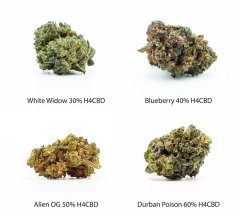
H4CBD Flowers sample set – White Widow 30% H4CBD, Blueberry 40% H4CBD, Alien OG 50% H4CBD, Durban Poison 60% H4CBD, 4 x 1 g
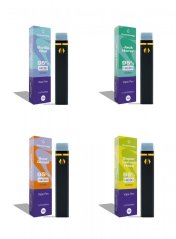
Canntropy H4CBD Vape Pen bundle, 95 % H4CBD, All in One Set – 4 flavours x 1 ml
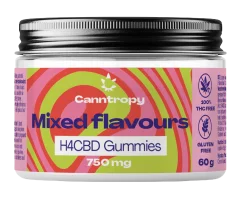
Canntropy H4CBD Fruit Gummies Flavour Mix, 750 mg, 30 pcs x 25 mg, 60 g
CanaPuff London Pound Cake 96 % H4CBD – Disposable vape pen, 1 ml
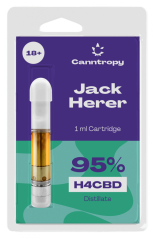
Canntropy H4CBD Cartridge Jack Herer, 95 % H4CBD, 1 ml
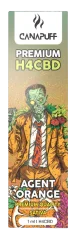
CanaPuff Agent Orange 96 % H4CBD – Disposable vape pen, 1 ml
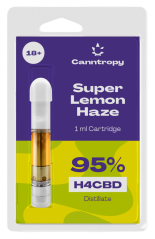
Canntropy H4CBD Cartridge Super Lemon Haze, 95 % H4CBD, 1 ml
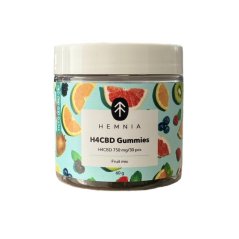
Hemnia H4CBD Gummies Fruit Mix, 750 mg H4CBD, 30 pcs x 25 mg, 60 g
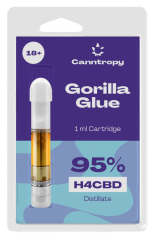
Canntropy H4CBD Cartridge Gorilla Glue, 95 % H4CBD, 1 ml

Canntropy H4CBD flower Durban Poison 60%, 1 g – 100 g
Imported from Canatura. Links have been converted to thcvapestores.com where possible.